
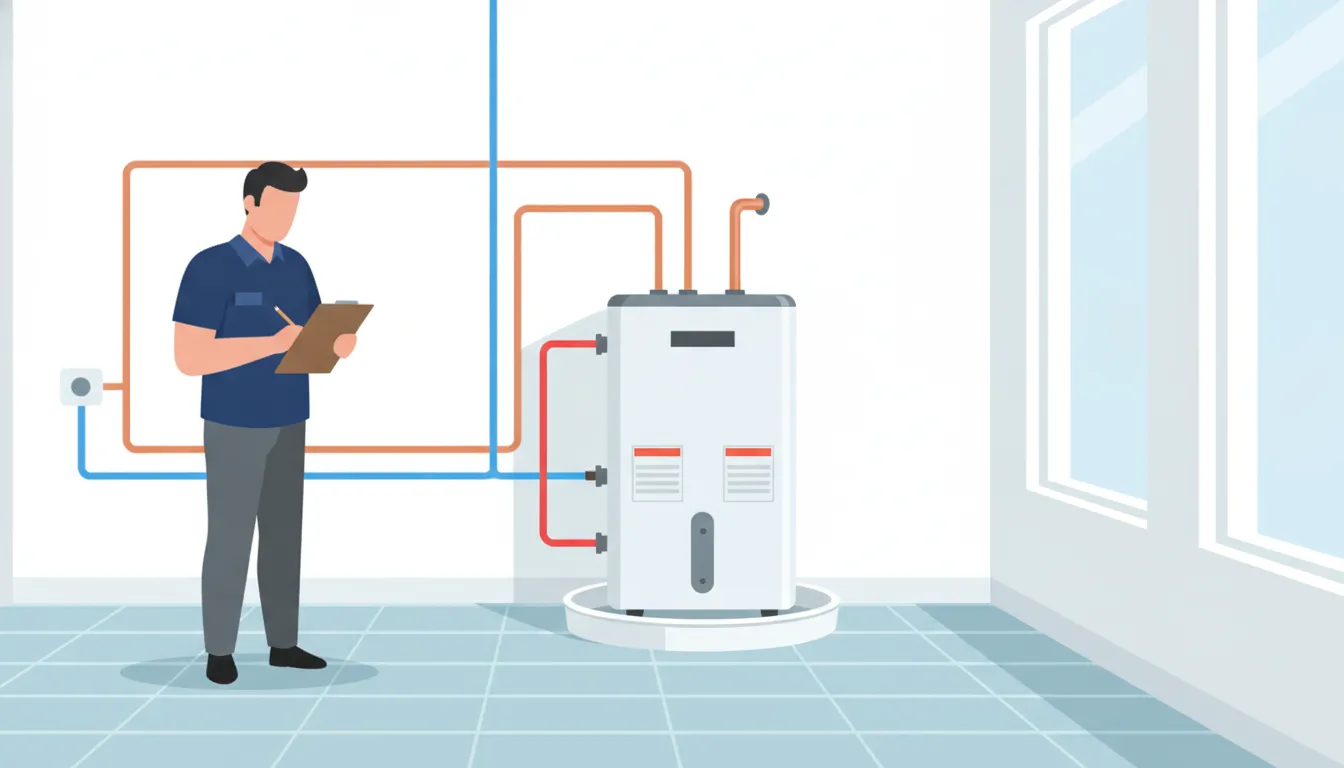
Energy Efficient Water Heater: Sizing and Fit
An energy efficient water heater only saves energy when the unit matches the home's peak hour and the room can support it. A high rating on the box does not help if the closet is too tight, the panel is full, or the drain cannot take condensate. This guide shows how to compare first-hour demand, space, power, and drainage before you approve a replacement.
What should you compare on an energy efficient water heater?
Start with the yellow Energy Guide label, not the marketing name. Since June 12, 2017, manufacturers have had to rate water heaters with a Uniform Energy Factor, or UEF. A higher UEF means the test used less energy to deliver the same hot water. The same label lists a first-hour rating for storage and hybrid units, or a gallons-per-minute rating for tankless units.
The U.S. Department of Energy says to size a storage water heater by first-hour rating, not by the gallon number on the tank. First-hour rating is how much hot water the full unit can supply in one busy hour. An oversized tank costs more to buy and loses more heat while it sits.
Efficiency still depends on the technology. ENERGY STAR says water heating is about 12 percent of home energy use. It also says a certified heat pump water heater uses about one-quarter of the energy of a standard electric model. Those figures are national test results. They are not a promise about your bill.
Call Miranda Plumbing and Air to discuss tank and tankless water heater installation across the Treasure Coast. The useful comparison is which option the house can actually support.
How do you size an energy efficient water heater for your home?
Count the busiest hour, not the whole day. A 2001 Department of Energy fact sheet still gives a useful method. List each use in that hour, multiply by a typical gallon amount, and add the column. Then look for a model whose first-hour rating is within about two gallons of that peak.
Use these planning amounts only as a starting list. They assume no low-flow fixtures:
- Shower: about 20 gallons.
- Shampoo: about 4 gallons.
- Bath: about 20 gallons.
- Shaving or washing hands and face: about 2 gallons each.
- Hand dishwashing: about 4 gallons.
- Automatic dishwasher: about 15 gallons.
- Food preparation: about 5 gallons.
- Clothes washer: about 32 gallons.
The fact sheet's sample hour is two showers, two shampoos, one shave, two hand washings, and one food-prep use. That adds to 94 gallons in the hour. A household that staggers showers may need far less. Two people showering while a washer runs can need more than the old tank ever delivered.
Do not copy a neighbor's gallon size. A 50-gallon label is a nominal group. The actual stored volume can be lower, and recovery speed changes the first-hour rating. Our guide to water heater recovery time explains why a full tank can still leave the second shower cool.
Tankless sizing uses flow rate and incoming water temperature, not first-hour rating. Florida groundwater is warmer than northern groundwater, so the same unit can serve more fixtures here. Use our tankless water heater sizing guide for the gallons-per-minute steps, then come back to the installation checks below.
A small water heater can serve one bathroom or a garage sink. It is a poor whole-home answer when the peak hour includes showers plus laundry. Point-of-use units also need their own power, shutoff, and drain plan.
Which installation limits decide if it will fit?
Sizing picks a capacity. The room decides whether that capacity can be installed. Miranda's water heater installation visits start with demand, the existing plumbing, the fuel or electrical supply, water conditions, and the space.
Compare the three efficient paths homeowners usually ask about. This is a fit check, not a ranking of which type is best.
| Check before you buy | Heat pump or hybrid | High-efficiency storage | Tankless |
|---|---|---|---|
| How to size it. | Use the first-hour rating against the peak hour. | Use the first-hour rating. A larger tank also loses more heat while it sits. | Use peak gallons per minute and temperature rise. |
| Space. | Plan for a taller unit, an open air intake, filter access, and room to drain the tank. | Expect a footprint like a standard tank, plus service clearance. | Plan for wall space, vent runs, and service clearance. |
| Utilities. | Most units need a dedicated electric circuit. Some newer models use a lower amp draw. | Gas, propane, or electric supply must match the unit. | Many units need a larger gas line or a heavy electric circuit. |
| Water leaving the unit. | Plan a condensate drain for cooling hours, plus a relief-valve discharge. | Plan a relief-valve discharge and, where required, a drain pan. | Condensing gas models need a condensate drain, plus a relief-valve discharge. |
| What can erase the savings. | A recirculation pump left on all the time can force electric-only mode. | A tank far larger than the peak hour wastes standby heat. | A unit sized below simultaneous showers runs out of hot water. |
ENERGY STAR's installation guide treats a unitary heat pump water heater much like an electric tank. You do not handle refrigerant. You do need an open intake path, a reachable control panel, and room to clean the air filter and drain the tank. A tight closet that worked for a short electric tank may fail those checks.
Most models need about 700 cubic feet of surrounding air. That is about a 10-by-10-foot room with a 7-foot ceiling. Some models can run with about 450 cubic feet. Confirm the number in the manual for the exact unit, and do not place the heater beside a bedroom if fan noise would bother anyone.
The same guide says a drain pan is good practice, especially on a floor that water would damage. The temperature-and-pressure relief discharge should end within 6 inches of a floor drain, aimed so hot water cannot hit people or electrical parts. Follow the manual for the exact model. Our Florida water heater code requirements page covers pans, expansion tanks, and garage placement in more detail.
Condensate is the detail many replacements miss. A heat pump pulls moisture from room air. That water needs a sloped line that stays clear. ENERGY STAR says to clean the air filter every 6 to 12 months, sooner in dusty rooms, and to clean condensate lines yearly. Standing water in the pan can mean the line is clogged.
Gas and electric changes are part of the job, not an add-on surprise. The installation page lists panel capacity, gas-line size, venting, expansion tanks, strapping, and shutoff valves as cost and scope items. A hybrid visit also confirms airflow, drainage, mode switching, and heat pump operation before the crew leaves.
One control setting can waste the efficiency you paid for. ENERGY STAR says not to run a circulation pump continuously on a heat pump water heater. Constant circulation can push the unit into electric-only mode, which uses far more power and can run you out of hot water. If the pipe runs are long, use an on-demand or button-activated pump, and connect the return to the cold inlet.
How do Treasure Coast homes change the install?
Miranda has served Port St. Lucie and the Treasure Coast since 1981. The same climate that makes a heat pump attractive also shapes the install. Warm garage and utility-room air gives the heat pump something to draw from. Humidity means the condensate line works harder. Hard water leaves scale in tanks, on elements, and inside tankless heat exchangers.
We do not claim a local water test in this article. White crust or a rumbling tank is a reason to read how hard water affects Florida plumbing. Ask whether a water softener or filtration system belongs in the plan. Treating the water can matter as much as the UEF number.
Many homes we see sit on a slab, with the heater in a garage, a closet, or a shallow utility nook. Measure height before you order a hybrid. The filter has to come out, and the air above the unit has to move. A garage unit still needs the pan, the relief line, and protection from vehicle impact.
Seasonal use is common from Stuart through Sebastian and Jupiter. If the house sits empty for weeks, ask about vacation mode rather than leaving a full tank at normal temperature. That is an operating choice. It does not change the first-hour rating you need when the house is full.
The brand is the last decision. The first decision is whether the first-hour rating, the circuit or gas line, and the drain plan all match the house.
What should you ask before you approve the replacement?
A clear estimate names the unit, the first-hour rating or flow rate, and every change to power, gas, venting, or drainage. Miranda provides an estimate and a written scope before work begins. GreenSky financing is available for larger replacements and is subject to credit approval.
Ask these questions on the visit:
- What is the first-hour rating, or the gallons per minute, and how does it compare with our peak hour?
- Will the closet or garage allow airflow, filter service, and tank draining?
- Where does condensate go, and where does the relief valve discharge?
- Does the panel or gas line need an upgrade for this model?
- Will any existing recirculation pump be changed so it cannot run all day?
- What labor warranty applies to this water heater job?
On water heater installation and service, Miranda's stated labor warranty is 90 days. The one-year labor warranty on our site applies to HVAC replacements, not to water heaters. Manufacturer warranties are separate. ENERGY STAR certified heat pump models include at least a six-year manufacturer warranty, and many current models offer six or ten years of limited equipment coverage. Read the exact certificate.
Plumbing work is done under Florida plumbing license CFC1427227. HVAC work uses license CAC1815486. Both are on the site because crews handle plumbing and air conditioning, but a water heater permit question belongs with the plumbing license.
If the current unit still has usable life, repair may cost less than replacement. No hot water, a leaking tank, or rusty water are repair questions first. Our water heater repair page lists those symptoms. Efficiency is a replacement reason when the tank is near the end of its service or the household has outgrown it, not because a new label looks better.
For a heat pump specifically, read what a heat pump water heater is before the visit. That article explains the technology. This one is about whether the house can use it well.
Frequently asked questions
What is the most energy-efficient type of water heater?
ENERGY STAR points to a certified heat pump water heater as the super-efficient electric choice. It uses about one-quarter of the energy of a standard electric tank in ENERGY STAR's comparison. It is only the right install when the room has airflow, a condensate drain, and enough electrical capacity.
Which water heater uses the least electricity?
Among electric options, a heat pump or hybrid unit uses the least electricity for the same hot water because it moves heat from the air. A standard electric tank uses resistance elements the whole time. A gas or propane unit uses little electricity, but it uses fuel instead.
What is the cheapest way to heat water with electricity?
The cheapest way to run an electric water heater is usually the one with the higher UEF that still matches your peak hour. A heat pump often wins on operating energy. It is not the cheapest to buy, and a bad install can push it into electric-only mode.
What is cheaper, a tankless water heater or a regular water heater?
The purchase price is only part of the cost. Tankless units often need a larger gas line, a heavier electric circuit, or a different vent. A regular tank may cost less to install and more to run. Compare the written scope, not the sticker, and do not treat a national savings claim as your bill.
Does a higher UEF always mean a lower bill?
No. UEF lets you compare models tested the same way. Your bill still depends on how much hot water you use, your utility rate, and whether the unit is allowed to run in its efficient mode. An oversized tank or a circulation pump left on all day can erase the difference.
Ready to match the unit to the house?
Bring the peak-hour list and the measurements of the closet or garage. A licensed plumber can confirm the first-hour rating, the power or gas supply, and the drain plan before you buy the wrong efficient model.
Call Miranda Plumbing and Air, or send the details through the contact form. We serve Port St. Lucie, Stuart, Fort Pierce, Sebastian, Jupiter, and the rest of the Treasure Coast.
Need plumbing or HVAC service on the Treasure Coast?
Contact Miranda Plumbing & Air