
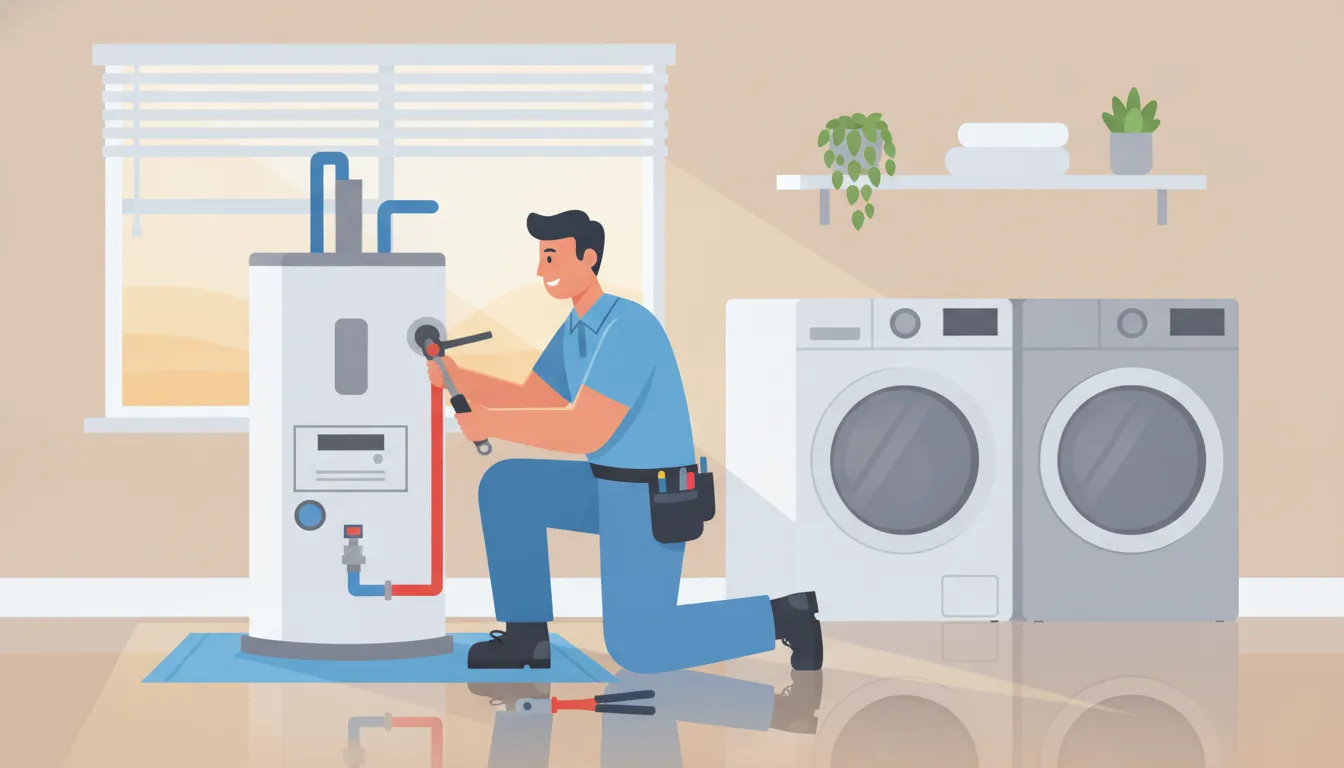
Florida Water Heater Code Requirements: A Homeowner's Guide
A water heater replacement is more than choosing a tank that fits the available space. In Florida, the installation may need to account for leak protection, thermal expansion, garage safety, drainage, and the connections serving the appliance. Local conditions such as humidity, hard water, and hurricane-related home repairs make careful planning especially worthwhile for Treasure Coast homeowners.
Book an appointment with our team to confirm which Florida water heater code requirements apply to your home before you replace the unit.
Florida water heater code requirements generally address how the tank is protected, drained, supported, and connected. Depending on the location, that can include a properly sized drain pan, an indirect drain, thermal expansion control, a compliant drain valve, and elevated ignition sources in garages. The Florida Residential Code requires a pan where a leak could cause damage. And the pan must be at least 1 1/2 inches deep with a drain of at least 3/4 inch. Florida Residential Code, Chapter 28
Understanding which provisions apply to your home helps you ask better questions before work begins and avoid an installation that must be corrected later. The details below explain the main requirements in practical terms, starting with when these protections are required.
What Are the Florida Water Heater Code Requirements?
Florida water heater code requirements are established through the Florida Building Code, including the Residential, 8th Edition, and the Florida Building Code/Plumbing provisions. These rules apply when a water heater is installed or replaced, and they address more than the connection of hot and cold-water lines. The location, drainage, pressure control, ignition-source protection, permits, and inspection all matter.
The exact requirements can vary with the type of water heater and its location. A licensed plumber should evaluate the installation before replacement, especially in garages, utility closets, attics, and other areas where a leak could damage the home.
| Code Requirement. | What It Requires. | Why It Matters in Florida. |
|---|---|---|
| Drain pan. | A pan at least 1 1/2 inches deep, from galvanized steel or aluminum, where a leak could cause damage. | Directs leaks and condensate away from finished areas in humid Treasure Coast homes. |
| Indirect drain. | Pan drained by an indirect waste pipe at least 3/4 inch in diameter. | Keeps a small leak from reaching floors, walls, or ceilings below. |
| Thermal expansion control. | An expansion tank or approved pressure-relief device for closed systems. | Prevents pressure buildup that can stress the tank and nearby piping. |
| Drain valve. | Bottom drain valve with a minimum 3/4-inch inlet and male hose thread. | Allows scheduled flushing in an area with hard water that can shorten heater life. |
| Garage elevation. | Ignition source at least 18 inches above the garage floor unless vapor-ignition-resistant. | Reduces ignition risk in a common Florida water-heater location. |
When is a water heater pan required?
A storage tank water heater must be installed in a pan when leakage from the tank could cause damage to the surrounding property. Under the Florida Residential Code, the pan may be made from galvanized steel or aluminum at least 0.0236 inches thick. It must also be large enough to collect dripping water or condensate.
The pan itself must be at least 1 1/2 inches deep and drained by an indirect waste pipe at least 3/4 inch in diameter. These requirements help direct a tank leak away from finished areas, but a pan is not a substitute for correcting a leaking or corroded water heater. Review the Florida water-heater provisions for the underlying code language.
What other installation details are required?
Florida requires an approved method of thermal expansion control for residential water-heater systems. Depending on the plumbing configuration, that may be an expansion tank or an approved pressure-relief device, such as a Watts 530C or similar device. A professional must confirm that the selected component is appropriate for the system.
Garage installations have an additional safety requirement. If the water heater has an ignition source, the source must be at least 18 inches above the garage floor unless the appliance is listed as flammable-vapor-ignition-resistant. Tank-type water heaters and hot-water storage tanks must also have a bottom drain valve with a minimum 3/4-inch nominal iron pipe-size inlet and a male hose-thread outlet.
Permits and inspections are part of a compliant replacement, not optional paperwork. Local requirements may differ, so the installer should confirm the permit process with the authority having jurisdiction and arrange the required inspection. For help planning a code-compliant water heater replacement, contact our team.
Why Does Florida Require a Water Heater Pan and Drain Valve?
Florida's water heater code treats leak prevention as part of a safe installation, especially when a failed tank could damage floors, walls, ceilings, or nearby equipment. A pan is required when leakage from a storage tank-type water heater or hot water storage tank could cause damage to the surrounding area. In Florida homes, that concern can be especially important in garages, utility closets, laundry rooms, and other spaces where a small leak may spread before it is noticed.
The pan is not simply a shallow tray placed under the tank. Under the Florida Residential Code, it must be made from galvanized steel or aluminum at least 0.0236 inch thick. It must also be at least 1.5 inches deep and large enough to collect dripping water or condensate from the tank. These specifications help the pan contain minor leakage long enough for a homeowner to notice the problem and arrange service.
How should a water heater pan drain?
A pan that collects water but has nowhere to discharge it can eventually overflow, so the code also addresses drainage. The pan must be drained by an indirect waste pipe at least 3/4 inch in diameter. This drain should be installed so water can leave the pan without creating a direct connection that could allow contaminated water or sewer gases to enter the system. Proper routing matters because a poorly placed or blocked pan drain can undermine the protection the pan is intended to provide.
Florida's heat and humidity add another practical reason to take pan drainage seriously. Condensation can form around water-heating equipment, particularly in warm, humid areas such as garages or enclosed utility spaces. A correctly sized pan and properly routed drain help manage that moisture as well as water from a developing tank leak. The pan does not replace routine inspection, but it can reduce the chance that an unnoticed drip immediately becomes costly property damage.
What does the water heater drain valve do?
Tank-type water heaters and hot water storage tanks must have a drain valve at the bottom for emptying the tank. The valve inlet must be at least 3/4-inch nominal iron pipe size, and the outlet must have male hose threads. That connection allows a service professional to attach a hose when draining the tank for replacement, maintenance, or diagnosis.
When reviewing water heater installation and replacement work, homeowners should confirm that the pan, indirect drain, and bottom-mounted drain valve are installed for the specific location. A licensed plumber can evaluate how Florida water heater code requirements apply to the equipment and surrounding finishes, then complete the connections so the protective components work together.
Is a Thermal Expansion Tank Required in Florida?
Yes, Florida water heater code requirements call for an approved device for thermal expansion control in residential plumbing systems. A thermal expansion tank is one way to meet that requirement. An approved pressure relief valve, such as a Watts 530C or similar device, may also satisfy the requirement when installed correctly. The applicable code interpretation does not say that every home must use one specific brand or component. It focuses on providing an approved method of controlling thermal expansion.
Why Does a Water Heater Need Thermal Expansion Control?
Water expands as it heats. In an open plumbing system, that small increase in volume may move back toward the municipal supply. A closed system does not allow the same movement. A check valve, backflow preventer, or pressure-reducing valve can prevent water from flowing backward, leaving the expanding water with less room to go.
As pressure rises, it can place additional strain on the water heater tank, supply lines, fittings, and fixtures. Pressure fluctuations may also contribute to dripping from a relief valve or premature wear on plumbing components. Thermal expansion control gives that changing volume a safer place to go and helps limit pressure buildup inside the system. It is a protective measure, not an indication that a water heater is already failing.
How Does an Expansion Tank Protect the Plumbing?
An expansion tank contains an air cushion separated from the system water by a flexible diaphragm. When heated water expands, the tank can accept part of that additional volume. As the water cools, the pressure can stabilize again. The tank must be properly sized, connected, and precharged for the home's water pressure and heater capacity. An incorrectly installed tank may not provide the intended protection.
Whether a particular home needs an expansion tank, an approved pressure relief device, or another accepted solution depends on the plumbing configuration and the authority having jurisdiction. That is why the answer to the common question. "Are expansion tanks required by Florida code?" should be tied to the approved thermal expansion-control requirement rather than a blanket product rule.
For the exact language, review the Florida Building Officials Association interpretation of Section 2903.4. A licensed plumber can identify whether the home has a closed system, confirm the existing pressure-control equipment. And install an approved solution as part of a compliant water heater replacement.
Where Can You Install a Water Heater in a Florida Garage?
Garages are a common location for water heaters on Florida's Treasure Coast because they keep bulky equipment outside the main living area and often provide practical access to plumbing. Electrical, or gas connections. However, the placement still has to account for ignition sources, airflow, drainage, and Florida's hot, humid conditions. A convenient corner is not automatically a code-compliant installation location.
How high must a garage water heater be?
Under the Florida Residential Code. A water heater with an ignition source must be installed so that the ignition source is at least 18 inches above the garage floor. This requirement helps keep a pilot light, burner, or other ignition source away from gasoline vapors and other flammable vapors that may collect near the floor. The code provides an exception for appliances listed as flammable-vapor-ignition-resistant, so the correct elevation depends on the specific equipment being installed. See the Florida Residential Code water-heater provisions for the applicable language.
Elevation is not the same as placing the tank on an improvised stand. The support must be stable, properly sized, and suitable for the water heater's weight when full. It also needs to preserve access to shutoffs, service connections, and the drain valve. A licensed plumber can confirm whether the existing platform is appropriate or whether a new support is needed during replacement.
What should you consider for venting and humidity?
Gas equipment requires correctly sized and routed venting, adequate combustion air, and proper clearances. Those details should be evaluated before a tank is moved or enclosed. Blocking a louver, crowding the vent connector, or storing chemicals around the appliance can create unsafe conditions even when the heater appears to be operating normally. Electric water heaters do not need combustion venting, but they still require safe electrical connections and service clearance.
Florida humidity also matters. A garage water heater can produce condensation on cold water piping, fittings, or nearby surfaces, especially when warm, moisture-heavy air meets cooler components. Condensation should not be confused with a tank leak, but persistent moisture can contribute to corrosion, damaged drywall, or slippery flooring. Insulating appropriate piping, improving drainage, and keeping the area ventilated can help. The installation should also provide a suitable pan and drain wherever a leak could damage the home.
If your garage water heater is corroding, leaking, or showing venting concerns, schedule Florida water heater repair needs with a qualified professional before the problem worsens. Correct placement is one practical part of meeting Florida water heater code requirements, but the complete installation should be reviewed as a system.
Do You Need a Permit to Replace a Water Heater in Florida?
Yes. Most Florida municipalities require a plumbing permit when a homeowner replaces a water heater. The permit allows the local building department to confirm that the installation follows applicable Florida Building Code requirements, including connections, safety devices, placement, and discharge piping. The exact process and fee vary by city or county, so confirm the local rule before work begins.
A permit is not simply paperwork. A replacement completed under a permit still requires an inspection. According to Florida Plumbing Authority, Florida Statute 489.103 includes limited owner-builder exemptions, but a permitted water heater replacement remains subject to inspection. If an installation fails inspection, the responsible party may need to correct the work and schedule another review.
Does replacing an existing heater require the same review as new construction?
New construction is reviewed as part of a larger building project, while a replacement is usually a smaller, targeted permit. That does not mean replacement work is exempt from code. The new unit still needs the required safety components and must be installed correctly for its location. Inspectors may review the pan and drain, temperature and pressure relief discharge, shutoff connections, expansion control, and elevation or venting details where applicable.
Florida conditions make this review especially useful. In a garage, an ignition source may need to be elevated at least 18 inches above the floor unless the unit is approved as vapor ignition-resistant. In coastal areas, salt air and humidity can accelerate corrosion around fittings and connections. A properly secured installation also matters during hurricane preparation, when vibration, wind-driven rain. Or stored items in a garage can expose weaknesses that were overlooked during a casual swap.
What changed with Florida plumbing updates in 2025?
Florida plumbing regulations saw updates in 2025, and replacement work must meet the requirements enforced by the local authority having jurisdiction. Amy's Plumbing's overview of the 2025 updates notes that water heater replacements must meet updated efficiency standards under Florida building statutes. A licensed plumber can identify which requirements apply to the selected equipment and your home's existing setup instead of assuming that a new model is a drop-in replacement.
Before scheduling work, check the permit requirements with your municipality and ask who will obtain the permit and arrange the inspection. Miranda's plumbing services team can help coordinate a code-conscious replacement for Treasure Coast homeowners. Contact our team to discuss your water heater replacement.
Why Hire a Licensed Plumber for a Code-Compliant Installation?
Water heater installation is more than connecting supply lines and turning on the unit. The work can involve plumbing, electrical wiring, gas connections, discharge piping, drainage, and location-specific safety requirements. That combination makes professional experience especially important for Treasure Coast homeowners reviewing Florida water heater code requirements.
A do-it-yourself installation may appear complete while still missing details an inspector will identify. Common problems include an improperly sized or routed temperature-and-pressure relief discharge line, inadequate drainage. Missing thermal expansion control, incorrect shutoff components, or an installation that does not meet garage elevation and ignition-safety rules. An inspection failure can mean additional repairs, a delayed project, and the cost of bringing the installation into compliance. More importantly, these requirements exist to reduce risks from scalding water, pressure, leaks, and ignition sources.
Why do plumbing and HVAC credentials matter?
Water heaters often sit at the intersection of multiple trades. Gas-fired equipment requires safe fuel and venting connections, while electric models require correct electrical work and protection. Miranda holds plumbing license CFC1427227 and HVAC license CAC1815486, giving the team the relevant expertise to coordinate these connected parts of the installation. A licensed professional can also identify when the existing setup needs correction instead of simply transferring an unsafe condition to a new unit.
What does local experience add?
Miranda has served the Treasure Coast for 46 years, with familiarity with the conditions that affect local homes. Including heat, humidity, hard water, salt air, and hurricane preparation concerns. That local perspective helps the installer evaluate the equipment location and existing connections in context, rather than relying on a one-size-fits-all installation approach.
Skipping a required permit can create problems later, especially when a homeowner sells the property, files an insurance claim, or needs documentation that the work was completed properly. A licensed contractor can explain the permit and inspection process, complete the installation to applicable standards, and help address code issues before they become expensive surprises. For dependable water heater code compliance in Florida, contact Miranda to schedule an appointment.
Frequently Asked Questions
Do I need a permit to replace a water heater in Florida?
In most Florida jurisdictions, a water heater replacement requires a plumbing permit and inspection, but the exact process varies by city or county. Check with your local building department or have a licensed plumber handle the permit requirements before work begins.
Are expansion tanks required by Florida code?
Florida requires an approved method of controlling thermal expansion in residential water-heater systems. Depending on the system, that may be a thermal expansion tank or an approved pressure-relief device, such as a Watts 530C or similar product (Florida Building Officials Association interpretation).
Does every Florida water heater need a drain pan?
A pan is required when a leaking tank could damage the surrounding property. The Florida Residential Code specifies a pan at least 1 1/2 inches deep. Made from approved material such as galvanized steel or aluminum at least 0.0236 inch thick, with an indirect waste drain at least 3/4 inch in diameter (Florida Residential Code, Chapter 28).
How high must a water heater be in a Florida garage?
If the unit has an ignition source, that source must be at least 18 inches above the garage floor unless the appliance is listed as flammable-vapor-ignition-resistant. A licensed installer can confirm whether the specific model and installation location meet the applicable requirement (Florida Residential Code, Chapter 28).
Ready to Book an Appointment?
Code requirements can vary with your home's layout, fuel source, and installation details. A professional review can help you plan the work clearly and keep your replacement on the right track. To discuss your water heater needs, book an appointment with our team. We can help you determine the next practical step for your Florida home.
Need plumbing or HVAC service on the Treasure Coast?
Contact Miranda Plumbing & Air