
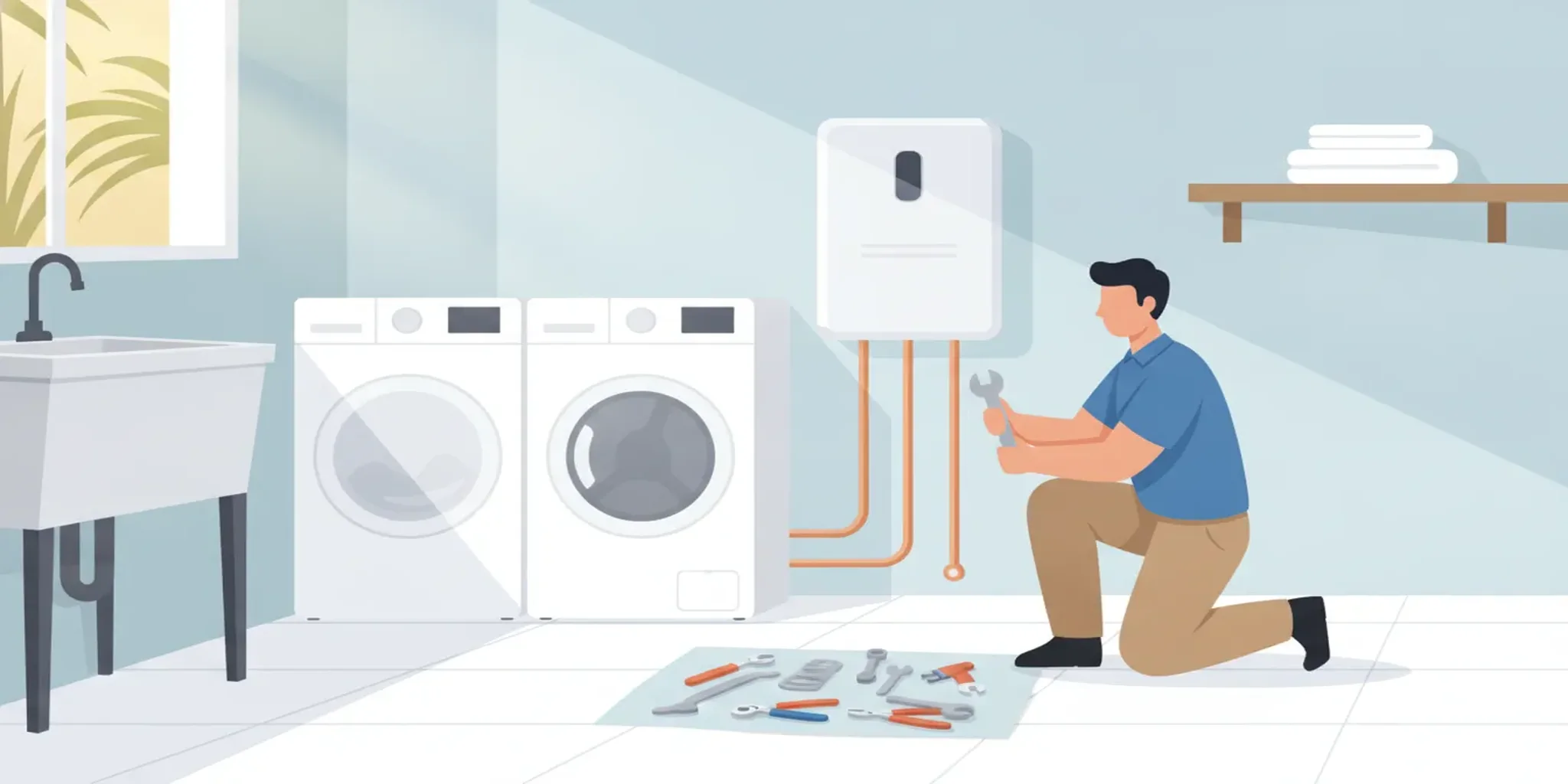
Tankless Water Heater Installation Cost Stuart FL
Replacing a traditional water heater is a significant home upgrade, and Stuart homeowners usually want to know whether the quoted price reflects the work their home actually needs. A tankless system may offer long-term efficiency and a longer service life, but installation costs vary with the unit, fuel source, plumbing, venting, and permitting.
For a residential tankless water heater installation cost stuart fl homeowners can generally expect roughly $1,800 to $5,500 installed. With many Florida projects falling closer to $3,200 to $5,500. These are planning estimates, not a guaranteed quote. The final price depends on the home and the scope of the conversion.
Contact Miranda Plumbing & Air for a professional tankless water heater quote.
Understanding what goes into that range makes it easier to compare estimates and choose a system that fits your household. The first step is looking at the installation details that have the biggest effect on the total.
What Affects Tankless Water Heater Installation Cost in Stuart, FL?
When homeowners compare tankless water heater installation cost in Stuart, FL, the equipment itself is only part of the estimate. A straightforward replacement may cost less than a conversion that requires new gas piping, electrical work, venting, or changes to the installation location. Local estimates commonly fall between $1,800 and $5,500 installed, with many typical projects landing around $3,200 to $5,500. Your home's existing connections and the system selected determine where your project falls within that range.
What type of unit does your home need?
Electric and gas-fired tankless systems have different installation requirements and performance characteristics. Tankless heaters commonly deliver about 2 to 5 gallons per minute, while gas models generally provide higher flow rates than electric models. The right choice depends on how many showers, faucets, or appliances may use hot water at the same time, as well as the available utility connections.
Proper sizing matters more than choosing the largest available unit. An oversized system can add unnecessary equipment cost, while an undersized system may struggle during simultaneous use. A qualified plumber should evaluate flow requirements and temperature rise before recommending a model.
How do labor and installation changes affect the estimate?
Labor is a major cost variable. Replacing a conventional tank with a tankless unit is not always a direct swap. A gas conversion may require a larger gas line to supply the new heater safely. The installer may also need to modify venting, add a dedicated electrical circuit, update water connections, remove the old tank, and bring the work into current code compliance. Permit requirements and site access can affect the final labor total as well.
These details are why an online price range should be treated as a planning estimate, not an exact quote. Ask whether the proposal includes labor, permits, connections, venting, disposal, and startup testing. A written, itemized scope makes it easier to compare recommendations fairly. Miranda's tankless water heater installation services can help Stuart homeowners evaluate the existing setup before selecting equipment.
Is the higher upfront cost worth considering?
Tankless systems avoid the standby energy losses associated with storing hot water. ENERGY STAR reports that demand water heaters can be 24% to 34% more energy efficient than conventional storage tanks in homes using 41 gallons or less of hot water per day. ENERGY STAR also notes that tankless units can last more than 20 years, compared with roughly 10 to 15 years for many storage tanks. Those potential efficiency and service-life benefits may improve the long-term value, but maintenance and installation conditions still belong in the decision.
Unit Cost vs. Labor: What Are You Really Paying For?
When you compare estimates for a tankless water heater installation in Stuart, FL, the equipment price is only one part of the project. A complete quote may include the heater itself, installation labor, permits, venting or gas-line work, water connections, fittings, shutoff valves, disposal, and other accessories. Florida installation estimates commonly fall between $1,800 and $5,500 overall, with many projects landing toward the $3,200 to $5,500 range. Your home's existing setup and the selected unit can move the final number significantly.
| Cost category | What it covers | Why the amount varies |
|---|---|---|
| Unit | The tankless heater selected for the home's fuel type, flow needs, and installation location. | Equipment may cost roughly $800 to $2,000 or more. Capacity, fuel type, efficiency, controls, and manufacturer all affect the price. |
| Labor | Removing the old heater, preparing the location, connecting the new system, testing it, and completing startup procedures. | Labor depends on access, the existing plumbing, the old heater type, code requirements, and whether additional gas or electrical work is needed. |
| Materials and accessories | Pipe, valves, connectors, venting components, electrical materials, mounting hardware, drain work, and required safety components. | A straightforward replacement may need fewer materials. A conversion from a storage tank can require more extensive modifications. |
Do not judge an estimate by the unit price alone. A lower equipment allowance may not represent a lower project cost if the quote leaves out venting, a gas-line upgrade, permits, or removal of the existing heater. Ask whether each part of the work is included and whether the proposal identifies the equipment model, warranty coverage, and expected capacity.
The right unit also affects long-term value. ENERGY STAR explains that tankless models can be 24% to 34% more energy efficient than conventional storage heaters in homes using 41 gallons or less of hot water per day. And that many tankless systems have a life expectancy of more than 20 years. Those figures are general guidance, not a promise of specific savings or service life. Review the product specifications and maintenance requirements for the model being proposed at ENERGY STAR's water heater resource.
If your existing system is already showing leaks, temperature problems, or inconsistent performance, water heater repair may be worth evaluating before replacing it. A professional can compare the condition of the current heater with the scope and expected value of a tankless upgrade.
What Hidden Costs Can Raise Your Final Price?
A tankless installation quote can change when the existing setup needs more than a simple equipment swap. These indirect costs are not necessarily problems. They reflect the work required to make the new system safe, properly sized, code-compliant, and dependable in your home.
Will the gas line need to be upgraded?
If you are switching from an electric water heater to a gas-fired tankless model, your home may need new gas service to the unit. An existing gas line may also be undersized for the higher input demand. The contractor may need to upsize the line, add a shutoff, or make related adjustments. Gas models can provide higher flow rates than electric tankless units, but the right choice depends on your home's available utilities and hot-water demand. ENERGY STAR explains that tankless systems must be selected for the flow rate and application they will serve, not simply by the number printed on the box (ENERGY STAR water heater guidance).
What happens if venting or termination must change?
A gas tankless heater may require different venting from the storage tank it replaces. The installation can involve new vent materials, a revised route, or an exterior termination that meets the manufacturer's instructions and local requirements. Even an electric conversion may require electrical-circuit changes instead of gas work. These details are why a site evaluation is more reliable than a quote based only on a photograph or the old heater's size.
Are permits and removal included?
Ask whether the estimate includes permit fees, inspection-related work, delivery, and removal of the old tank. A full storage tank is heavy and may require draining, disconnection, careful handling, and disposal. If the old unit is in a tight closet, attic, or utility area, access can also affect labor. An itemized proposal should identify these allowances so you can compare quotes fairly and avoid surprises after work begins.
Does Stuart's hard water affect preparation?
Hard-water scale on the Treasure Coast can make flushing, isolation, and maintenance especially important. Depending on the home's water condition, the recommendation may include scale-control equipment, service valves, or additional preparation to protect the heat exchanger. Those items are estimates based on the property and equipment, not automatic add-ons. Florida's ENERGY STAR program resources can also help homeowners understand efficiency considerations and determine whether an eligible improvement may fit a state energy-saving program (Florida Energy Saver Program).
Together, gas-line work, venting, permits, removal, access, and scale preparation can raise a quote meaningfully above the equipment price alone. A licensed professional can explain which items apply to your Stuart home. If an existing unit is already struggling, review Stuart water heater services before deciding whether replacement is the better long-term option.
Do You Need a Permit to Replace a Water Heater in Florida?
In many Florida jurisdictions, replacing a water heater requires a permit and an inspection, but the exact process depends on the property and the local building department. For a Stuart home, Martin County requirements may vary based on the type of unit, fuel source, location, venting, electrical work, and whether the installation changes existing connections.
That is why a permit should not be treated as an optional paperwork step. It helps confirm that the water heater is installed according to applicable plumbing, electrical, fuel-gas, venting, and safety requirements. A professional can also identify installation details that are easy to overlook, such as temperature and pressure relief protection, drain routing, shutoff access, expansion control, and proper clearances.
Who Pulls the Permit?
A licensed plumbing professional will typically confirm whether a permit is required, prepare the necessary information, and coordinate the inspection when the project calls for one. Before work begins, ask what is included in the proposal. A clear quote should explain whether permit handling, inspection coordination, removal of the old heater, and any required upgrades are included or listed separately. Permit costs are local and project-specific, so an exact fee should come from the appropriate Martin County office or your contractor rather than from a generic online estimate.
Professional installation also protects the long-term value of the equipment. A tankless system may need correctly sized gas, electrical, water, and venting connections, especially when replacing a conventional tank. Following the manufacturer's installation requirements and local code can help prevent avoidable performance problems and support warranty compliance. Miranda can review your home's existing setup and recommend the right tankless water heater installation services for the project.
If you are planning a replacement, contact Miranda for a straightforward assessment and quote that accounts for the actual home, equipment, and permit requirements.
How Do You Size a Tankless Water Heater for Your Home?
Tankless sizing is not based only on the number of people in your household. The right unit must produce enough hot water for the fixtures you expect to use at the same time, even when Stuart's incoming water temperature changes. A unit that is too small may struggle during a shower while another fixture runs. A unit that is too large can add unnecessary equipment and installation expense.
- List the fixtures that may run together. Write down the hot-water fixtures you realistically use at the same time. For example, a shower, kitchen faucet, and washing machine may overlap in a busy household. Use the manufacturer's flow-rate specifications when available. The goal is to estimate your home's maximum simultaneous demand, not the total number of faucets in the house.
- Add the expected flow rates. Combine the gallons-per-minute needs of those fixtures to establish the required output. ENERGY STAR explains that tankless water heaters typically deliver about 2 to 5 gallons per minute, with gas-fired models generally providing higher flow rates than electric models. If your calculated demand exceeds a single unit's output, a professional may recommend a higher-capacity model or a properly designed multi-unit system. Learn more about tankless water heater efficiency and capacity.
- Calculate the temperature rise. Temperature rise is the difference between the water entering your home and the temperature you want at the fixture. A cooler incoming supply requires the heater to work harder. Your plumber can measure or confirm the incoming temperature, then use the desired delivery temperature and flow rate to determine the unit's actual heating requirement.
- Choose whole-house or point-of-use coverage. A whole-house system must handle several possible fixtures and is sized for peak demand. A point-of-use unit serves a limited area, such as a remote bathroom or an addition, so its flow requirement is usually narrower. The intended application matters because the same model may be suitable for one fixture but inadequate for an entire home.
- Have the installation requirements checked. Final sizing also needs to account for fuel type, electrical capacity, venting, gas-line capacity, available space, and local code requirements. A licensed professional can match the equipment to your home's demand and confirm whether your existing connections can support it. For help comparing whole-house options, review Miranda's tankless water heater installation services before selecting a unit.
Professional sizing is especially important when replacing a storage tank with tankless equipment. The change affects both capacity and the home's plumbing, fuel, and venting setup. An on-site evaluation helps prevent an undersized system from becoming a daily frustration.
What Are the Downsides of Switching to Tankless?
Tankless water heating can be a strong fit for some Stuart homes, but it is not automatically the right choice for every household. The main tradeoff is that the system often costs more to install than a straightforward storage-tank replacement. Your final quote can also change when the home needs electrical work, a larger gas line, new venting, permits, or other updates to support the equipment. Those requirements depend on the existing heater, fuel type, layout, and selected unit, so a site inspection matters when comparing the tankless water heater installation services available for your home.
Why can the upfront installation be more involved?
A tankless unit does not always connect to the same infrastructure as an older tank heater. A gas model may require a properly sized gas line and compatible venting. An electric model may need adequate circuit capacity. Removing the old tank and bringing the installation up to current code can add labor and materials. These are not arbitrary extras. They help the heater operate safely and deliver the performance the manufacturer intended.
That higher initial investment may be balanced by longer service life and lower standby losses over time. ENERGY STAR reports that tankless systems can be more energy efficient than conventional storage tanks in certain usage patterns. But actual savings depend on household demand, utility rates, maintenance, and proper sizing. A quote should explain both the immediate work and the expected long-term benefits rather than promising a guaranteed payback.
Can a tankless heater keep up with simultaneous demand?
Tankless systems heat water as it flows, so they have a maximum flow rate instead of a stored reserve. Typical systems deliver about 2 to 5 gallons per minute, and gas-fired models generally provide higher flow rates than electric models, according to ENERGY STAR. Running several showers, a washing machine, and a dishwasher at the same time may exceed the capacity of an undersized unit. Sizing should account for the fixtures you use together and the required temperature rise, not just the number of people in the home.
What maintenance issues should Stuart homeowners consider?
Tankless heaters still need maintenance. Mineral scale can collect inside the heat exchanger, particularly in areas with hard water. Over time, buildup can reduce efficiency or restrict performance if it is not addressed. Ask the installer what flushing interval fits your water conditions and whether filtration or treatment is appropriate.
Some homeowners also notice a brief burst of cooler water between uses, known as the cold-water sandwich effect. This can occur when water sitting in the pipes reaches the fixture before the heater fires again. Thoughtful system placement and installation can help reduce the inconvenience, but it is a characteristic to discuss before switching.
How to Get a Fair, Transparent Quote in Stuart
A fair quote should make it easy to understand what you are paying for and why. Ask each contractor for an itemized estimate that separates the equipment, labor, removal of the existing heater, materials, permits, and any electrical, gas-line, or venting work. A single total may look simple, but it makes meaningful comparisons difficult. Two quotes can have similar prices while covering very different scopes of work.
Ask whether the estimate includes the tankless unit, isolation valves, required connections, startup, testing, and disposal of the old tank. If your home is switching from a conventional gas or electric water heater, confirm whether the existing setup can support the new system. Gas-line sizing, venting changes, electrical requirements, and access to the installation location can all affect the final price. These questions are especially important when reviewing a quote for tankless water heater installation services.
It is also reasonable to ask who will handle permits and inspections. Verify that the company uses properly licensed professionals and request the license information if it is not included in the proposal. The quote should identify the equipment model, warranty terms, installation standards, and any maintenance recommendations. If an estimate leaves these details vague, ask for clarification before approving the work.
The lowest number is not automatically the best value. A lower quote may exclude venting, code updates, water-quality considerations, or follow-up service. A higher quote may include work your home genuinely needs. Miranda's approach is to explain those tradeoffs clearly, then recommend an option based on comfort, efficiency, reliability, and the home's existing infrastructure. That gives you a better basis for deciding than a promise of the cheapest installation.
Contact Miranda for a clear, professional water heater quote.
Frequently Asked Questions
What is the average cost to install a tankless water heater in Stuart, FL?
A complete installation may range from about $1,800 to $5,500 in Florida, with many projects falling near $3,200 to $5,500. Your actual quote depends on the unit, labor, venting, permits, gas-line needs, and the condition of the existing water-heater connections. Treat online ranges as planning estimates, not a guaranteed price.
Is $900 a fair price for a tankless water heater installation?
$900 may be reasonable for limited labor when the correct connections and supporting infrastructure are already in place, but it may not represent the full project. Ask whether the price includes the heater, required fittings, permits, venting, gas or electrical work, removal of the old unit, and startup testing. An itemized quote makes the comparison more useful.
Does installing a tankless water heater require gas-line upgrades?
It can, especially when a gas tankless unit replaces an electric water heater or the existing gas line was sized for a lower demand. The installer should confirm the fuel type, gas-line capacity, venting route, and electrical requirements before recommending a model. These details are important for safe operation and a reliable installation.
How do you choose the right tankless water heater size?
Sizing is based on the flow rate and temperature rise required when your household uses hot water fixtures at the same time. Tankless systems commonly deliver about 2 to 5 gallons per minute, while gas models generally provide higher flow than electric models. A professional should evaluate your household's peak demand before selecting whole-home or point-of-use equipment. See ENERGY STAR's water-heater guidance for additional sizing and efficiency information.
Ready to Plan Your Tankless Water Heater Installation?
A professional review can help match your home's hot-water needs with the right system and clarify the work included in your local quote. Miranda Plumbing & Air can discuss a tankless installation or replacement consultation for your Stuart home.
Contact us to request a transparent local quote.
Before comparing tankless pricing, review this water heater installation guide for Stuart, FL for sizing and planning basics.
Need plumbing or HVAC service on the Treasure Coast?
Contact Miranda Plumbing & Air