
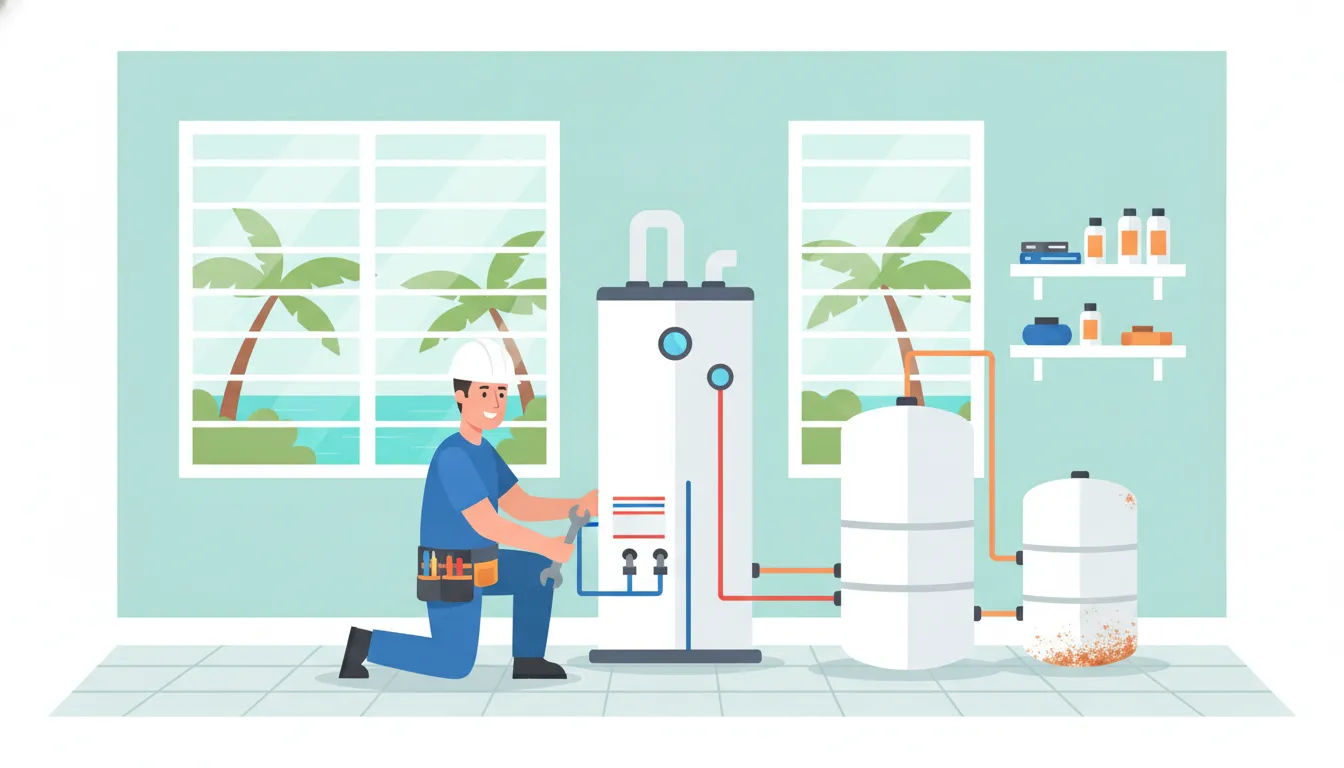
Water Heater Installation Stuart FL Homeowner Guide
Choosing a water heater is easier when you start with your household's actual demand, available space, and long-term energy goals. For many Stuart homeowners, the right installation balances reliable hot water with Florida's local water conditions.
Contact Miranda Plumbing & Air to plan your water heater installation Stuart FL.
Water heater installation Stuart FL homeowners need depends on peak hot water demand, fuel availability, household size, and maintenance needs. Tank models store heated water, while tankless units heat water only when needed. A licensed professional can size the system, assess connections, and confirm installation requirements before work begins.
A thoughtful installation also accounts for local hard water, which can contribute to scale and future service needs. Professional installation supports code compliance and manufacturer warranty requirements, while a careful assessment helps prevent an undersized or poorly matched system.
Understanding how tank and tankless systems differ is the first step toward choosing a practical fit for your Stuart home.
Which Water Heater Is Right for Your Stuart Home?
For a Stuart home, a storage tank may suit predictable demand and available utility space. A tankless system may suit households seeking on-demand heating and a smaller footprint. The best choice depends on peak usage, fuel or electrical capacity, installation space, water conditions, and the maintenance plan you can follow.
The best choice depends on how your household uses hot water, not simply on the unit style.
Start with your busiest periods. Consider showers, laundry, dishwashing, and simultaneous use during mornings or weekends.
A storage-tank heater keeps a reserve of heated water available. This familiar design can suit households with predictable demand and adequate utility space.
A tankless heater warms water without a storage tank. It heats water only when needed, which avoids standby energy losses associated with storage tanks. The U.S. Department of Energy explains how tankless systems work.
Tankless models can also save space. However, the system must match your home's simultaneous flow demands. Typical tankless output ranges from 2 to 5 gallons per minute.
Gas-fired tankless units generally provide higher flow rates than electric tankless models. Your home's fuel availability, electrical service, venting needs, and installation space all affect the decision.
| Consideration | Storage tank | Tankless |
|---|---|---|
| Water supply | Stores a reserve for household use. | Heats water as fixtures call for it. |
| Space | Requires room for the tank. | Uses less storage space. |
| Usage pattern | Fits steady or predictable demand. | Fits households seeking on-demand heating. |
| Sizing focus | Capacity and peak household demand. | Flow rate and temperature rise. |
| Fuel and utilities | Depends on the selected model. | Gas or electric service can change available flow. |
Florida's groundwater temperature also matters. Incoming water temperature affects how much heating the unit must provide before reaching the desired output.
That local condition should be considered alongside your energy goals. A licensed installer can evaluate the home's fuel source, electrical capacity, connections, and available space.
Stuart homeowners should also account for local hard water. Scale can contribute to water heater service needs, especially when maintenance is overlooked.
For a professional evaluation, review Miranda's water heater installation and replacement service. The right recommendation should reflect your home, usage, and long-term priorities.
Contact Miranda Plumbing & Air to plan your water heater installation in Stuart.
How Do You Choose the Right Water Heater Size for Water Heater Installation Stuart FL?
Choose a water heater size by measuring peak hot water demand. For a tank, compare capacity and recovery performance. For tankless, calculate simultaneous flow rate and temperature rise. A licensed installer should confirm the recommendation against your home's fuel, electrical service, available space, and expected usage.
The right size depends on how your household uses hot water, not simply the number of bedrooms. Start with your busiest normal period, then compare storage capacity or delivery rate.
- List simultaneous hot-water activities. Note what may happen during your household's peak period. A morning routine might include two showers, a dishwasher, and a washing machine. Include fixtures that could run together rather than adding every fixture in the home.
- Estimate peak demand for a tank model. A storage heater must supply enough hot water during that busy period. Consider shower duration, fixture flow, and recovery time between uses. A larger tank is not automatically better if household demand, available space, energy source, or installation requirements point elsewhere.
- Calculate flow rate for a tankless model. Add the gallons-per-minute demand of fixtures expected to operate at the same time. Tankless sizing requires both flow rate and temperature rise for the intended application, according to the U.S. Department of Energy sizing guidance. Whole-home demand may require a different calculation than a remote bathroom.
- Determine the required temperature rise. Temperature rise means the desired output temperature minus the incoming water temperature. Incoming water conditions can vary, so a professional assessment should use realistic local and household conditions. A unit's advertised flow rate may decrease when it must raise water temperature further.
- Check the unit's delivery limits. Tankless heaters commonly deliver hot water at about 2 to 5 gallons per minute. Gas-fired tankless models generally produce higher flow rates than electric models. Compare the manufacturer's performance data with your calculated peak demand, fuel availability, electrical capacity, and venting needs.
- Set a safe operating temperature. Do not choose a high temperature simply to increase apparent capacity. Water heated to 140 degrees Fahrenheit increases scalding risk. Ask the installer how temperature controls, mixing valves, and household safety needs should shape the final setting.
- Review the recommendation with an installer. Bring your peak-use list, current unit information, and any symptoms of inadequate hot water. A qualified professional can confirm sizing, connections, code considerations, and manufacturer requirements. Miranda's water heater installation and replacement service can help Stuart homeowners compare practical options.
There is no universal tank size or tankless rating that fits every home. The best choice balances peak demand, recovery or flow performance, safety, space, fuel, and long-term operating goals.
What Should You Check Before Installing a New Unit?
Before water heater installation, check the existing unit's age, visible corrosion, leaks, hot water performance, utility connections, installation space, and access. Record the model details, but do not disturb gas connections or electrical components. A professional inspection can turn those observations into a safe replacement plan.
A planned replacement gives you time to compare options, confirm fit, and avoid making decisions during a plumbing emergency. Start with a simple inspection.
How old is the existing water heater?
Find the manufacturer label on the tank or unit. Record the brand name and serial number before discussing replacement options.
Those details can help determine the unit's age. ENERGY STAR recommends considering replacement when you suspect a water heater is more than 10 years old. ENERGY STAR explains how to check water heater age.
An older unit may still operate normally today. However, its age can support proactive planning, especially if other warning signs appear.
Do you see corrosion, moisture, or leaks?
Look around the tank, water lines, shutoff valve, and nearby floor. Do not remove panels or disturb gas connections during this inspection.
Visible corrosion around the water lines or on the unit indicates deterioration. ENERGY STAR notes that corrosion can weaken the system and contribute to failure.
Moisture or a small puddle also deserves attention. A leak may come from a connection, valve, drain, or tank. The source determines whether repair or replacement makes more sense.
If you notice active leaking, contact a qualified professional promptly. Miranda's water heater repair in Stuart can help assess the condition before you select a new unit.
Has hot water performance changed?
Pay attention to inconsistent hot water, slow recovery, unusual temperature changes, or hot water that runs out sooner than expected.
These symptoms can have several causes. They do not automatically mean the entire water heater needs replacement. A professional can inspect the unit and related connections.
Write down when the problem occurs. Note whether it affects one fixture or the whole home. Include how many people use hot water during busy periods.
What installation details should you gather?
Photograph the unit label, connections, surrounding space, and access path. Record whether the current system uses gas or electricity.
Also note nearby drains, outlets, shutoff points, and obstacles. These details help an installer evaluate placement and explain available options.
Planning before failure gives you more control. You can review the unit's age, condition, household needs, and installation requirements without rushing the decision.
What Happens During Water Heater Installation in Stuart, FL?
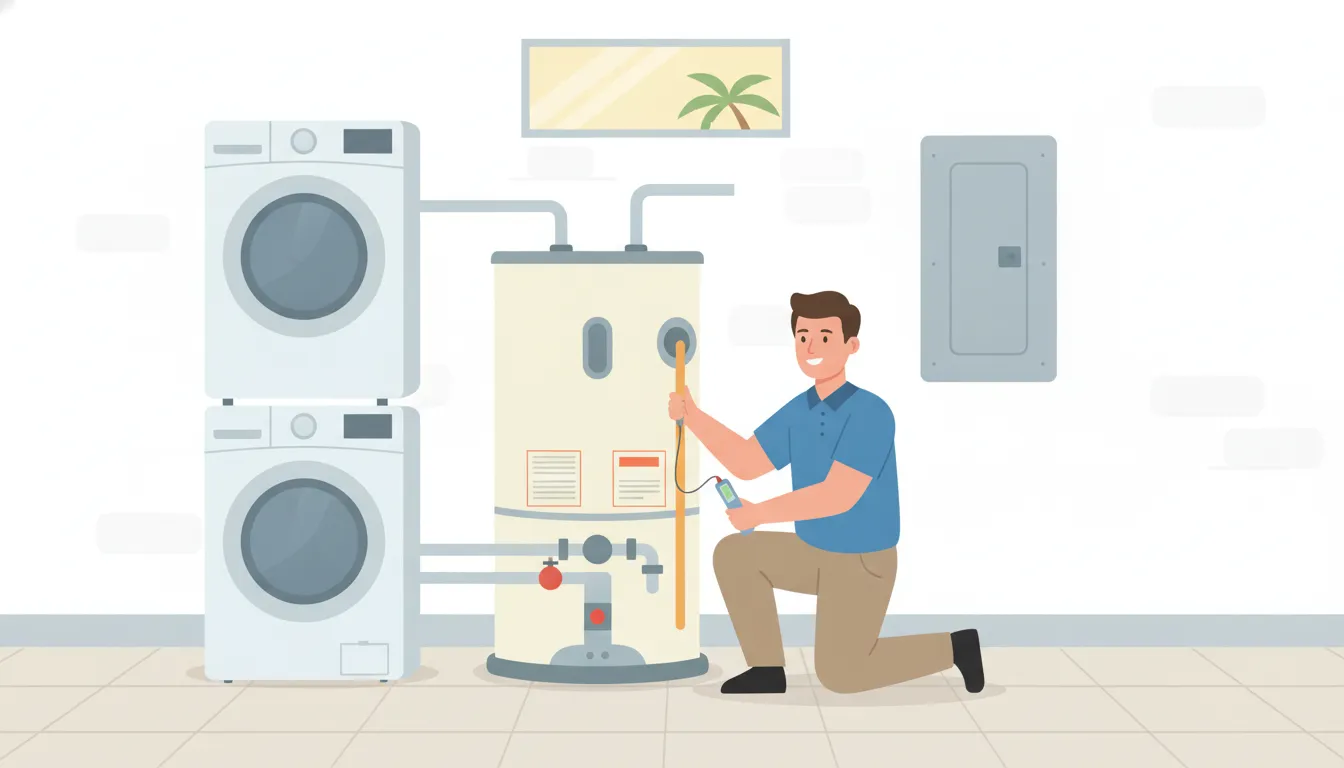
During water heater installation in Stuart, an installer assesses the existing system, confirms the replacement unit, prepares connections, installs safety components, tests operation, and explains maintenance. The exact work depends on the heater type, fuel, venting, electrical service, water lines, drainage, access, and applicable requirements.
A professional visit should feel organized, transparent, and tailored to your home. The installer first confirms how your household uses hot water.
That assessment helps connect the equipment choice with available space, fuel type, water quality, and future maintenance needs. A licensed professional can also identify requirements that are easy to miss during a do-it-yourself replacement.
- Assess the existing system and installation area. The technician reviews the current water heater, its age, condition, connections, venting, drainage, and surrounding clearance. They also consider access, household demand, and whether local hard water may contribute to scale. This information supports a practical replacement plan instead of a one-size-fits-all recommendation.
- Confirm the replacement unit and specifications. The installer discusses the unit type, capacity, fuel source, efficiency goals, and expected usage pattern. For a tankless model, sizing must account for simultaneous fixtures and the temperature rise from incoming water to the desired output. The selected equipment should fit the home's demand and the installation area's physical requirements.
- Shut off utilities and remove the old heater. Before work begins, the technician shuts off the water and the applicable energy source. The old tank is drained and disconnected carefully. This step helps reduce spill risks and protects nearby flooring, walls, and equipment. The installer can then inspect the exposed supply lines and mounting area.
- Install the new unit and make the connections. The replacement is positioned securely, then connected to the water supply and discharge components. Gas, electrical, venting, or other required connections depend on the equipment selected. The installer follows manufacturer instructions and applicable building codes throughout the work. You can review Miranda's water heater installation and replacement service when planning this step.
- Complete safety and compliance checks. The technician checks connections, valves, temperature controls, drainage, support, and other safety components. They also look for leaks and confirm that the installation meets relevant code requirements. Code compliance matters because it supports safe operation and helps protect the manufacturer's warranty requirements.
- Start the system and verify operation. After the connections pass inspection, the installer restores the necessary utilities and starts the unit according to manufacturer directions. They confirm that the system heats properly and that fixtures receive hot water. Temperature settings should balance comfort with scald prevention, especially in homes with children or older adults.
- Review the equipment and clean the work area. The technician explains basic operation, shutoff locations, maintenance considerations, and warranty information. They remove installation debris and leave the area orderly. Ask which maintenance steps are appropriate for your equipment and local water conditions.
The result should be more than a connected appliance. It should be a correctly sized system, safely installed, and clearly explained before the technician leaves.
Why Does Stuart, FL Water Quality Matter for Installation?
Stuart water conditions matter because mineral scale can affect plumbing components and water heaters over time. Water quality does not dictate one universal system choice. It should prompt questions about maintenance, filtration, service access, and the equipment's suitability for the home's usage and water conditions.
Water quality belongs in the installation conversation because local conditions can affect how a water heater operates and how it should be maintained.
Homeowners across the Treasure Coast may encounter hard water conditions. Hard water can contribute to mineral scale inside plumbing components and water heaters. That possibility does not determine one perfect equipment choice, but it should shape the questions asked before installation.
How Can Hard-Water Scale Affect Planning?
Scale can collect on components that heat or move water. Over time, buildup may affect performance and increase the need for service. The impact depends on the equipment, water conditions, usage, and maintenance history.
A professional assessment can account for these factors before recommending a tank or tankless system. The discussion may include the unit's maintenance requirements, access for future service, and whether water treatment deserves consideration.
Tankless equipment deserves particular attention because its internal components can be sensitive to mineral buildup. Installation planning should include clear guidance about maintenance intervals and the conditions that may require service.
These questions are part of a broader review of your home's plumbing system. Miranda provides plumbing services in Stuart and throughout the Treasure Coast, with recommendations adapted to local homes.
What Maintenance Should You Discuss Before Installation?
Ask the installer how water quality affects the selected equipment and which maintenance tasks the manufacturer recommends. Request practical details about service access, flushing, component inspection, and signs of scale buildup.
Miranda's customer guidance recommends annual maintenance to help address scale buildup associated with local hard water. Annual service is a planning recommendation, not a guarantee of a specific operating life.
It is also useful to discuss the home's water use and any changes expected after installation. A growing household, seasonal occupancy, or a remodel can change demand. Those details help the installer consider equipment capacity alongside local water conditions.
Good installation planning connects the equipment choice with the home's water quality, usage pattern, and long-term care. That approach supports informed decisions without assuming every Stuart property has identical water conditions.
How Do You Hire a Licensed Water Heater Installer?
Hire a licensed water heater installer by confirming credentials, insurance, sizing methods, permit responsibilities, equipment specifications, warranty details, and the complete written scope. Ask how the recommendation fits your household demand, utility service, installation space, water conditions, and future maintenance needs.
Choosing an installer is about more than finding the first available appointment. A qualified professional should explain the options, inspect the installation area, and document the work clearly.
For homeowners planning water heater installation and replacement service, use this checklist before approving the work.
Confirm the license and insurance
Ask for the contractor's license information and confirm that it matches the company performing the installation. Miranda Plumbing & Air Conditioning is licensed under CFC1427227 and insured.
Insurance can help clarify how the contractor handles accidental property damage or worker injuries. Ask what coverage applies to the work and request documentation when appropriate.
Ask how the unit will be sized
A professional should ask about household size, bathrooms, simultaneous showers, appliances, and peak hot-water demand. The right choice depends on how your household uses hot water.
For a tankless system, ask how the installer calculated flow rate and temperature rise. The calculation should reflect the fixtures that may operate at the same time.
Ask whether the recommended fuel type, electrical service, venting, and available space match your home. A recommendation should account for the existing setup, not just the equipment label.
Discuss permits and applicable code requirements
Permit and inspection requirements can depend on the property, equipment, and local authority. Ask the installer which requirements may apply and who will coordinate any needed steps.
Also ask how the installation will address shutoff access, discharge piping, connections, ventilation, and other safety details. A careful explanation is more useful than a vague promise of compliance.
Get the scope and warranty in writing
A written scope should identify the equipment, capacity, fuel type, accessories, removal work, disposal, labor, and cleanup. It should also identify anything excluded from the work.
Ask which warranties cover the equipment and labor. Confirm who registers the equipment, what maintenance the manufacturer expects, and how warranty concerns are handled.
Plan for maintenance in Stuart
Local hard water can contribute to scale and increase water heater service needs. Ask whether the maintenance plan includes inspection, flushing, or other care suited to your system.
Ask how often the system should be reviewed and which signs deserve prompt attention. A maintenance plan can help you manage performance without waiting for a complete failure.
For local service context, review Miranda's plumbing services in Stuart, FL. The right installer welcomes questions and gives you enough information to make a careful decision.
Frequently Asked Questions
How much does water heater installation cost in Stuart, FL?
There is no single installation price because costs depend on the heater type, capacity, fuel, venting, electrical work, access, removal, and required code updates. Ask for a written scope that separates equipment, labor, permits, disposal, and any recommended upgrades. A professional assessment can identify the right options without guessing from a generic online price.
Is a tankless water heater worth it for a Stuart, FL home?
Tankless can be worthwhile when you want on-demand heating, less storage space, or reduced standby losses. The U.S. Department of Energy explains that tankless systems heat water only when needed and do not have storage-tank standby losses. Your installer should confirm demand, fuel capacity, installation requirements, and maintenance needs before recommending one.
Do I need a permit for water heater installation in Stuart, FL?
Permit requirements can depend on the project and the local jurisdiction. Ask your licensed installer to verify current requirements with the applicable Stuart or Martin County building office before work begins. Professional installation also supports code compliance and manufacturer warranty requirements.
How often should I replace my water heater?
Consider replacement when the unit approaches or exceeds 10 years, especially if it shows corrosion, leaks, or declining performance. ENERGY STAR recommends considering replacement when you suspect a water heater is more than 10 years old. Check the brand and serial number on the tank label to help confirm its age.
What size water heater do I need for my house?
Choose size from your household's peak hot-water demand, not simply the number of bedrooms. Tankless sizing requires flow rate and temperature rise, which is the desired output temperature minus incoming water temperature. A professional can match capacity to simultaneous showers, appliances, household routines, and available fuel.
Ready to Plan Your Water Heater Installation?
Choosing a water heater involves more than selecting a tank size. A home assessment can clarify the right system, installation requirements, and maintenance needs.
Miranda Plumbing & Air serves Stuart and the Treasure Coast with licensed, insured plumbing services.
Need plumbing or HVAC service on the Treasure Coast?
Contact Miranda Plumbing & Air