
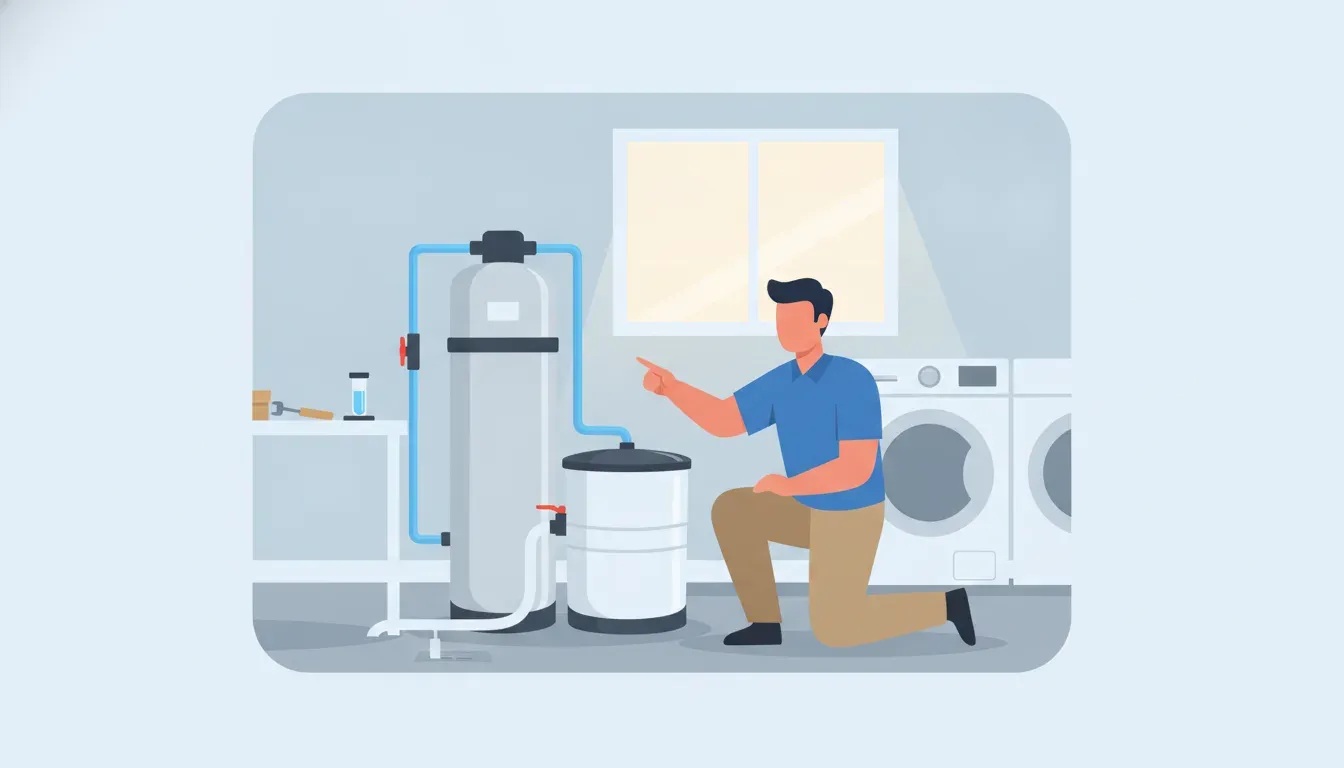
Water Softener Installation Cost in Florida: What to Know
Water softener installation cost depends on more than the equipment itself. Your water hardness, household demand, plumbing layout, and treatment goals all affect the estimate.
Florida homeowners may also need to consider drainage, electrical access, water testing, and local plumbing conditions. A good estimate explains each part before work begins.
Ask Miranda about your water softener installation plan.
What Does Water Softener Installation Include?
A complete installation usually begins with a water-quality review. The review helps identify hardness and separates it from taste, odor, sediment, or other concerns. The work may include selecting equipment, preparing the installation area, connecting the treatment system, and testing the finished setup. The exact steps depend on the home and the selected system. A typical whole-home installation may involve these components:
- Water testing: Testing identifies hardness and helps clarify the treatment goal.
- System sizing: Capacity should match household water use and incoming water conditions.
- Plumbing connections: The technician connects the unit to the home's main water line.
- Bypass controls: A bypass allows the system to be isolated during service or maintenance.
- Drain routing: Regeneration discharge needs a suitable connection and safe drainage path.
- Startup testing: The finished system should be checked for leaks, flow, and correct operation.
Some homes need only minor plumbing changes. Others need additional work to create proper access, drainage, or fixture coverage.
Which Factors Shape Water Softener Installation Cost?
The most useful estimate separates equipment, labor, site preparation, and future ownership needs. This makes it easier to compare proposals that appear different at first.
How does water hardness affect the estimate?
Hardness affects the treatment capacity the system must provide. A system should be selected from test results rather than from a guess based on white residue alone.
The U.S. Environmental Protection Agency explains that softener sizing depends on water hardness and household water use. Its WaterSense softener guide also explains why efficient controls matter.
How does household demand affect system size?
A home with more residents, bathrooms, or frequent water use may need more treatment capacity. The estimate should account for typical demand instead of using a one-size-fits-all recommendation. Ask how the installer calculated capacity. Ask whether the recommendation considers peak use, not only the average number of occupants.
How do plumbing changes affect installation?
The installation area may need new shutoff valves, a bypass, rerouted piping, or improved access. The condition and location of the main water line can change the labor involved.
Older piping, tight utility rooms, and unusual layouts can require more preparation. These conditions do not automatically make a project unsuitable, but they should appear in the estimate.
Why do drainage and electrical access matter?
Many systems need a drain connection for regeneration. Some controls also need a nearby electrical outlet. If the correct connections are not nearby, the installer may need to route piping or adjust the equipment location. Safe drainage and service access should take priority over hiding the system in a cramped space.
How Do Salt-Based and Salt-Free Systems Affect the Estimate?
Treatment type affects both the installation work and the ownership plan. These systems should not be treated as identical products.
| System approach | What it does | Estimate questions | Ongoing considerations |
|---|---|---|---|
| Salt-based ion exchange | Removes calcium and magnesium from treated water. | What capacity, brine setup, drain connection, and bypass are needed? | Salt supply, regeneration, maintenance, and discharge planning. |
| Salt-free conditioner | May reduce scale without removing hardness minerals. | Does the home need scale control or true hardness reduction? | Media replacement, service access, and realistic performance expectations. |
| Whole-home filtration | Targets selected water-quality concerns beyond hardness. | Which tested concern should the filter media address? | Filter changes, flow requirements, and treatment limits. |
The EPA notes that water softeners do not address every water-quality concern. Its home water-treatment guide recommends identifying the problem before choosing equipment.
Miranda's water softener systems service can help homeowners compare treatment goals, sizing, and installation needs. If the concern involves taste, odor, or another issue, review the water filtration installation service as well.
Contact Miranda for a practical water-treatment estimate.
Why Does Florida Location Matter?
Florida homes can experience different water conditions based on the supply source, local geology, plumbing materials, and neighborhood infrastructure. That variation is one reason a copied equipment recommendation can miss the mark. A Florida home may need a different capacity or installation layout than a similar home elsewhere.
UF/IFAS explains that water hardness and other water-quality characteristics can vary by source. Its Florida home water-quality guidance supports testing before selecting treatment. Local conditions can also affect how the system connects to the home's plumbing. A professional assessment should review the water line, available space, drain route, and access for future service.
For broader context, Miranda's Florida hard-water plumbing guide explains how mineral-rich water can affect fixtures and household plumbing. A softener may address hardness, but it is not a universal solution for every water concern.
What Should a Professional Estimate Spell Out?
An estimate should make the recommendation understandable. You should not need to guess what is included or which conditions could change the scope. Ask for clear information about these items:
- Water test results: Ask which measurements support the treatment recommendation.
- Equipment type: Confirm whether the system removes hardness or mainly targets scale.
- Capacity and sizing: Ask how household demand and water conditions shaped the selection.
- Installation scope: Confirm included valves, bypass plumbing, connections, and startup testing.
- Drain and power needs: Ask whether existing connections are suitable or need changes.
- Maintenance plan: Clarify salt, media, filter, cleaning, and service requirements.
- Warranty terms: Review what the equipment and installation coverage include.
- Future service access: Confirm that the system can be reached for inspection and repair.
Compare estimates by scope rather than by the lowest total alone. A lower estimate may exclude site preparation, testing, drainage work, or future service needs.
Miranda's plumbing services team can review related plumbing conditions before you choose a system. The goal is a treatment plan that fits the home, not simply a tank placed near a water line.
How Can You Compare Water Softener Installation Estimates?
Start by asking each provider to describe the same project scope. A useful comparison separates the treatment equipment from the work required to install and test it.
Ask whether the estimate includes the initial water test, equipment delivery, removal of old equipment, new shutoff valves, bypass plumbing, drain connections, and final testing.
Also ask which work remains outside the estimate. Some homes may need changes near the main water line, a new outlet, improved drainage, or access work in a crowded utility area. Permits or inspections may apply to some plumbing work. Ask the provider whether local requirements affect the scope and who handles any required documentation.
Warranty language deserves a close review. Confirm whether the equipment warranty and installation workmanship coverage come from the same party. Ask what maintenance is required to keep the equipment operating as intended.
Service access matters after installation. A system that is difficult to reach can make routine checks slower and more disruptive. The estimate should show where the equipment will sit and how a technician can service it.
Finally, compare the recommendation with your actual goal. A lower installation estimate may reflect a conditioner, smaller capacity, or limited fixture coverage. Those differences can change the result you receive.
What Ongoing Costs Should You Plan For?
Installation is only one part of water softener ownership. The system may also require supplies, water use, routine checks, and occasional service. Salt-based systems require a continuing supply of salt or an approved potassium product. The amount depends on water hardness, household demand, system capacity, and control settings.
Regeneration also uses water. The EPA explains that efficient, demand-initiated controls can reduce unnecessary cycles. Ask how the proposed system measures use and decides when to regenerate.
Salt-free conditioners can have different media replacement or service needs. They also produce a different treatment result. Confirm the expected performance before comparing ownership costs.
Filters have their own replacement schedule. If your home needs filtration as well as softening, include filter changes and service access in the long-term plan.
Routine maintenance can identify leaks, blocked drains, worn valves, or incorrect settings. Addressing those problems early may prevent a small issue from becoming a larger plumbing repair.
Miranda's water softener service page is a useful starting point for discussing system fit, installation, and maintenance needs. Request an evaluation when the equipment no longer produces the expected result.
Can You Estimate the Total Before a Site Visit?
You can identify the main cost drivers before a visit, but a reliable total usually requires home-specific information. Useful details include the number of residents, bathrooms, water source, visible scale, available installation space, and any known plumbing changes.
Photos can help a technician understand the utility-room layout. They cannot replace testing or an inspection of the water line, drain path, valves, and service access.
Be cautious when a recommendation gives one fixed number without asking about water hardness or household demand. The equipment may not match the home's actual needs.
How Can You Prepare for a Water Softener Installation Estimate?
Before a site visit, collect information that can make an estimate more useful. Note the water source, household size, number of bathrooms, and any recurring scale.
Photos of the utility area can show available space, nearby plumbing, drain access, and outlet placement. Include a photo of the main water line if it is easy to identify.
Ask whether the estimate includes water testing and system sizing. A proposal should explain what each item addresses, not only list a model number. Ask about installation timing, service access, bypass operation, and the expected maintenance schedule. These details help compare proposals with different equipment and labor scopes.
If a proposal excludes related plumbing work, request that limitation in writing. Clear exclusions reduce surprises when the technician finds an access or drainage issue.
Also ask how the system will be checked after startup. Leak testing, flow checks, and control verification help confirm that the installation works as intended.
Keep the written estimate with test results and product documentation. Those records can help with future service, replacement parts, and maintenance decisions. Florida homes vary widely in age, layout, water source, and available utility space. A local evaluation can identify conditions that a generic online estimate cannot show.
A careful comparison focuses on the complete scope, expected result, and ongoing responsibilities. The lowest equipment price may not represent the lowest total ownership burden.
Ask how the installer will handle old equipment if a replacement is involved. Removal, disposal, and a temporary water shutoff can affect the work plan.
Clarify who supplies salt or replacement media after installation. Also ask whether routine service is performed by the installing company or another provider. Request contact details for follow-up questions and warranty support. A clear service path matters if the system needs adjustment after the household begins using it.
Finally, compare the expected result with your original goal. A softener, conditioner, and filter solve different problems, so the estimate should name the intended improvement.
When Should You Schedule a Water Softener Evaluation?
Consider an evaluation when scale returns quickly, soap leaves a persistent film, or water spots remain after cleaning. An evaluation is also useful before a remodel, appliance replacement, or move into a home with unfamiliar water conditions.
Request help if an existing system leaks, regenerates unusually often, stops reducing scale, or leaves the water feeling different. If hard water may be affecting a water heater, Miranda's water heater installation and replacement service can help review the related equipment. A water softener may protect plumbing, but it does not repair an already damaged appliance.
Get a clear water softener installation estimate for your Florida home.
Frequently Asked Questions About Water Softener Installation Cost
What is included in a water softener installation estimate?
An estimate may include water testing, system sizing, equipment, plumbing connections, drainage, startup testing, and future maintenance guidance. Confirm each item in writing.
Does water hardness change the installation cost?
Yes. Hardness helps determine the treatment capacity and control settings. Testing helps prevent an undersized or unnecessarily large system.
Is a salt-free conditioner the same as a water softener?
No. Many salt-free conditioners target scale without removing calcium and magnesium. Ask what result the equipment is designed to provide.
Do Florida homes need a water softener?
Not every Florida home needs one. Water testing, visible scale, household goals, and plumbing conditions should guide the decision.
Should I compare equipment prices without a site visit?
Use online prices only as general research. A site-specific estimate should account for water conditions, plumbing access, drainage, sizing, and installation scope.
Can a water softener fix hard-water damage?
A softener can reduce future hardness exposure when properly selected and maintained. It cannot repair damaged plumbing, fixtures, or appliances by itself.
Talk with Miranda about the right water treatment approach for your home.
Need plumbing or HVAC service on the Treasure Coast?
Contact Miranda Plumbing & Air