
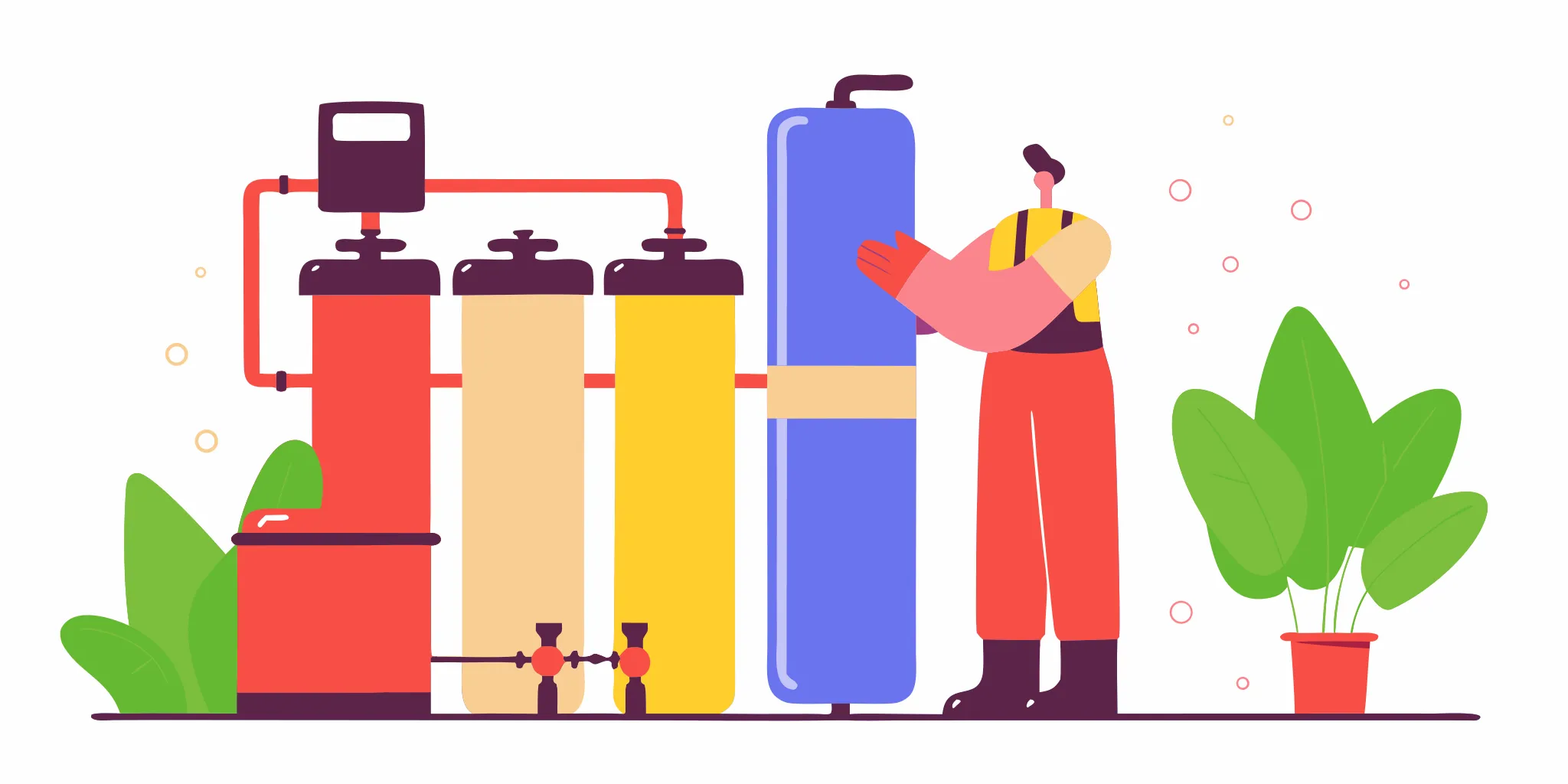
Hard water is a routine reality for many Florida homes, especially where groundwater supplies pick up calcium and magnesium as they move through rock and soil. Over time, those minerals can leave spots on fixtures, restrict flow, reduce water heater efficiency, and make soap less effective. The result is usually gradual wear, not an overnight plumbing emergency, which makes it easy to overlook.
Hard water Florida plumbing problems are best addressed by matching a water softener, filtration system, or salt-free conditioner to your home's water chemistry. Softening can reduce calcium and magnesium scale, while filtration can improve overall water quality and help protect fixtures and appliances.
A water quality test is the practical first step before choosing equipment. Understanding where Florida's hardness comes from makes it easier to select a solution that fits your home, so let's begin with the local geology behind the issue.
What Makes Florida's Water So Hard?
Florida's hard water begins underground. Much of the state's groundwater moves through limestone formations before it reaches a private well or municipal supply. As that water travels through rock and soil, it dissolves small amounts of naturally occurring minerals, especially calcium and magnesium. Those minerals are useful for understanding why a home may develop white deposits on faucets, showerheads, and other plumbing components.
The Environmental Protection Agency generally classifies water with hardness above 120 milligrams per liter, or 7 grains per gallon, as hard. The exact level can vary by location and water source, so a test is more reliable than judging water quality by appearance alone. On the Treasure Coast, where many homes depend on groundwater or receive water influenced by groundwater conditions, naturally occurring hardness is a common plumbing consideration.
What the limestone aquifer has to do with hardness
Limestone is largely made of calcium carbonate. When groundwater passes through this porous rock, it can pick up calcium and related minerals. Magnesium may enter the water through the same natural process. By the time the water reaches a home, the mineral content may be high enough to react with soap. Leave residue, or form scale as water evaporates or is heated.
This is a water-chemistry issue, not a sign that a home is unsafe. The EPA notes that hard water is not a health concern, but its mineral content can contribute to scale on plumbing fixtures and appliances. In practical terms, hard water Florida plumbing concerns are usually about maintenance, performance, and the useful life of equipment rather than an immediate health risk.
Why hardness levels matter in a Florida home
Calcium and magnesium remain dissolved while water is cool, but heating or evaporation can leave those minerals behind as scale. Over time, that buildup may affect flow through plumbing and make fixtures harder to clean. Testing the water identifies the actual hardness level and helps determine whether a home needs treatment, rather than assuming every property requires the same solution.
For homeowners in Port St. Lucie, Stuart, Vero Beach, Fort Pierce, and nearby communities, understanding the local geology is the first step. The right response depends on the water source, measured hardness, and the condition of the home's plumbing.
Source: U.S. Environmental Protection Agency water softener guide.
How Hard Water Damages Pipes and Fixtures
Hard water affects more than the appearance of a faucet. As calcium and magnesium stay in the water supply, they can settle on plumbing surfaces and gradually form a mineral layer called scale. The result is a combination of reduced flow, stubborn fixture deposits, and greater maintenance needs throughout your home's plumbing systems.
Scale restricts flow inside the pipes
Scale can build up along the inside walls of supply pipes. That buildup reduces the pipe's effective internal diameter and increases resistance to flow, which may contribute to lower water pressure at fixtures. You might notice that a shower takes longer to rinse, a faucet stream feels weaker, or water pressure drops when multiple fixtures run at the same time. The U.S. Environmental Protection Agency identifies reduced flow and lower pressure as potential effects of scale inside plumbing.
Deposits can also collect in valves and other moving components. A valve that becomes stiff, sticky, or difficult to operate may need cleaning or replacement sooner than expected. These problems do not always appear suddenly. Gradual changes in pressure and fixture performance are useful reasons to have the system inspected before a small restriction becomes a larger plumbing concern.
Fixtures show the early warning signs
Showerheads, faucets, and valves are exposed to water every day, so they often reveal hard-water effects first. Mineral deposits can clog showerhead openings and faucet outlets, creating an uneven spray pattern or a stream that splashes in different directions. A faucet aerator with a chalky ring or reduced flow is another visible clue. Removing the aerator and soaking it in vinegar can loosen deposits, although recurring buildup points to an underlying water-quality issue rather than a one-time cleaning need.
Hard water can also damage metal plumbing components through a combination of mineral deposits and other water-chemistry factors, including pH and alkalinity. Those conditions may accelerate corrosion over time. Because Florida homes can have different water sources, plumbing materials, and usage patterns, periodic inspections are a practical part of maintaining a Treasure Coast home. A professional can check pressure, valves, visible corrosion, and scale before recommending whether treatment or targeted repairs make sense.
The EPA notes that hard water is not generally a health hazard, but its effect on plumbing can be costly when left unaddressed. Testing the water and evaluating the condition of the fixtures together gives homeowners a clearer basis for deciding on maintenance or a whole-home treatment option.
The Hidden Cost of Hard Water on Water Heaters and Appliances
Hard water can quietly raise the cost of operating and maintaining the appliances your household uses every day. As heated water passes through a tank or appliance, calcium and magnesium can form scale on internal components. That buildup affects performance first, then can contribute to earlier repairs or replacement.
Why scale makes water heaters work harder
Scale reduces heat conductivity, so the heat source cannot transfer energy to the water as efficiently. In a tank water heater, the mineral layer acts like insulation around the heating surface. The burner or heating element must work harder and run longer to produce the same hot-water supply. That can increase energy use while also making recovery between showers slower. The EPA identifies reduced heat conductivity and lower water-heater efficiency as two effects of scale buildup. Read the EPA's water softener guidance for more detail.
Scale can also reduce the useful life of the equipment. Water heaters with significant buildup may need more frequent cleaning, service, or replacement. If your tank is already aging or producing inconsistent hot water, a professional evaluation can help determine whether repair, flushing, or water heater replacement makes the most practical sense.
How hard water affects washers and dishwashers
The same mineral deposits reach other appliances connected to your home's plumbing. Washing machine heating elements can accumulate scale, while hoses and related components may deteriorate over time. Hard water also interferes with cleaning performance, allowing residue to remain on clothing and making fabrics feel stiff or look discolored after repeated cycles.
Dishwashers can leave visible spots or a cloudy film on glasses and dishes even after a complete cycle. Those marks are often a sign that minerals remain on surfaces as water dries. More detergent does not necessarily solve the underlying water chemistry, and excessive detergent can leave its own residue.
In hard water Florida plumbing environments, protecting appliances starts with measuring the water rather than guessing at the cause. A water quality test can show whether mineral levels are substantial enough to justify treatment, helping you choose a solution that supports efficient operation without adding unnecessary equipment.
How Hard Water Florida Plumbing Shows Up in Your Home
Hard water often announces itself through small changes in everyday routines before it creates a larger plumbing concern. In Treasure Coast homes, watch for several signs appearing together rather than relying on one symptom alone.
- Spots on dishes and glassware: A dishwasher cycle may leave a cloudy film or white spots on glasses and plates. Hard water minerals can remain as residue after washing, even when the appliance is working normally. EPA guidance explains how hard water creates scale and residue on fixtures and appliances.
- Dry skin and hair: If your skin feels tight or your hair feels unusually dry after showering, mineral-rich water may be contributing. The EPA identifies hard water as a possible cause of dryness in skin and hair, although other factors can produce similar effects.
- Soap that will not lather: Hard water reacts with soap and forms a sticky residue, reducing its ability to produce a good lather. You may use more soap while still feeling a film on your skin or seeing buildup around the tub and sink.
- Stiff or discolored laundry: Minerals can interfere with detergent performance and leave residue on clothing. Fabrics may feel rough after washing, and light-colored items can gradually look dull or gray.
- Uneven shower spray: Mineral scale can collect in showerhead openings, creating weak, irregular spray patterns. A fixture that once distributed water evenly may develop several restricted or misdirected streams.
- White scale around faucets: Crusty deposits on faucet bodies, handles, or aerators are among the easiest signs to spot. When an aerator is restricting flow, remove it if practical and soak it in household vinegar, then rinse and reinstall it. Replace it or call a plumber if the deposit will not release or the screen is damaged.
One cleaned aerator does not determine your home's water quality. If these signs keep returning across multiple fixtures, a water test can identify the hardness level and help distinguish hard water Florida plumbing issues from isolated fixture problems.
Water Softeners and Filtration: Solutions That Work
The right treatment depends on your water chemistry, plumbing goals, and household preferences. A free in-home water test can measure hardness and mineral content before Miranda recommends a system, rather than treating every Florida home the same way.
How a traditional water softener works
A cation exchange softener reduces calcium and magnesium by exchanging those ions for sodium or potassium ions. A standard unit has two primary tanks: a tall resin tank and a shorter brine tank. As water passes through the resin, hardness minerals are captured. During regeneration, the system flushes away the collected minerals and recharges the resin so it can continue treating incoming water. The EPA explains the ion-exchange and regeneration process in more detail.
Water softening is not automatically necessary in every home. It is generally considered when hardness is substantial, and softeners are often recommended when testing shows more than 180 mg/L, or 10 grains per gallon. Proper sizing, programming, and maintenance help the system work effectively while minimizing water waste.
For Treasure Coast homeowners comparing equipment, Miranda can evaluate whether a water softener system fits the home's water use and plumbing layout.
Salt-based softeners versus salt-free conditioners
Salt-based equipment removes hardness minerals through ion exchange. Salt-free conditioners take a different approach: they help prevent scale from adhering to pipes and fixtures, but they generally do not remove calcium or magnesium. That distinction matters if your goal is mineral reduction, not only scale control.
| Feature | Salt-Based Softener | Salt-Free Conditioner |
|---|---|---|
| Removes calcium and magnesium | Yes (ion exchange) | No (does not remove minerals) |
| Prevents scale buildup | Yes | Yes (prevents adhesion) |
| Requires salt refills | Yes (periodic) | No |
| Best for | High hardness (over 10 gpg) | Moderate hardness or maintenance |
A professional water test makes the comparison more useful. It can help identify whether a conventional softener, a salt-free conditioner, or another treatment approach is appropriate for your home.
Why add filtration?
Filtration can complement softening when taste and odor are also concerns. Some filtration systems remove chlorine alongside softening, providing great-tasting water throughout the home. Miranda's water filtration solutions can be evaluated as part of a whole-home treatment plan instead of as an isolated appliance.
Miranda Plumbing & Air offers free in-home water testing and GreenSky financing for qualifying major installations. Work is performed by a licensed, insured team with plumbing license CFC1427227 and HVAC license CAC1815486, giving homeowners one experienced local provider for connected home-service needs.
Frequently Asked Questions
Is Florida water hard or soft?
Much of Florida has hard water because groundwater picks up calcium and magnesium as it moves through rock and soil. Water above 120 mg/L, or 7 grains per gallon, is generally considered hard according to the EPA. Hardness can vary by utility and neighborhood, so a water test is the most reliable way to evaluate your home.
How does hard water damage pipes and fixtures?
Calcium and magnesium can form scale inside pipes, faucets, showerheads, valves, and water heaters. That buildup reduces the space available for water to flow, which can contribute to lower pressure and uneven shower spray. Hard water can also contribute to corrosion when combined with factors such as pH and alkalinity, as described by the EPA.
What is the best water softener for a Florida home?
The right system depends on your measured hardness, household water use, plumbing layout, and water-quality goals. A cation-exchange softener removes calcium and magnesium by exchanging them for sodium or potassium ions. Filtration may be added when you also want to address chlorine or other water-quality concerns. Proper sizing and maintenance help the system work effectively while minimizing water waste.
How can I tell if my home has hard water?
Common clues include white scale on faucet aerators or showerheads, spots on dishes, soap that does not lather well, and stiff or discolored laundry. These signs can point toward hard water, but testing confirms the hardness level and helps determine whether softening is appropriate. The EPA recommends considering softeners for substantial hardness or when advised by a utility or appliance manufacturer.
Does hard water affect skin and hair?
It can leave a sticky residue because hard water reacts with soap and reduces lather. Some homeowners also notice dry-feeling skin or hair after bathing. A properly selected treatment system can reduce the minerals responsible for these effects, while a water-quality test helps identify the most suitable approach for your home.
Ready to Improve Your Home's Water Quality?
A water quality assessment can help identify whether a softener, filtration system, or combination best fits your Florida home and plumbing needs. Miranda Plumbing & Air can help you compare practical options for your household. Book an Appointment for water softener or filtration installation and take the next step toward cleaner, more manageable water.