

Water Heater Maintenance Florida: Essential Guide for Homeowners
Mineral deposits can build inside a water heater long before a homeowner notices a change at the tap. On Florida's Treasure Coast, hard water makes that buildup more likely, while coastal salt air can contribute to exterior corrosion. A practical maintenance routine helps tank and tankless systems operate efficiently and can extend the useful life of the equipment.
Book professional water heater maintenance on the Treasure Coast, Miranda Plumbing & Air serves Port St. Lucie, Vero Beach, Stuart, Fort Pierce, Jupiter, Palm Beach Gardens, and surrounding communities with licensed, insured service.
For water heater maintenance Florida homeowners should schedule an annual tank flush, inspect the anode rod, watch for sediment signs such as popping or rumbling sounds. And have tankless units professionally descaled every one to two years based on local water hardness. These steps support reliable hot water and help control efficiency losses.
Start by looking at the water quality clues already visible around your home. Then match your maintenance plan to the system you have and the conditions in your part of the Treasure Coast.
Why Does Florida's Hard Water Make Water Heater Maintenance Essential?
Across the Treasure Coast, water quality can affect how quickly a water heater accumulates mineral scale. In Port St. Lucie, Vero Beach, Stuart, Fort Pierce, Jupiter, Palm Beach Gardens, and nearby communities, hard water is a routine consideration for homeowners. Port St. Lucie tap water has been reported to contain eight contaminants above EPA guidelines, making regular attention to household water systems especially important.
Mineral scale reduces performance over time
Hard water contains dissolved minerals that can settle inside a tank water heater or collect on the components of a tankless unit. As deposits build, the heater may need to work harder to transfer heat, which can reduce efficiency and shorten equipment life. The EPA notes that regular maintenance helps fixtures and systems perform well, conserve water, and control utility costs. EPA water maintenance guidance supports a proactive approach rather than waiting for a failure.
Florida's Treasure Coast conditions can accelerate this process. A layer of scale at the bottom of a tank can interfere with heating, while deposits can restrict flow through tankless heat exchangers. Flushing, inspecting, and descaling at appropriate intervals helps keep those deposits from becoming a larger repair issue. Learn more about water heater replacement options if your current unit is nearing the end of its service life.
Look for clues at your faucets and showerheads
Your fixtures can provide an early warning. White, chalky residue on a showerhead, faucet aerator, or glass shower door indicates mineral deposits in the water supply. That same hard-water buildup may also be accumulating inside the water heater. Cleaning the fixture addresses the visible symptom, but it does not remove scale already inside the appliance. A water filtration system can help reduce mineral content entering your water heater.
Coastal air adds another maintenance concern
Hard water is not the only Florida-specific factor. Homes near the coast can also experience salt-air corrosion on the exterior of a water heater, connections, and nearby plumbing components. During a maintenance visit, the system should be checked for rust, degraded fittings, leaks, and other signs that humidity and salt exposure are taking a toll.
Miranda Plumbing & Air has served Treasure Coast homeowners for 44 years, since 1981. Our local experience includes the water, humidity, and coastal conditions affecting homes from Port St. Lucie to West Palm Beach. A scheduled inspection can identify scale and corrosion early, before they affect hot-water reliability.
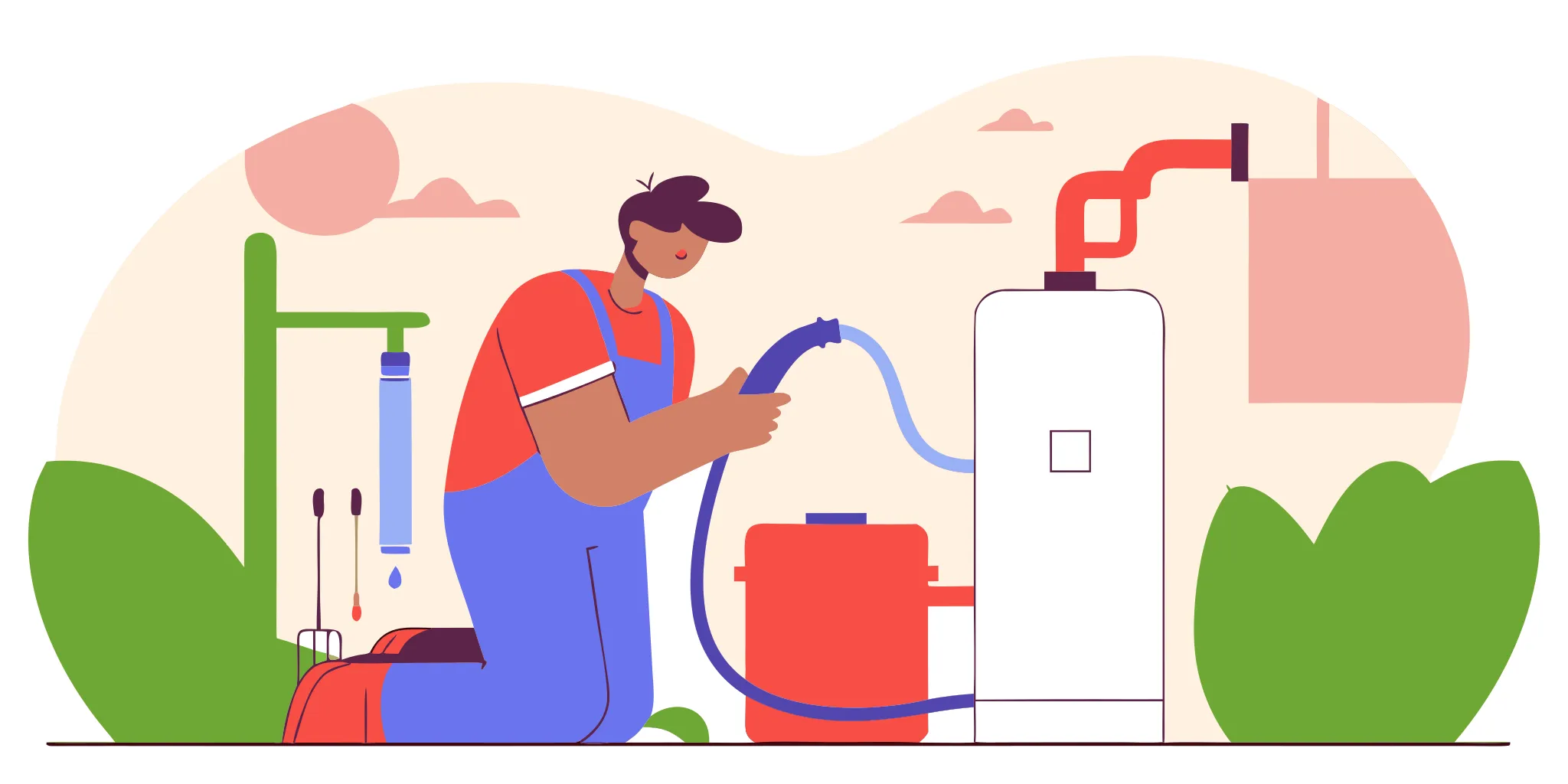
How Do You Flush a Water Heater? A Step-by-Step Guide
Annual flushing is a critical part of water heater maintenance Florida homeowners should not overlook, particularly in areas with mineral-rich water. Sediment settles at the bottom of a tank, displacing space that would otherwise hold hot water and forcing the system to work harder. The process below follows the basic residential procedure outlined by the U.S. Environmental Protection Agency.
Safety first: A water heater combines very hot water with electricity or gas. If you are not comfortable identifying the correct shutoffs, working around hot water, or checking for leaks, schedule professional service instead. Never drain a gas-fired unit while the burner is operating, and never work on an electric unit while power is still connected.
- Turn off the energy source. For an electric water heater, switch off the dedicated circuit breaker. For a gas model, turn the thermostat or gas control to the appropriate off or pilot setting according to the manufacturer's instructions. Allow the water to cool before opening the drain.
- Shut off the cold-water supply. Close the cold-water valve above the tank. This stops new water from entering while the existing water and sediment drain out.
- Connect a garden hose. Attach one end securely to the tank's drain valve. Place the other end at a safe discharge point, such as outdoors or into a suitable drain. The water may be hot, so keep people and pets away from the outlet.
- Open the drain valve. Open a nearby hot-water faucet to help air enter the tank, then open the drain valve. Let the tank drain completely. Do not force a stuck valve, and stop if the hose connection leaks.
- Rinse the tank. Once the flow stops, briefly open the cold-water supply to stir and push remaining sediment through the hose. Close the supply and repeat until the water runs clear. Persistent discoloration or heavy debris is a reason to call a plumber.
- Refill before restoring power or gas. Close the drain valve, remove the hose, and open the cold-water supply. Leave a hot-water faucet open until water flows steadily without air. For an electric heater, the tank must be completely full before the breaker is turned back on. Restore gas operation only after the tank has refilled and follow the manufacturer's lighting instructions.
- Check your work. Inspect the drain valve and hose connection for slow leaks. Listen during the next heating cycle. Popping or rumbling can indicate water trapped beneath sediment and boiling, which may damage the tank or heating element. If sediment has reduced your hot-water supply or the noises continue, arrange an inspection.
Florida's hard water can make sediment accumulate faster, so an annual flush is a practical baseline. A professional may recommend a more frequent schedule based on the tank's condition and local water quality. For homes with especially hard water, a local plumbing professional can evaluate whether more frequent service is needed.
How Often Should You Inspect the Anode Rod in Florida?
Inside a tank-style water heater, the anode rod is designed to corrode before the steel tank does. It attracts corrosive elements in the water, sacrificing itself to help protect the tank's interior lining. Once the rod is depleted, those same elements can begin attacking the tank, allowing rust and leaks to develop. That makes the rod a small component with an important role in long-term water heater care Florida homeowners should not overlook.
Why Florida homes need annual checks
Hard water is common across the Treasure Coast, and its mineral content can cause an anode rod to deplete faster than it would in a softer-water area. Mineral-rich water can also increase the strain on other water heater components. Miranda's maintenance guidance recommends inspecting the anode rod annually because a fully corroded rod can no longer protect the tank from corrosion and premature failure (Miranda Home Services).
An annual inspection does not always mean replacing the rod. A professional can evaluate its remaining material, check the tank opening and surrounding components, and recommend replacement based on the rod's condition and your home's water quality. Scheduling the inspection during regular water heater maintenance helps make the timing easier to remember, particularly for seasonal homeowners who spend part of the year away.
What homeowners can look for
Inspecting an anode rod requires shutting down the water heater, relieving pressure, and removing the rod from the tank. If you are comfortable with those steps and have the correct tools. Examine the rod for heavy pitting, exposed core wire, or sections where the protective metal has largely disappeared. As a practical rule, replacement is appropriate when corrosion has consumed more than half of the rod's original material. Do not force a seized rod or continue if water, gas, or electrical connections are difficult to isolate.
Because removal can damage the fitting or create a leak if it is reinstalled incorrectly, many Florida homeowners prefer to have a licensed professional handle this check. A qualified technician can identify accelerated depletion, account for hard water conditions in Port St. Lucie, Vero Beach, Stuart, or nearby communities, and replace the rod before the tank itself becomes the problem.
Do Tankless Water Heaters Need Maintenance in Florida?
Tankless water heaters are an efficient option for Florida homes because they heat water on demand and can provide a continuous supply for showers, laundry, and daily cleanup. That convenience does not make them maintenance-free. In Treasure Coast communities, hard water minerals can accumulate inside the heat exchanger and gradually restrict water flow and heating performance.
Why descaling matters for tankless systems
When mineral scale forms on the heat exchanger, the unit has to work harder to transfer heat through the buildup. You may notice reduced flow, slower heating, temperature fluctuations, or error codes as the deposits become more significant. Tankless units are particularly sensitive to this issue because their narrow internal passages depend on consistent water flow.
Periodic descaling removes those deposits before they interfere with performance. A technician typically isolates the heater, circulates an approved cleaning solution through the heat exchanger, and flushes the system thoroughly before returning it to service. Vinegar or a manufacturer-approved citric acid solution may be used for the cleaning process, depending on the equipment and the severity of the buildup. The product instructions and the heater manufacturer's requirements should guide the choice of solution.
Tank vs tankless: maintenance at a glance
| Task | Tank water heater | Tankless water heater |
|---|---|---|
| Mineral deposit removal | Annual tank flush | Descaling every 1-2 years |
| Corrosion protection | Anode rod inspection yearly | N/A (no tank to corrode) |
| Affected by hard water | Yes, sediment at tank bottom | Yes, scale in heat exchanger |
| Typical service life | 10-12 years | 20+ years with proper care |
| Common failure sign | Popping or rumbling | Reduced flow or error codes |
| DIY-friendly task | Visual inspection only | Visual inspection only |
How often should a Florida tankless heater be serviced?
Professional descaling is generally recommended every one to two years, with the exact interval depending on local water hardness and household usage. Homes with very hard water may need annual descaling. If faucets and showerheads develop visible mineral deposits, that is a practical sign that similar scale may be forming inside the heater. The same mineral buildup that leaves a white film on fixtures can affect the heat exchanger as well.
Routine service can also include checking connections, filters, valves, temperature performance, and the manufacturer's maintenance requirements. Keeping records of professional service may help preserve warranty coverage when the manufacturer requires documented maintenance. Do not open the cabinet or disconnect gas, electrical, or water connections unless you are qualified to do so.
Miranda Plumbing & Air services both conventional tank and tankless water heaters throughout the Treasure Coast. If you are unsure whether your system needs descaling, an inspection can identify the maintenance interval that fits your home's water conditions and usage.
Warning Signs Your Water Heater Needs Professional Attention
Routine professional water heater maintenance and repair can address small problems before they affect comfort or cause water damage. In Florida, mineral buildup, humidity, and coastal conditions can make changes in performance easier to notice over time. Contact a qualified plumber if you see any of these warning signs.
Rumbling or popping sounds
Rumbling, popping, or crackling during a heating cycle often points to sediment collected at the bottom of a tank. Water can become trapped beneath that layer and boil, putting extra stress on the tank and heating elements. A professional can assess the buildup and determine whether the unit needs flushing, element service, or a more thorough inspection.
Rusty water or visible corrosion
Rust-colored or discolored hot water should not be ignored, especially when the cold water remains clear. It may reflect corrosion inside the tank or a depleted anode rod, which is designed to protect the tank from corrosive elements. Rust around the exterior can also be more common in coastal Florida homes because of salt air. Miranda can identify whether the issue is serviceable or whether it is time to consider signs your water heater is failing.
Leaks, especially at the tank base
Moisture around the tank base, pooling water, or a steady drip from a connection requires prompt attention. A leaking tank may have internal corrosion or a failed component, while a leaking valve or fitting may be repairable. Do not remove safety components or attempt to force a stuck pressure relief valve. Miranda recommends checking the pressure relief valve annually to confirm that it is not stuck or leaking, since a faulty valve creates a significant safety risk.
No hot water or fluctuating temperatures
No hot water, a sudden drop in temperature. Or frequent shifts between hot and lukewarm water can indicate a failing heating element, mineral buildup, a thermostat problem, or another internal issue. These symptoms can also appear when sediment reduces the usable volume of a tank. Professional testing helps identify the cause instead of replacing parts unnecessarily.
Higher utility bills or an aging unit
An unexplained increase in utility costs may signal reduced heating efficiency or an unidentified leak. Compare current bills with the same period in the prior year and arrange an inspection if the difference is significant. Water heaters older than 10 to 12 years are generally more prone to failures and may be better candidates for replacement than repeated repairs. Miranda provides same-day service when available, and our 24/7 emergency response team can help with urgent leaks and breakdowns across the Treasure Coast.

Professional Maintenance vs DIY: What Every Florida Homeowner Should Know
Some water heater checks are reasonable for a homeowner, while others involve gas, electricity, pressurized water, or specialized tools. A practical approach to water heater maintenance Florida homeowners can rely on is to handle simple observations yourself and schedule a licensed professional for work that affects safety. Performance, or the manufacturer's warranty.
What you can safely check at home
Look at the area around the tank or tankless unit periodically. Check for visible moisture near fittings, the drain valve, or the base of the tank. Inspect exposed connections for corrosion, and note any rust on the exterior, particularly in coastal areas where salt air can accelerate corrosion. You can also listen for new popping or rumbling sounds, watch for changes in water temperature, and look for mineral scale on faucets or showerheads.
These observations help you identify a change early, but they do not replace a service inspection. Do not remove panels, adjust gas controls, bypass safety devices, or attempt to test a pressure relief valve if you are unsure how it operates.
Leave these tasks to a licensed professional
Anode rod replacement requires access to the tank and the correct replacement part. A professional should also handle tank flushing when sediment is heavy, including safe isolation of power or gas, controlled draining, and proper disposal of the flushed material. Pressure relief valve testing deserves the same care because a stuck or leaking valve is a safety concern. For tankless systems, descaling requires the right cleaning solution, isolation valves, and procedure to protect internal components.
Professional maintenance can also help keep a manufacturer's warranty valid, since many manufacturers require proof of regular professional service. Miranda Home Services is a Ruud Pro Partner, with specialized training to service and install Ruud systems. The team works on both conventional tank and tankless water heaters, with a licensed plumbing team serving the Treasure Coast. Browse our full list of plumbing services for additional support.
Know the cost before work begins
Miranda uses a Straightforward Pricing Guide, so you can review the cost of recommended maintenance or repairs before work starts. New customers can receive $20 off Monday through Friday from 8 a.m. to 4 p.m. Service is backed by a 100% satisfaction guarantee, and qualifying replacement work includes a 1-year labor warranty. For a new system, review the water heater replacement services available for your home.
Frequently Asked Questions
How often should you maintain a water heater in Florida?
Schedule a basic inspection at least once a year. Florida's mineral-rich water can accelerate scale and sediment buildup, so homes on the Treasure Coast may need more frequent flushing or closer monitoring. During the visit, check the tank or unit, connections, pressure relief valve, and anode rod. An annual review also helps identify leaks or temperature problems before they become disruptive.
Why does hard water make water heater maintenance more important?
Hard water leaves mineral deposits inside the heater and on fixtures. Scale can reduce heating efficiency, restrict flow in tankless equipment, and displace usable hot-water capacity in a tank. If showerheads and faucets develop heavy white buildup, the heater may be accumulating similar deposits. Maintaining a water softener, where appropriate, can also help reduce the mineral load.
How do I know whether my tank water heater needs flushing?
Popping or rumbling during a heating cycle is a common sign that water is trapped beneath sediment at the bottom of the tank. Longer heating times, less available hot water, or discolored water can also point to buildup. Flushing requires shutting off the power or gas, closing the cold-water supply, connecting a hose to the drain valve, and draining the tank safely. If you are unsure of the procedure, have a plumber handle it.
How often should a tankless water heater be descaled?
Tankless systems still need maintenance, particularly in hard-water areas. Professional descaling is generally recommended every one to two years, with the exact interval based on local water hardness and system performance. Reduced flow, fluctuating temperatures, or slower heating can indicate scale. A technician can clean the heat exchanger and confirm that the unit is operating correctly without guessing at the cause.
Schedule Your Water Heater Maintenance
Regular maintenance can help Florida homeowners address hard water buildup and keep tank or tankless systems working as expected. For practical guidance tailored to your home, schedule your water heater maintenance appointment with Miranda Plumbing & Air.
Need plumbing or HVAC service on the Treasure Coast?
Contact Miranda Plumbing & Air