
Tankless Water Heater Pros and Cons Stuart: What to Know
Choosing a water heater in Stuart is not only a question of household size. Florida's hard water, long cooling season, and the age of many Treasure Coast homes can affect how much you spend to install and maintain the system.
The tankless water heater pros and cons stuart homeowners should weigh include on-demand hot water, lower standby energy loss, compact design, and a potential service life of more than 20 years. The tradeoffs are a higher upfront cost, flow-rate limits during simultaneous use, and regular flushing to control mineral scale. Energy Star notes that efficiency gains vary with household water usage, so the best choice depends on your home and habits: review water-heater efficiency guidance.
Schedule a tankless water heater consultation with Miranda. Before comparing installation costs and long-term savings, it helps to understand what changes when hot water is heated only as you need it.
What Makes a Tankless Water Heater Different?
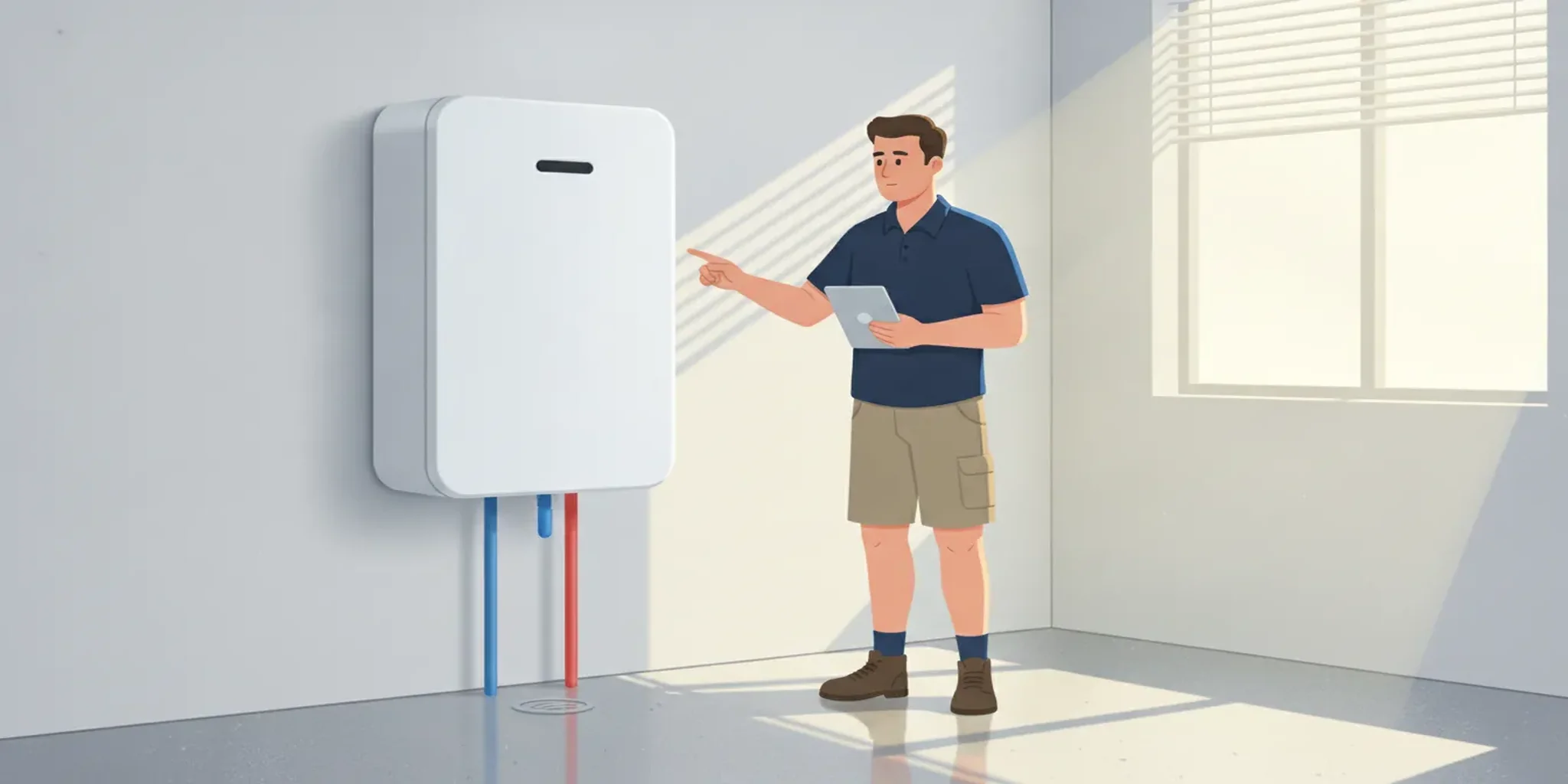
A traditional storage-tank water heater keeps a set amount of hot water ready inside a large insulated tank. That design is familiar and dependable, but it also means the system is continually working to maintain the water temperature, even when nobody is using hot water. A tankless water heater takes a different approach. It heats water as it passes through the unit, responding when a faucet, shower, or appliance calls for hot water.
Because there is no tank full of heated water, the system does not need to maintain stored heat between uses. This helps avoid the standby heat loss associated with storage-tank models. The U.S. Department of Energy explains that demand water heaters provide hot water only as needed and do not produce the standby energy losses associated with storage water heaters. See the ENERGY STAR water heater guidance for related efficiency information.
That difference can be especially appealing in a Stuart home where hot water needs vary. A seasonal resident may not want to keep a large tank heated during extended absences. A full-time household may appreciate having hot water available without waiting for a tank to recover after several showers. Tankless equipment can also be mounted on a wall, which may free floor space in a utility room, garage, or other service area.
Still, tankless does not mean unlimited output under every condition. The unit must be sized for the home's incoming water temperature, fixture flow rates, and the number of hot-water uses that may happen at once. If several fixtures run simultaneously, an undersized system may not keep up. That is why the installation decision should account for the home's plumbing layout and daily routines, not just the equipment's compact size.
For homeowners comparing tankless water heater pros and cons in Stuart. The central tradeoff is straightforward: on-demand heating can reduce standby loss and provide a longer-term, space-saving design, but it requires careful selection and installation. A local professional can compare both tank and tankless options honestly before recommending a system.
tankless water heater installation
How Does a Tankless Water Heater Work in a Stuart Home?
A tankless water heater heats water only when a fixture calls for it. When you open a shower, faucet, or appliance valve, cold water enters the unit and passes through a heat exchanger. A gas burner or electric heating element then raises the water temperature to the selected setting before it travels to the fixture.
Because the system does not store a large volume of heated water, it can provide a continuous supply while demand continues. You are not waiting for a storage tank to recover after someone takes a long shower. The U.S. Department of Energy's general guidance on demand water heating is available through ENERGY STAR, which also provides consumer information about efficient water-heating equipment.
How much hot water can a tankless unit deliver?
Capacity is measured by flow rate, expressed in gallons per minute, or GPM. Many tankless systems deliver approximately 2 to 5 GPM, although the actual output depends on the model, incoming water temperature, and the temperature rise required. Stuart homeowners should consider how many fixtures may operate at once, not just the number of people in the home.
For example, one unit may comfortably supply a shower and a sink. But a household running two showers while a dishwasher or washing machine operates may approach the heater's limit. A properly sized system helps maintain the desired temperature instead of allowing the water to become cooler as demand increases.
Are gas and electric tankless water heaters different?
They are. Gas-fired tankless water heaters generally produce higher flow rates than electric models, which can make them a better fit for homes with heavier simultaneous demand. Electric units may work well for smaller demand patterns, but they can require substantial electrical capacity. Gas installations may require appropriate venting and gas-line capacity.
If a household regularly needs more hot water than one unit can produce, two tankless water heaters can be installed in parallel. This approach adds capacity, but it also affects installation planning, utility requirements, and cost. A professional evaluation should account for fixture flow rates, temperature settings, available gas or electrical service, and the home's piping layout. Miranda can help compare those requirements before you arrange tankless water heater installation.
Tankless Water Heater Pros and Cons for Stuart Homeowners
Tankless water heaters can be an excellent fit for some Stuart homes, but they are not automatically the best choice for every household. The right decision depends on your hot water habits, available electrical or gas capacity, installation conditions, and willingness to keep up with maintenance.
What are the main advantages?
- Lower energy waste: Tankless units heat water only when a fixture calls for it, so they avoid the standby heat loss of a storage tank. For homes using 41 gallons or less of hot water per day, the U.S. Department of Energy reports that demand water heaters can be 24% to 34% more energy efficient than conventional tanks. See the current guidance at ENERGY STAR.
- Longer expected service life: Most tankless water heaters have a life expectancy of more than 20 years, compared with roughly 10 to 15 years for traditional storage heaters. Replaceable parts may extend the unit's service life further when it is properly maintained.
- A steady supply of hot water: Because the system heats water as it flows, your household does not have to wait for a depleted tank to recover. That can be especially convenient when several people need hot water at different times.
- More usable space: A wall-mounted tankless unit takes up much less floor space than a bulky storage tank. That can make a difference in a utility closet, garage, or smaller Stuart home.
- Less flood exposure: A tankless system does not hold a large reservoir of water. It therefore avoids the catastrophic tank-failure and flooding risk associated with a ruptured storage tank, although any plumbing system can still develop leaks.
What should you consider before installing one?
- Higher upfront investment: The unit and installation generally cost more than a standard tank replacement. Depending on the home, the project may also require gas-line, venting, electrical, or other capacity upgrades.
- Flow-rate limits: Tankless models typically deliver about 2 to 5 gallons per minute. A smaller unit may struggle when multiple showers, appliances, or fixtures run at the same time. Gas models generally provide higher flow rates than electric models, and larger homes may need multiple units installed in parallel.
- Regular scale control: Hard-water minerals can build up inside the heat exchanger and reduce efficiency. Periodic flushing is important in Stuart's hard-water conditions and may require professional service.
In short, tankless water heaters reward homeowners who value efficiency, longevity, space savings, and a continuous hot water supply. They require more planning at installation and consistent maintenance than many tank systems.
Ready to weigh tankless water heater pros and cons for your Stuart home? Talk to the Miranda team.
How Do Florida's Hard Water and Climate Affect Tankless Water Heaters?
Stuart homeowners need to consider more than the heater's purchase price when comparing tankless and storage models. The Treasure Coast has significant hard-water issues, and dissolved minerals can accumulate inside a tankless unit's heat exchanger. Over time, calcium and lime scale can restrict heat transfer, reduce efficiency, and potentially damage the system.
That is why periodic flushing is especially important for tankless equipment in this area. A professional flush removes mineral buildup before it becomes a performance problem. The right maintenance interval depends on the home's water quality, usage, and equipment, so a licensed technician should evaluate the system rather than relying on a one-size-fits-all schedule.
Why does hard water make maintenance more important?
A tankless heater activates when hot water is needed and transfers heat through a compact exchanger. When minerals coat those internal surfaces, the unit may have to work harder to heat water. Neglecting the buildup can affect temperature consistency and shorten the useful life of components. Professional maintenance, including flushing when appropriate, helps protect efficiency and supports reliable operation.
Some hard-water homes may also benefit from a water softener. Softening the incoming water can help optimize tankless performance by reducing the mineral load entering the heat exchanger. It is not a substitute for inspection or scheduled service, but it can be a practical part of a water-quality plan for a Stuart home.
How does Florida's climate affect the value of efficiency?
Florida's long cooling season adds another reason to pay attention to household energy use. Air-conditioning systems may run for 10 to 12 months each year, and high humidity keeps comfort systems working hard. A tankless water heater is not automatically the best choice for every household, but its on-demand design avoids standby heat loss. ENERGY STAR provides additional guidance on efficient water-heating products and selection at ENERGY STAR's water heater resource.
Miranda installs both tank and tankless water heaters, so the recommendation can account for your home's water quality, hot-water demand, fuel source, and maintenance expectations. If scale has already affected performance, schedule water heater repair services or ask about tankless water heater repair in Stuart. A local evaluation can help you choose a system that fits Florida conditions instead of treating climate and water quality as afterthoughts.
Is a Tankless Water Heater Worth the Cost in Stuart?
For many Stuart homeowners, the answer depends less on the purchase price alone and more on how long you plan to stay. How much hot water your household uses, and whether you are prepared for routine maintenance. A tankless system costs more to purchase and install at the start. But it can repay part of that investment through a longer service life and lower energy waste.
The comparison below shows the practical trade-offs. Energy performance varies with household usage. The U.S. Department of Energy reports that demand water heaters can be 24% to 34% more energy efficient than conventional storage tanks in homes using 41 gallons or less of hot water per day. That guidance is available through ENERGY STAR's water heater resources. Higher-use homes may see a smaller efficiency advantage.
| Consideration | Tankless water heater | Traditional storage tank |
|---|---|---|
| Upfront cost | Higher purchase and installation cost, with possible gas-line or electrical upgrades. | Usually lower initial purchase and installation cost. |
| Expected lifespan | Often more than 20 years when properly maintained. | Typically about 10 to 15 years. |
| Energy efficiency | Heats water on demand and avoids standby heat loss. Low-use homes may be 24% to 34% more efficient. | Stores heated water, so some energy is used to maintain its temperature. |
| Maintenance | Periodic flushing helps remove mineral scale. Stuart's hard water makes this especially important. | Still needs inspection and maintenance, but has different tank, sediment, and corrosion concerns. |
| Hot-water capacity | Continuous supply, but flow rate limits can affect simultaneous showers and appliance use. Larger households may need two units. | Limited by the tank's stored capacity, followed by recovery time. |
| Space | Compact wall-mounted design frees floor space. | Requires floor space for a large storage tank. |
When does the higher first cost make sense?
Tankless may be a strong fit if you expect to remain in your home for many years. Have limited utility-room space, or regularly want hot water without waiting for a tank to recover. The longer lifespan also matters when comparing replacement cycles. However, a household with several simultaneous hot-water demands may need multiple units, which raises the initial investment. A smaller home with modest usage may benefit more quickly from reduced standby loss.
Before choosing, ask for a system comparison based on your household's flow rate, fuel source, water quality, and expected maintenance. Miranda installs both tank and tankless systems. So a licensed local evaluation can help you choose the option that fits your Stuart home rather than paying for capacity you do not need.
How to Choose and Size the Right Tankless Water Heater for Your Home
The right tankless water heater is selected by matching the unit to your home's actual demand, not simply by choosing the largest model on the shelf. Stuart homeowners benefit from South Florida's warmer groundwater, but the system still needs to deliver the required flow rate when several fixtures operate at once. Use this process to narrow the options, then have a licensed professional verify the sizing and installation requirements.
- Determine your hot-water flow-rate needs. List the fixtures and appliances that might run at the same time, such as a shower, kitchen faucet, bathroom faucet, or washing machine. Add their expected gallons per minute to estimate the peak demand. Tankless units commonly provide about 2 to 5 gallons per minute, so a model that handles one shower comfortably may not support multiple showers and appliances simultaneously. Sizing from your real routine helps prevent disappointing temperature or pressure changes.
- Calculate the required temperature rise. Temperature rise is the difference between the incoming groundwater temperature and the hot-water temperature you want at the fixture. South Florida groundwater is warmer than groundwater in many northern states, which generally means a lower temperature rise and an easier heating requirement. That regional advantage does not eliminate sizing: the selected unit must still raise the incoming water temperature adequately at your home's peak flow. A professional can measure conditions and confirm the manufacturer's performance specifications.
- Choose between gas and electric. Gas-fired tankless units generally deliver higher flow rates than electric models, which can make gas a practical choice for homes with heavier simultaneous demand. Electric units may suit a smaller household or a property without the right gas infrastructure, but they can require substantial electrical capacity. The choice should account for available utility connections, venting, panel capacity, installation cost, and the way your household uses hot water.
- Plan for simultaneous use and larger households. Even a large gas-fired unit may not meet every demand when many fixtures run together. If your household has several bathrooms, frequent guests, or high morning demand, ask whether two tankless units installed in parallel would provide better coverage. This approach can accommodate higher flow requirements, but it also affects space, fuel or electrical planning, controls, maintenance, and upfront cost. The goal is dependable performance, not maximum capacity that sits unused.
- Have the system professionally sized and installed. Tankless installation involves more than connecting water lines. Gas units may need correctly sized gas piping and approved venting, while electric models may need dedicated circuits and panel capacity. The installer should verify flow rate, temperature rise, safety clearances, water quality, shutoff access, and code requirements before recommending a model. Miranda installs and services both tank and tankless water heaters, so our team can compare the options honestly and recommend the system that fits your home. Explore our plumbing services or schedule an evaluation before purchasing equipment.
For efficiency information and product guidance, review the U.S. Environmental Protection Agency's ENERGY STAR water heater resources. A properly matched system can deliver the benefits of on-demand heating without creating new capacity or installation problems.
Frequently Asked Questions
Are there any downsides to tankless water heaters?
The main drawbacks are a higher upfront purchase and installation cost, possible gas-line or electrical upgrades, and flow-rate limits. A unit may not supply enough hot water for several fixtures running at once unless it is sized correctly or paired with another unit.
Why do plumbers not recommend tankless water heaters?
Tankless systems are not a poor fit for every home. Concerns usually involve undersized equipment, inadequate utility capacity, hard-water scale, or skipped maintenance. In Stuart, mineral buildup can affect the heat exchanger, so professional sizing, installation, and periodic flushing are important for reliable performance.
What are the pros of tankless water heaters?
They heat water on demand, avoid standby heat loss, provide a continuous supply while demand stays within the unit's capacity. And take up less floor space than a storage tank. Their longer expected service life can also make the higher initial investment worthwhile for the right household.
Are tankless water heaters worth it?
They can be worthwhile if you value space savings, consistent hot water, and long-term efficiency, especially when your household's usage fits the unit's output. A tank may be more practical when the lowest initial cost is the priority. Compare both options after reviewing your home's hot-water demand and existing gas or electrical setup.
Schedule Your Tankless Water Heater Consultation
Choosing between tankless and storage-tank equipment depends on your home's hot-water needs, available utilities, and long-term priorities. A consultation can help you compare practical options for your Stuart home and plan an installation that fits your household.
Schedule a tankless water heater consultation with the local Miranda Plumbing & Air team.
Need plumbing or HVAC service on the Treasure Coast?
Contact Miranda Plumbing & Air