
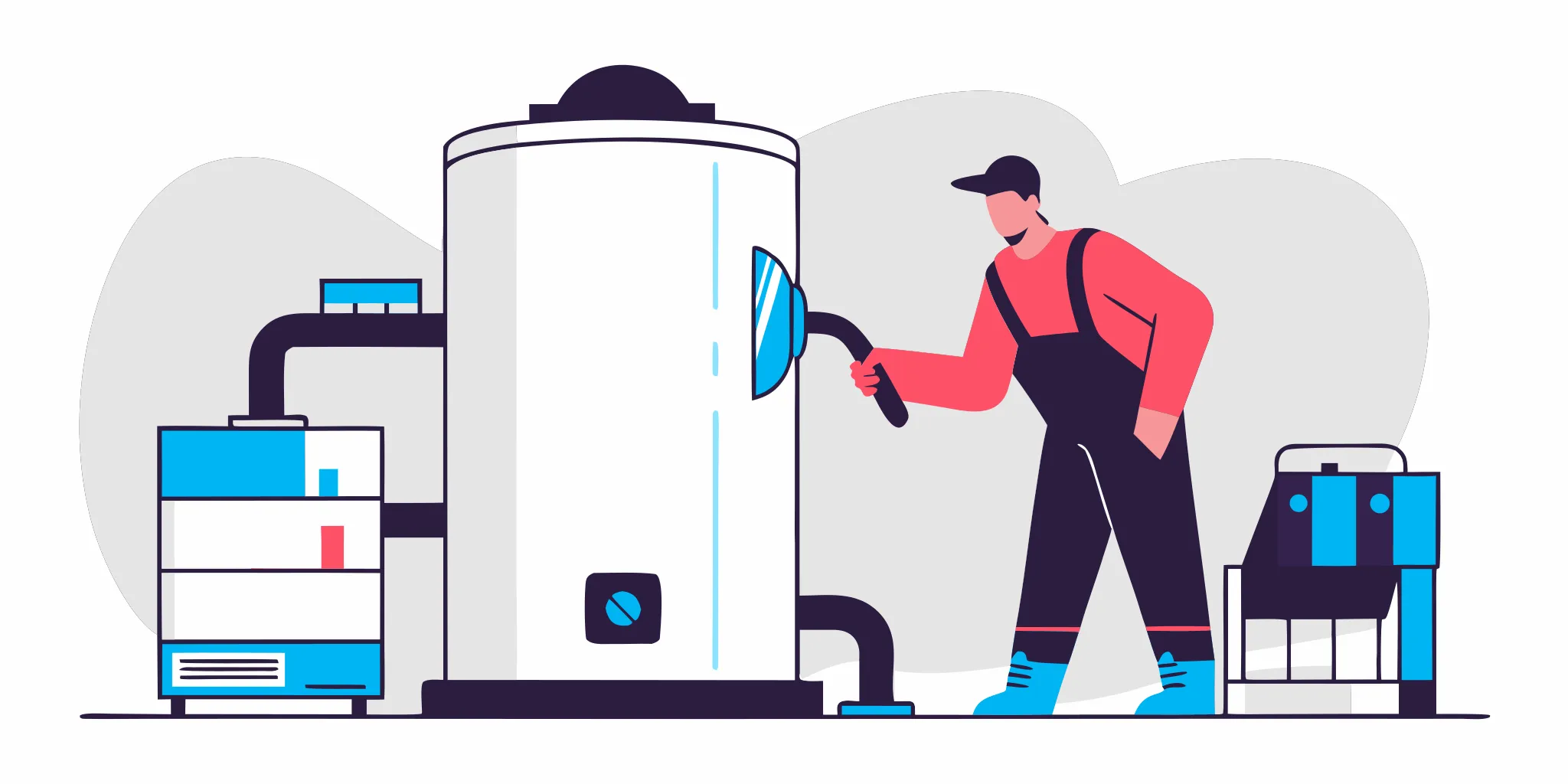
Storage Tank Water Heaters: A Complete Guide
A storage tank water heater remains a practical, familiar choice for many Treasure Coast households. It keeps a ready supply of hot water for showers, laundry, dishwashing, and everyday routines, which can make it a comfortable fit for families, retirees, and seasonal residents alike. The right model is not simply the largest tank that will fit in the utility room. It should match your household's peak demand, fuel source, available space, and the Florida water conditions that affect long-term performance.
Book an Appointment for professional guidance on a water heater repair, replacement, or new installation in the Treasure Coast.
This guide explains how storage tank systems work, what size may suit your home, how they compare with tankless options, and the maintenance habits that can help Florida homeowners get more reliable service from their equipment.
How a Storage Tank Water Heater Works
A storage tank water heater uses an insulated reservoir to heat and hold water until your home calls for it. The U.S. Department of Energy describes storage water heaters as systems that use a tank to hold and heat water for residential use. When you turn on a hot-water fixture, hot water leaves from the top of the tank while cold water enters near the bottom. The system then reheats that incoming water so the tank can recover for the next use.
Most residential tanks hold roughly 30 to 80 gallons. The tank's burner or electric heating elements do the heating, while a thermostat controls the temperature. Because the system maintains a ready reserve, it can serve several normal household uses without waiting for water to heat on demand.
That readiness is also the tradeoff. A tank must use some energy to keep stored water warm even when nobody is using it. Modern insulation and higher-efficiency models help reduce this standby loss, but it is still a factor to weigh when comparing water heater types.
Gas and electric storage tanks
Gas models use a burner below the tank and commonly recover hot water more quickly after heavy use. Electric models use heating elements inside the tank and can be a sensible choice where electric service is the practical option. Neither fuel type is automatically right for every home. The best choice depends on your existing utility setup, household demand, installation requirements, and budget.
For Florida homes, it is also worth considering where the tank sits. A garage, utility room, or enclosed closet may be exposed to different temperatures and humidity levels. A licensed plumber can assess clearance, drainage, ventilation where applicable, and the condition of the existing connections before recommending a replacement.
What Size Storage Tank Water Heater Does Your Home Need?
Water heater sizing starts with how much hot water your household needs during its busiest hour, not with the number of bathrooms alone. A home where two people shower at different times can have very different demand from a home where several people shower, run the dishwasher, and do laundry in the same morning.
- One to two people: A smaller tank, often around 30 to 40 gallons, may provide enough capacity when hot-water use is modest.
- Two to three people: A 40- to 50-gallon tank is a common starting point, depending on habits and appliance use.
- Four or more people: A 50-gallon tank or larger may be appropriate, especially when several fixtures run close together.
- High-demand households: Larger tanks or systems with a stronger recovery rate can be useful for large tubs, frequent guests, or overlapping routines.
Look beyond the tank's gallon label. The first-hour rating estimates how much hot water a model can supply during a busy hour, accounting for both stored water and recovery. This rating is especially useful when comparing gas and electric models, because two tanks with similar capacities may perform differently during peak use.
Snowbird households may have a different pattern from full-time family homes. A property that is lightly used for part of the year may still need dependable capacity when guests arrive. A thoughtful sizing conversation can help avoid buying more equipment than you need or ending up with a tank that struggles during the times your household needs it most.
Storage Tank vs. Tankless: Picking the Right Heater
Storage tank and tankless systems solve the same problem in different ways. A storage tank keeps hot water on hand. A tankless unit heats water as it flows through the equipment. The better fit is the one that matches your household's demand pattern, available utilities, installation conditions, and long-term preferences.
| Consideration | Storage tank water heater | Tankless water heater |
|---|---|---|
| How it delivers hot water | Stores a ready supply in an insulated tank. | Heats water as it moves through the unit. |
| Upfront installation | Often simpler when replacing a similar existing tank. | May require changes to gas, electrical, venting, or water connections. |
| Hot-water capacity | Limited by tank size and recovery rate during extended heavy use. | Continuous while flow demand stays within the unit's capacity. |
| Space | Requires floor space for the tank. | Compact wall-mounted design can free up floor space. |
| Maintenance needs | Benefits from flushing and periodic tank-component checks. | Benefits from periodic descaling, especially in hard-water areas. |
A tank system can be a strong choice for homeowners who value familiar operation, predictable installation, and a ready reserve of water. A tankless system may appeal to homeowners who need to save floor space or prefer on-demand heating. Neither option is a universal upgrade over the other.
For example, a tankless system must be sized for the number of hot-water fixtures likely to run at once. A large household may need more capacity than a single unit can comfortably deliver during a peak morning. A conventional tank, on the other hand, may be ideal when existing connections and household habits make it a straightforward fit.
Talk with a Miranda plumbing professional about your options. A site-specific evaluation is the most reliable way to compare total installation needs instead of choosing from a generic chart.
Storage Tank Water Heater Maintenance for Florida Homes
Florida's water and climate give storage tanks a few local considerations. Hard water can leave mineral sediment inside a tank over time, reducing efficient heat transfer and adding wear to components. Humidity, salt air in coastal areas, and the environment around a garage or utility space can also influence the condition of fittings and connections.
Regular maintenance helps address those conditions before they turn into an inconvenient loss of hot water. A professional visit may include checking for leaks, reviewing the temperature and pressure relief valve, inspecting the anode rod, and flushing sediment when appropriate for the system. The anode rod is designed to help protect the tank from corrosion, so its condition matters more than many homeowners realize.
Tank insulation also matters. Research on residential water-heating systems has found that insulation can improve temperature retention in a standard tank. Modern water heaters are already insulated, but the overall installation should still be reviewed for appropriate placement and energy performance.
- Pay attention to rusty water, moisture around the base, or reduced hot-water availability.
- Do not ignore a small leak at a connection, valve, or drain area.
- Ask whether annual service is appropriate for your water conditions and model.
- Before hurricane season, make sure the surrounding area is clear and any home-preparedness plan accounts for utility interruptions.
If your water heater is not keeping up, takes longer to recover, or shows moisture around the unit, schedule professional storage tank water heater repair. A trained technician can identify whether the concern is a maintainable issue or a sign that replacement should be considered.
When Should You Repair or Replace a Storage Tank Water Heater?
There is no single age when every water heater needs replacement. Many conventional tanks provide about 8 to 12 years of service, but usage, water quality, installation quality, and maintenance all affect the real timeline. A unit that has been cared for in a low-demand home may age differently from one serving a busy household with hard water.
Repair may make sense when the issue is isolated and the tank itself remains in good condition. Examples can include a serviceable valve, a thermostat concern, or a heating issue that a technician can diagnose and correct. Replacement becomes more practical when the tank is older, repairs are becoming frequent, there is visible corrosion, or a leak develops from the tank body.
Homeowners often notice the change first through daily routines: hot water runs out sooner, the supply is inconsistent, the unit makes unfamiliar popping sounds, or water appears around the base. Those symptoms are worth a professional assessment, not guesswork. You can also read our guidance on replacing your storage tank water heater when weighing the timing of an upgrade.
When replacement is the right path, Miranda offers storage tank water heater installation and replacement guidance with free estimates, straightforward written quotes, and no hidden fees. GreenSky financing may be available for qualifying major repairs and installations, and new customers can ask about $20 off weekday service from 8 a.m. to 4 p.m.
Why Work With a Local Treasure Coast Plumbing Team?
Water-heater decisions are local. The water quality, climate, home construction, and service needs in Port St. Lucie, Stuart, Vero Beach, Fort Pierce, Jupiter, Palm Beach Gardens, and West Palm Beach are not identical to those in a generic national buying guide.
Miranda has served Florida's Treasure Coast since 1981. Our licensed and insured team brings plumbing license CFC1427227 and HVAC license CAC1815486, with the added convenience of HVAC and plumbing expertise under one roof. We are also a Ruud Pro Partner. Whether you need help evaluating a conventional tank, planning an upgrade, or responding to a water-heater problem, you can expect clear recommendations and written options before work begins.
Book an Appointment to discuss your storage tank water heater with a local Miranda professional. For urgent plumbing concerns, ask about 24/7 emergency service.
Storage Tank Water Heater FAQs
What is a storage tank water heater?
A storage tank water heater is a conventional system that heats water and holds it in an insulated tank until your home needs it. When a hot-water fixture opens, the system draws from that reserve and then reheats the incoming water.
How long does a storage tank water heater last?
Many conventional tank water heaters last roughly 8 to 12 years. Actual life depends on water quality, household demand, installation conditions, and maintenance. A licensed inspection is the best way to judge the condition of a specific unit.
What are the pros and cons of tank water heaters?
Tank systems provide a ready supply of hot water and are familiar to service and replace. Their tradeoffs include the floor space they require, a finite supply during extended heavy use, and standby energy use from maintaining stored water at temperature.
Are storage tank water heaters efficient?
Modern tank water heaters use insulation and improved controls to reduce energy loss. Their efficiency should be compared alongside capacity, recovery rate, fuel type, and your household's usage pattern. The most efficient option on paper is not always the best practical fit for a home's demand.
Is it better to repair or replace a tank water heater?
It depends on the unit's age, condition, repair history, and the type of issue. A repair can be worthwhile for a newer unit with an isolated problem. An older tank with corrosion, leaks, or recurring repair needs may be a better candidate for replacement.
Need help choosing, maintaining, or replacing a water heater? Contact Miranda Plumbing & Air to book an appointment with a Treasure Coast team that has served local homeowners for 46 years.
Need plumbing or HVAC service on the Treasure Coast?
Contact Miranda Plumbing & Air