

Indoor Air Quality Services: Florida Home Guide
Indoor air quality services help homeowners connect comfort concerns with the right HVAC evaluation. The goal is not to sell every available device. The goal is to understand what your home is experiencing, then choose a practical next step.
Talk with Miranda about your indoor air quality needs
Florida homes face year-round cooling demand, outdoor humidity, and changing moisture conditions. Those factors can affect how rooms feel, how often dust returns, and whether odors linger. A professional evaluation can look at the complete system instead of treating one symptom in isolation.
What Do Indoor Air Quality Services Evaluate?
Short answer: A professional evaluation can review humidity, moisture control, filtration, airflow, purification, duct conditions, and HVAC performance. The technician compares those findings with your symptoms and goals. This creates a service plan based on the home, rather than recommending the same equipment for every household.
Indoor air quality is a system question. A room may feel dusty because of a filter problem, duct leakage, household sources, or airflow that does not reach the space properly. A musty smell may involve moisture, a drain pan, insulation, or another condition that needs inspection.
Miranda's indoor air quality service team describes testing, documentation, and practical recommendations as part of its service offering. That approach gives homeowners a clearer starting point before they choose equipment or cleaning.
- Humidity and moisture conditions in living spaces.
- Filter type, fit, loading, and replacement pattern.
- Airflow through supply and return paths.
- Visible duct concerns, insulation, and accessible connections.
- Air purifier, media filter, HEPA, or UV light options.
- HVAC performance factors that can affect comfort and air movement.
The evaluation does not replace mold remediation, medical advice, or a specialized environmental investigation when those services are needed. It helps identify HVAC and moisture-related conditions that may deserve attention.
How Does a Professional IAQ Assessment Work?
Short answer: A professional IAQ assessment starts with your observations and service history. The technician then reviews the HVAC system, moisture clues, airflow, filtration, and accessible duct areas. The final recommendation should explain what was found, which options fit, and what the service can reasonably address.
Before the visit, write down when the concern appears. Note whether it affects one room or the entire house. Record whether the issue changes after rain, during heavy cooling, after filter replacement, or after the home sits closed.
During the visit, the technician may ask about:
- Rooms that feel damp, stale, warm, or difficult to condition.
- Dust that returns quickly after cleaning.
- Odors that appear when the system starts.
- Condensation near vents, windows, or mechanical equipment.
- Filter changes, recent repairs, or water damage.
- Comfort goals for children, older adults, pets, or seasonal residents.
A review may include temperature readings, airflow observations, filter inspection, drain and coil checks, and a visual look at accessible ductwork. The exact scope depends on the concern and the equipment.
Testing has limits. A single reading is not a complete picture of every contaminant in a home. Good service documentation should explain what was checked and what the results mean for the next decision.
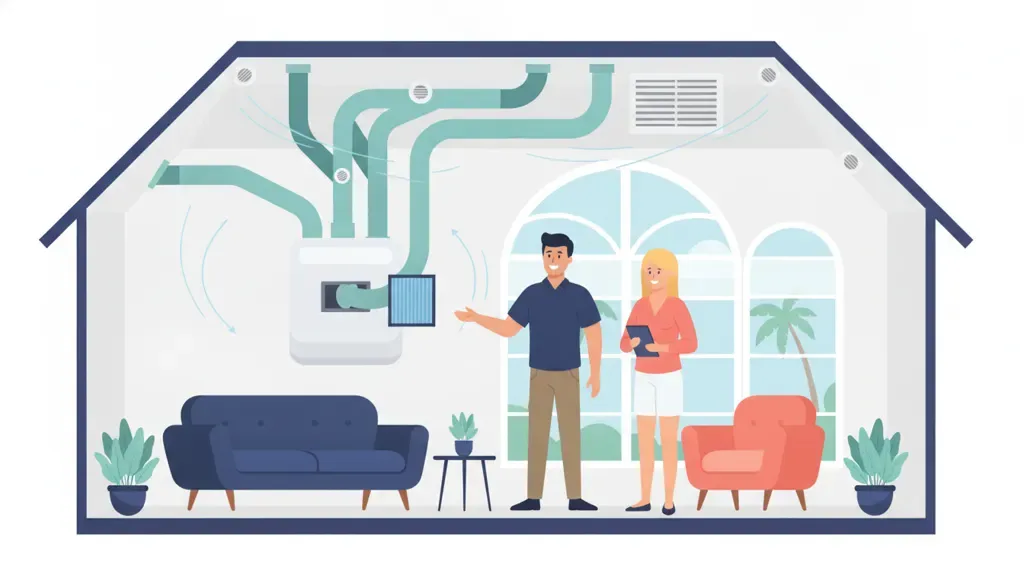
Miranda's technicians can also review related system needs through local HVAC services in Port St. Lucie and the Treasure Coast. Keeping the service conversation connected helps prevent an air quality device from masking an equipment problem.
Which Service Fits Humidity and Moisture Concerns?
Short answer: Humidity concerns call for a moisture-focused evaluation before equipment selection. The review may consider cooling performance, drain operation, system sizing, ventilation, and whole-home dehumidification. The right solution depends on whether moisture comes from HVAC operation, the building, outdoor air, or another source.
Florida air can feel uncomfortable even when the thermostat reaches its set point. A home may also have rooms that feel clammy while other rooms feel acceptable. These patterns can point to different service needs.
Potential service paths include:
| Home observation | What a technician may review | Possible next step |
|---|---|---|
| Rooms feel damp or clammy | Humidity, cooling cycles, drainage, and system capacity | Moisture evaluation or whole-home dehumidifier discussion |
| Condensation near equipment | Drain pan, condensate line, insulation, and airflow | HVAC inspection and repair when needed |
| Musty odor returns | Moisture sources, accessible equipment, and affected surfaces | Source review, cleaning, or specialist referral |
| Comfort changes after a repair | System operation, filter fit, and airflow balance | Performance check and targeted correction |
The EPA's indoor air quality guidelines connect moisture management with healthy home assessments. They also note that HVAC sizing and condensate drainage can influence indoor conditions.
Do not assume a dehumidifier is the answer to every humidity complaint. An oversized cooling system, blocked filter, drainage problem, or duct issue may need attention first. A service evaluation can help separate those possibilities.
What Can Filtration and Airflow Services Address?
Short answer: Filtration and airflow services address how air moves through the HVAC system and what the filter can capture. A technician can review filter fit, loading, bypass gaps, return air, supply airflow, and equipment compatibility. The objective is cleaner movement without creating avoidable system strain.
Filters work only when air passes through the filter media. Gaps around the filter or an incorrectly sized filter can allow air to bypass it. A filter that is too restrictive for the equipment can also create an airflow concern.
During a review, the technician may look for:
- A filter that matches the equipment and filter rack.
- Dust buildup around the filter or return opening.
- Restricted returns or blocked supply registers.
- Uneven airflow between rooms.
- Signs that the equipment is struggling to move air.
- Maintenance needs that affect coils, drains, or blower operation.
Miranda lists media, HEPA, and electronic filtration among its whole-home air purifier options. The correct choice depends on the existing HVAC system, the home's layout, and the household's goals.
Routine maintenance also matters. An AC tune-up and maintenance visit can include performance measurements, drainage checks, targeted cleaning, and a condition review. That work supports comfort and airflow, although it is not the same as a complete IAQ assessment.
Ask how a proposed filter affects airflow before installation. Ask where it will be installed and how often it should be changed. A clear answer is more useful than choosing a filter by a label alone.
When Do Purification and UV Options Make Sense?
Short answer: Purification and UV options may make sense when a home needs added air cleaning beyond its standard filter. A technician should explain the target concern, installation location, maintenance needs, and expected limits. These systems support source control and filtration, but they do not solve every IAQ problem.
Whole-home air purifiers can use different technologies. Media filters, HEPA systems, and electronic filtration do not perform the same way. Equipment selection should account for airflow, cabinet space, replacement parts, and the HVAC system's design.
UV lights also need careful explanation. Miranda offers UV light installation with lamp maintenance. A UV system is one component of an IAQ plan. It should not be presented as a universal replacement for cleaning, filtration, moisture control, or professional remediation.
Before choosing a purifier or UV light, ask:
- What specific concern is this equipment intended to address?
- Where will the equipment be installed?
- How will it affect airflow and system maintenance?
- Which parts need replacement or routine service?
- What result should the homeowner reasonably expect?
These questions help keep the decision practical. They also make it easier to compare equipment options without treating a product name as a diagnosis.
How Do Duct-Related Concerns Change the Plan?
Short answer: Duct concerns require a visual and performance-based review. A technician may inspect accessible sections, connections, insulation, airflow, and signs of moisture or debris. Cleaning, sealing, repair, or another action may be appropriate, but the evidence should match the service recommendation.
Dust around vents does not prove that the entire duct system needs cleaning. A musty smell does not identify the source by itself. Moisture, damaged insulation, poor filtration, or a nearby building condition may also contribute.
The EPA guidance on duct cleaning recommends asking providers to show contamination that would justify the service. It also emphasizes controlling moisture and maintaining filters to help prevent duct contamination.
A professional review can consider several paths:
- Cleaning when visible contamination or debris supports that recommendation.
- Sealing or repairing accessible leaks that affect airflow.
- Replacing damaged insulation or addressing condensation risks.
- Correcting filter gaps that allow dust to bypass filtration.
- Referring water damage or confirmed mold conditions to the appropriate specialist.
Homeowners should be cautious about broad promises. Duct cleaning does not remove every source of indoor pollution. It also cannot replace moisture control or repair a failing HVAC component.
Which Symptoms Point to the Next Step?
Short answer: Symptoms can help prioritize an evaluation, but they cannot diagnose the cause. Dust, odors, humidity, uneven comfort, or visible moisture may point toward different service paths. A technician should connect the observation with system evidence before recommending a repair, cleaning, or new equipment.
Use the symptom map below as a conversation starter:
| What you notice | Start the conversation with | What to avoid assuming |
|---|---|---|
| Dust returns quickly | Filter fit, return airflow, duct access, and maintenance | That the ducts automatically need cleaning |
| Musty smell near a vent | Moisture, drain, coil, duct, and surrounding area review | That the odor proves mold inside the duct |
| High humidity indoors | Cooling cycles, drainage, sizing, and dehumidification | That a portable device fixes the whole home |
| One room feels stale | Supply and return airflow, register position, and room load | That a whole-home purifier is the first step |
| Airflow changes after service | Filter, blower, coil, duct, and equipment operation | That the issue is only a filter problem |
Persistent respiratory symptoms require medical guidance. A home service provider can inspect HVAC and moisture conditions, but cannot determine a medical cause.
If the system is also cooling poorly, leaking, or making unusual sounds, consider professional air conditioning repair. A performance problem can affect comfort and the way air moves through the home.
What Should You Ask Before Choosing an IAQ Service?
Short answer: Ask what the technician will inspect, what the service can and cannot determine, and how the recommendation connects to your symptoms. Confirm maintenance requirements, equipment compatibility, documentation, warranties, and the next step. These questions make the service easier to evaluate and reduce surprises.
A dependable provider should explain the assessment before starting. The conversation should include the concern, the planned checks, and the possible service paths. Homeowners should have time to ask questions before approving work.
Useful questions include:
- What will you measure or inspect during the visit?
- Which findings would support cleaning, repair, filtration, or dehumidification?
- Will the recommendation work with my current HVAC system?
- What maintenance will the proposed equipment require?
- What conditions are outside the scope of this service?
- Will I receive written findings or a clear explanation of the next step?
- What warranty applies to the service or installation?
Miranda's service pages describe free estimates, documented evaluations, financing options, and separate labor warranty terms for service and installations. Confirm the current details with the company before scheduling.
How Can You Prepare for an IAQ Visit?
Preparing a few details can make a professional evaluation more useful. Write down when each concern appears and whether weather, occupancy, or system cycles change it. Note recent filter changes, repairs, leaks, remodeling, or periods when the home was closed. These details help the technician compare your observations with equipment and moisture conditions.
- Which rooms feel uncomfortable and when.
- Whether odors change when the HVAC system starts.
- How often filters are replaced and what type is used.
- Where you notice condensation, dust, or visible moisture.
- Which repairs or indoor projects happened recently.
Keep access clear around air handlers, returns, thermostats, and visible vents. Do not remove panels or attempt electrical, refrigerant, or duct repairs before the visit. If you see standing water or active leaks, protect the property and tell the provider when scheduling.
Ask for findings in plain language. A helpful summary identifies what was observed, what was not tested, and which next step matches the concern. It can also note maintenance needs and any specialist referral. This gives you a record for future service and prevents a general symptom from becoming an unsupported equipment recommendation.
Miranda has served Florida's Treasure Coast since 1981. Its licensed HVAC team supports homeowners in Port St. Lucie and nearby communities with air quality, repair, maintenance, and installation services.
Schedule an indoor air quality evaluation with Miranda
Frequently Asked Questions About Indoor Air Quality Services
What are indoor air quality services?
Indoor air quality services evaluate HVAC performance, humidity, filtration, airflow, purification, and duct-related concerns. The provider uses the findings to recommend an appropriate service or a specialist referral.
How often should a home have an IAQ evaluation?
There is no single schedule for every home. Consider an evaluation after persistent humidity, recurring odors, water damage, major HVAC work, remodeling, or comfort changes that do not resolve.
Can an HVAC technician test for mold?
An HVAC technician can review moisture and equipment conditions. Mold sampling, remediation, or health-related decisions may require a qualified environmental or remediation specialist.
Does a new filter solve poor indoor air quality?
A properly fitted filter can support cleaner air movement. It may not correct moisture, duct leakage, source pollution, equipment problems, or inadequate ventilation.
Are air purifiers and UV lights the same?
No. Air purifiers and UV systems use different approaches. A technician should explain the intended use, installation requirements, maintenance, and limits of each option.
When should I call for indoor air quality help?
Call when humidity, dust, odors, uneven airflow, condensation, or comfort issues persist. Also call after water damage or when you need help choosing an HVAC-related solution.
Get practical indoor air quality service guidance for your home
Need plumbing or HVAC service on the Treasure Coast?
Contact Miranda Plumbing & Air