
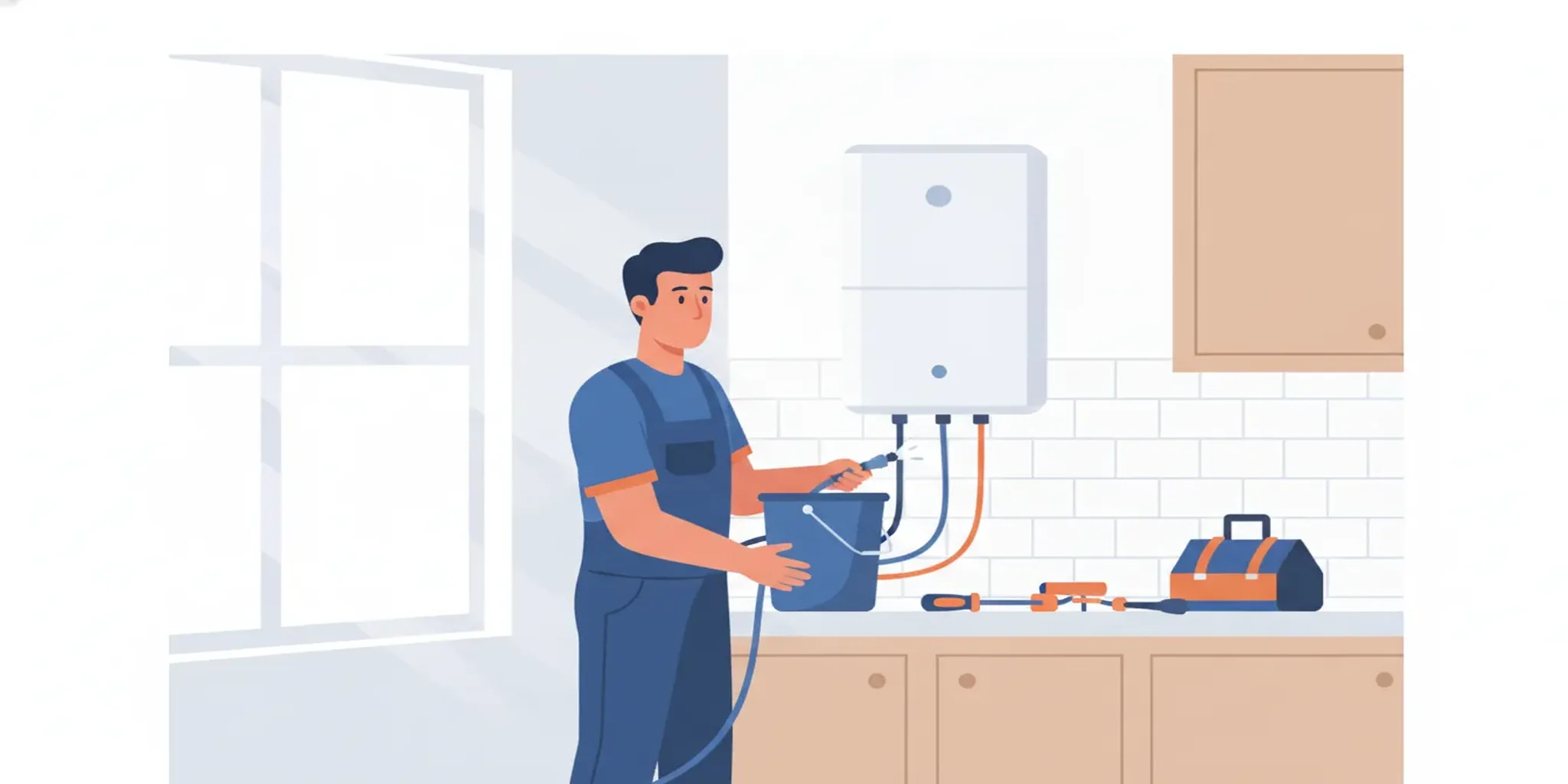
How to Maintain a Tankless Water Heater: A Seasonal Plan
Florida's heat, humidity, hard water, and coastal air can make a tankless water heater work harder than many homeowners realize. Without routine care, mineral scale can quietly build up inside the heat exchanger, restrict hot-water flow, and drag down efficiency. A seasonal plan helps you catch these issues before they turn into a cold shower or an unexpected emergency service call.
To maintain a tankless water heater through every season, plan an annual professional descaling flush. Homes with hard water may need this service twice a year. Between visits, keep the air intake and filter clear, watch for error codes or temperature changes, and follow the manufacturer's instructions for safe inspection.
Schedule professional tankless water heater maintenance with Miranda Home Services.
Maintenance is not about taking apart equipment unnecessarily. It is about matching a few practical checks to the conditions around your home and knowing when a trained technician should handle the work. On Florida's Treasure Coast, hard water and humidity deserve particular attention because minerals can collect inside the unit faster than in other regions. The right seasonal schedule starts with understanding why that mineral buildup matters, how often to act. And when to bring in a licensed professional who can keep your hot water dependable through every season.
Why Does a Seasonal Maintenance Plan Matter for Your Tankless Water Heater?
Florida homeowners depend on steady hot water through long, humid seasons. A simple seasonal plan helps keep tankless equipment ready for daily showers, laundry, and guests without turning routine upkeep into a last-minute concern. On the Treasure Coast, hard water deserves particular attention because dissolved minerals can collect inside the heat exchanger over time.
Schedule professional tankless water heater maintenance with Miranda Home Services.
How do Florida conditions affect tankless water heaters?
Hard water is common across much of Florida's Treasure Coast, including communities such as Port St. Lucie, Stuart, Vero Beach, and Fort Pierce. When heated, minerals in the water can form scale on the heat exchanger. Mineral scale is the most common tankless water heater issue, and it can restrict water flow and reduce efficiency. Homeowners may first notice fluctuating water temperature or an error code, but the underlying buildup can develop before those signs appear.
Humidity and salt air add to the importance of paying attention to equipment, connections, and the surrounding installation area. These conditions do not mean a tankless unit is a poor fit for Florida. They do mean that a maintenance schedule should reflect the local environment rather than rely on a generic reminder that may be easy to overlook.
Can routine care extend the unit's service life?
Yes. Regular maintenance, including flushing the heat exchanger, helps preserve performance and extend the life of a tankless water heater. A yearly service is a sensible minimum for most units. In hard-water areas, the unit may need to be flushed twice a year, depending on water conditions, usage, and the manufacturer's recommendations. A spring and fall reminder can make that schedule easier to follow, especially for seasonal residents who spend part of the year away from home.
Maintenance also supports efficient operation. Scale makes the system work harder to transfer heat and maintain flow. Cleaning the appropriate filters, reviewing error codes, and checking for leaks or loose connections gives a technician an opportunity to address small concerns before they affect comfort. If you notice inconsistent temperatures or recurring alerts, professional water heater maintenance and repair can identify whether scale or another issue is involved.
A seasonal plan is not about doing more work than necessary. It is a practical way to match tankless water heater care to Florida's hard-water conditions, protect the equipment's performance, and keep hot water dependable.
How Do You Maintain a Tankless Water Heater Throughout the Year?
A tankless water heater needs a small set of recurring checks to protect water flow, heating performance, and the heat exchanger. Most units require maintenance at least once a year, including a descaling flush. In hard-water areas such as Florida's Treasure Coast, that flush may be needed twice a year because minerals can accumulate more quickly. Rheem recommends more frequent flushing in hard-water conditions.
How often should you flush the heat exchanger?
An annual descaling flush removes mineral buildup from the heat exchanger. Scale can restrict water flow and reduce efficiency, sometimes showing up first as fluctuating water temperature or an error code. A professional can confirm the manufacturer's procedure and use the appropriate descaling solution for your model. If your home has hard water, scheduling this service in the spring and fall is a practical way to keep the work consistent.
What should you clean and inspect?
- Air inlet and filter: Clean the air-inlet filter and any accessible unit filter according to the manufacturer's instructions. Dust, lint, and debris can interfere with proper operation.
- Error codes: Check the display for active or recurring codes. Record the code instead of repeatedly resetting the unit, since it can point to a flow, ignition, venting, or sensor concern.
- Leaks and connections: Inspect around the water lines, isolation valves, pressure-relief components, and the cabinet for signs of moisture. A technician should also check gas and electrical connections for looseness or other problems.
- Exterior condition: Keep the area around the heater clear and dry. Outdoor units deserve extra attention in coastal Florida, where humidity and salt air can affect exposed components.
When is professional service the better choice?
Descaling requires shutting down the unit and connecting service hoses correctly. Gas-fired models also involve combustion and venting components, while electric models contain energized connections. If you are unsure which valves to close, see a leak, smell gas, or notice repeated error codes, stop and arrange professional water heater maintenance and repair. Regular service can help preserve the system's intended performance without turning a routine task into an avoidable repair.
If your current system is nearing replacement or you are comparing options for a remodel, Miranda can also help with tankless water heater installation and model selection for your home's demand and water conditions.
Schedule tankless water heater maintenance with Miranda Plumbing & Air.
How Often Should You Flush a Tankless Water Heater?
For most homes, schedule a tankless water heater flush at least once a year. That annual service removes mineral scale from the heat exchanger before it restricts water flow or makes the unit work harder. Rheem also recommends more frequent flushing in hard-water areas, where a twice-yearly schedule may be appropriate. You can review its maintenance guidance here.
That recommendation is especially useful for homeowners along Florida's Treasure Coast. Hard water often leaves white scale around faucet aerators, showerheads, and other fixtures. You may also notice a filmy feeling on glass or shower surfaces after cleaning. Those signs do not prove that the heat exchanger is scaled, but they are a practical reason to ask about water quality and shorten the maintenance interval.
What does a tankless water heater flush actually do?
Inside the heater, water passes through a heat exchanger where it is warmed on demand. Over time, dissolved minerals can adhere to the internal passages. During a professional descaling service, the technician follows the manufacturer's shutoff procedure, isolates the heater, connects service hoses. And uses a small circulating pump to move an approved descaling solution through the heat exchanger. The solution loosens mineral deposits, and the system is then flushed with clean water before the heater is returned to service.
This is different from simply rinsing the outside of the unit or cleaning a faucet screen. The process addresses buildup in the component that transfers heat to your water. The correct solution, connection method, flushing time, and restart procedure depend on the model, so the owner's manual should guide the service.
What happens if you skip descaling?
As scale accumulates, the heater may transfer heat less effectively and need to work harder. Homeowners can notice reduced flow, temperature swings, longer waits for comfortable water, or error codes. In Florida homes with hard water, allowing deposits to build for too long can also make routine maintenance more involved. Regular flushing is preventive care, not a guarantee against every repair, but it helps protect performance and may support a longer service life.
Should you flush annually or twice a year?
Use an annual flush as the minimum for a typical home with moderate usage and no clear signs of mineral buildup. Choose a semiannual schedule when your home has hard water, visible scale on fixtures, heavy hot-water demand, or a history of temperature or flow problems. A plumber can help confirm the interval by reviewing the unit's condition, usage, water quality, and manufacturer requirements. Keep a note of each service date so the next flush does not get lost among seasonal home tasks.
| Flush schedule | Best for homes with | Why it matters |
|---|---|---|
| Annual flush | Moderate use, softer water, no visible scale on fixtures | Removes normal mineral buildup and keeps the heat exchanger efficient. |
| Twice-yearly flush | Hard water, visible scale, heavy hot-water demand, or past flow issues | Stops scale from building fast enough to restrict flow or trigger error codes. |
Annual or semiannual flushing does not replace cleaning the filter or air inlet, checking connections, and evaluating leaks or error codes. Roto-Rooter's tankless maintenance guide likewise recommends flushing at least annually. If your heater is overdue or already showing inconsistent temperatures, schedule professional tankless water heater maintenance with Miranda Home Services.
A Step-by-Step Seasonal Tankless Water Heater Maintenance Checklist
A seasonal checklist can keep routine care organized without turning maintenance into a guessing game. Before you begin, confirm that your model supports homeowner flushing and follow the manufacturer's instructions. Tankless units vary in valve layout, filter location, descaling procedure, and required cleaning solution.
- Read the owner's manual. Locate the service valves, isolation valves, air-inlet filter, and error-code guide. Confirm the recommended descaling solution, hose connections, pump requirements, and whether the manufacturer recommends professional service for your model. If the manual calls for a different sequence, use it instead of a general checklist.
- Turn off the power and water supply. Shut off the electrical disconnect or gas supply according to the manual, then close the cold-water inlet and hot-water outlet isolation valves. Allow the unit and water to cool before connecting equipment. Never remove covers or work near gas or electrical components unless you are qualified to do so.
- Connect the flushing hoses. Attach one service hose from a circulating pump to the flush inlet and a second hose from the flush outlet into a clean bucket. Open the service ports only after confirming that the isolation valves are closed. Keep connections secure and position the bucket where it cannot be tipped over.
- Run the descaling pump. Add the approved descaling solution and circulate it through the heat exchanger for approximately 1.5 hours, or for the duration specified by the manufacturer. Descaling helps address mineral buildup that can restrict flow and reduce efficiency. Do not leave the pump unattended if the equipment instructions require monitoring. When finished, dispose of the solution as directed and flush the system with clean water.
- Clean the air-inlet filter. Remove and clean the filter using the method in the owner's manual. Clear away dust and debris without damaging the screen or surrounding components. Good airflow supports proper operation, but avoid spraying water into electrical areas or forcing debris deeper into the unit.
- Reassemble and restart carefully. Close the service ports, remove the hoses, return the valves to their normal operating positions, and restore water flow gradually. Check every connection for leaks before restoring power or gas. Restart the heater according to the manual, then run a hot-water fixture and watch for error codes, unusual sounds, fluctuating temperature, leaks, or loose connections.
Annual descaling is a useful baseline, while hard-water homes may need flushing twice a year. A professional annual visit can provide more thorough descaling and inspection, especially when the unit is difficult to access or the service valves are unfamiliar. Consistent maintenance also helps protect the performance of an efficient system. For context, ENERGY STAR explains how certified gas tankless water heaters use 9 percent less energy than conventional gas tankless models.
If you would rather have the checklist handled by a trained technician, Miranda can help with plumbing services and routine tankless water heater care.
Schedule Your Seasonal Tankless Water Heater Maintenance Today
Frequently Asked Questions
What maintenance does a tankless water heater need?
Plan for an annual descaling flush, then clean the air-inlet filter and inspect the unit for error codes, leaks, and loose gas or electrical connections. In a hard-water area, mineral buildup can return faster, so a spring and fall check may be more appropriate.
How often should you flush a tankless water heater in Florida?
Flush it at least once a year. Homes in hard-water areas, including much of Florida's Treasure Coast, may need flushing twice a year to limit scale buildup and protect the heat exchanger. Rheem recommends twice-yearly flushing in hard-water areas.
What is the most common tankless water heater problem?
Mineral scale in the heat exchanger is the most common problem. It can restrict water flow and reduce efficiency, with fluctuating water temperature or error codes often appearing first. A qualified technician can confirm whether scale, a filter issue, or another component needs attention.
Why do tankless water heaters need seasonal maintenance?
Seasonal maintenance turns an easy-to-miss task into a predictable part of home care. Checking before periods of heavier use helps identify buildup, leaks, blocked air inlets, or connection problems before they interrupt hot water. It also gives you a consistent record for planning professional service when the flush is beyond a DIY inspection.
Ready to Schedule Tankless Water Heater Maintenance?
A seasonal maintenance visit can help keep your system running reliably through Florida's changing weather and help you stay ahead of routine service needs. When you are ready, book an appointment with Miranda Home Services for professional tankless water heater maintenance and service.
Schedule Your Tankless Water Heater Maintenance With Miranda Home Services
Need plumbing or HVAC service on the Treasure Coast?
Contact Miranda Plumbing & Air