
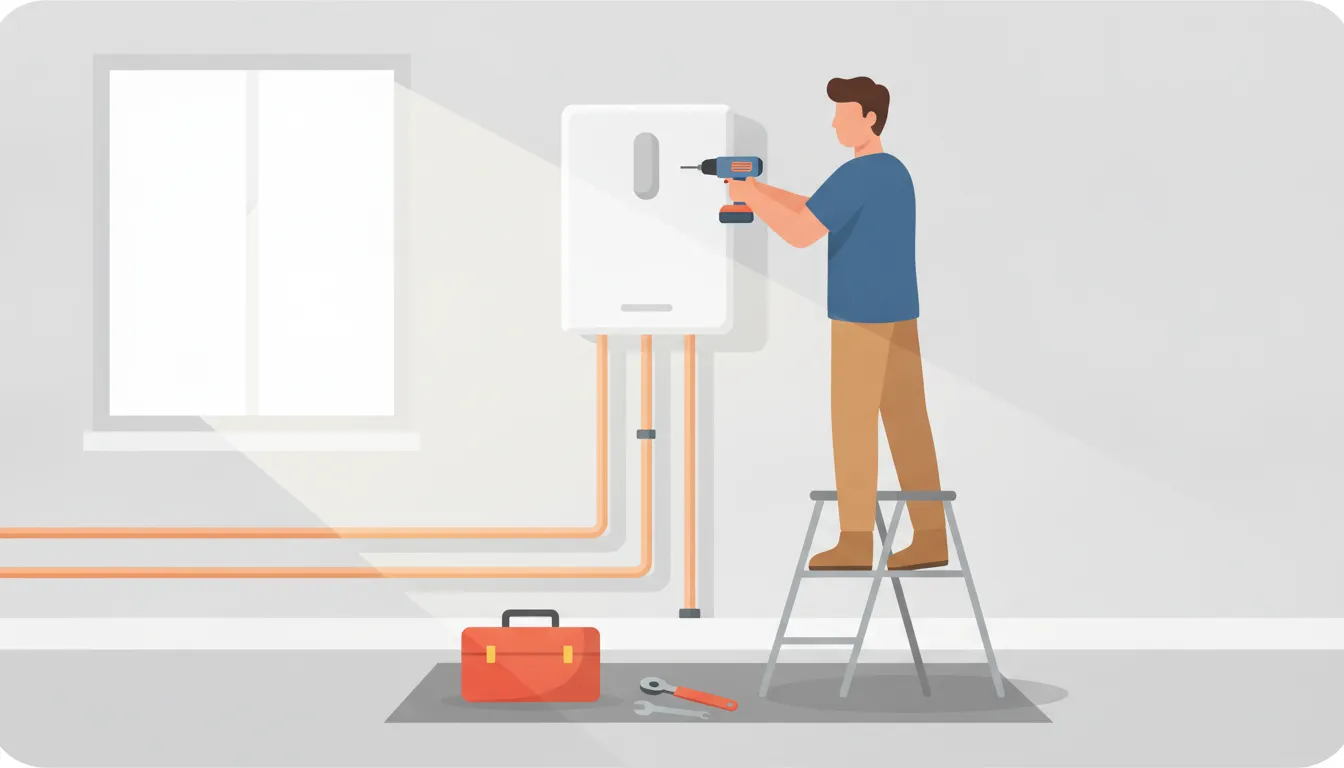
How Much Does a Tankless Water Heater Cost Stuart?
Replacing a traditional tank water heater in Stuart is not priced by the unit alone. The final estimate can include installation labor, gas or electrical upgrades, venting, permits, water-line changes, and the flow rate your household needs.
For how much does a tankless water heater cost stuart projects, a realistic starting range is about $1,800 to $4,500 installed, with the tankless unit itself often accounting for roughly $700 to $1,500. Your home's fuel type, existing connections, hot-water demand, and permit requirements can move the total higher or lower.
A professional evaluation is the safest way to replace a broad online range with a written, home-specific price. Miranda offers free estimates and Straightforward Pricing for Treasure Coast homeowners, so you can compare the equipment, labor, and required upgrades before approving the work.
Request your tankless water heater estimate.
The cost breakdown below explains where that investment goes and which details matter most.
How much does a tankless water heater cost in Stuart, FL?
Most tankless water heater installations in Stuart cost about $1,800 to $5,500 when the unit, labor, required upgrades, and permit are included. For a whole-home gas system in a typical Stuart residence, a realistic mid-range budget is approximately $3,000 to $4,500. The final quote depends less on a universal price list and more on how closely the new system matches your home's existing setup. Your plumbing, gas, electrical, and venting requirements all shape the final figure.
That range is consistent with published Florida installation estimates. One Florida cost guide places installed projects around $1,800 to $4,500, while another reports typical installations between $3,200 and $5,500, depending on the home. These figures are useful for planning, but they are not a substitute for an in-home assessment.
What is included in the total installation price?
A tankless installation estimate generally combines four major cost categories:
- The unit: The heater itself varies by fuel type, brand, flow-rate capacity, and efficiency. A system sized for one or two fixtures at a time will not have the same equipment cost as a whole-home model designed for several simultaneous demands.
- Labor: Labor covers removing the existing heater, mounting the new unit, connecting water lines, testing the system, and commissioning it according to the manufacturer's instructions.
- Plumbing, gas, electrical, or venting upgrades: A gas tankless unit may need a properly sized gas line, suitable combustion-air provisions, and approved venting. Some models also require nearby electrical power. If your existing infrastructure is not adequate, those improvements can move the project toward the upper end of the range.
- Permit and inspection costs: Local permit requirements and fees should be included in the written estimate when applicable. A qualified installer should understand local residential codes and explain which permits the project requires.
Why can two Stuart homes receive different quotes?
Two homes can need different equipment even when they have the same number of occupants. An installer should evaluate the household's peak hot-water demand in gallons per minute, including whether showers, faucets, appliances, or other fixtures may run at the same time. Incoming cold-water temperature also affects the flow rate a tankless system can deliver. Fuel type and brand add another layer of variation, since gas and electric models have different capacity and installation requirements.
For that reason, compare estimates by what they include, not just by the bottom-line number. Ask whether the quote covers the unit, removal, labor, gas or electrical work, venting, plumbing changes, permit handling, startup, and warranty requirements. ENERGY STAR recommends requesting installation cost estimates in writing and getting a customized price from an installer rather than relying only on retail pricing. See our guide to professional tankless water heater installation to understand the service involved.
A written, itemized quote gives you a clearer basis for deciding whether the project fits your budget and helps prevent unexpected charges after work begins.
What does the tankless water heater unit itself cost?
The equipment price is only one part of the project, but it is a useful starting point when you are comparing options in Stuart. For a typical whole-home gas tankless water heater, plan on roughly $700 to $1,500 for the unit itself. A recent Port Saint Lucie pricing reference lists a typical unit range of about $759 to $994, with a broader reported range of $408 to $1,361. Use those figures as planning guidance, not as a guaranteed local quote.
How do electric and gas units compare in price?
Electric tankless water heaters are often the least expensive units to purchase. They can work well for a smaller home, a single point of use, or a household with modest simultaneous hot-water demand. However, the lowest equipment price does not automatically mean the lowest project price. A whole-home electric model may require substantial electrical capacity, new breakers, or wiring upgrades.
Gas-fired whole-home units generally cost more than basic electric models because they are designed to heat a larger volume of water quickly. Gas models also tend to offer higher flow rates than electric units, which can matter when showers, faucets, and appliances operate at the same time. Within the gas category, condensing models and other high-end units typically cost more upfront. Their design may support strong efficiency and a longer service life when correctly installed and maintained, but the equipment should still be selected for the home's actual needs.
What makes one tankless unit more expensive than another?
Fuel type is only the first pricing factor. Flow-rate capacity, measured in gallons per minute, affects the size and cost of the unit. A small unit may be adequate for one bathroom, while a larger home may need a higher-capacity model or more than one unit. Brand, efficiency rating, controls, warranty coverage, and installation requirements also influence the price.
ENERGY STAR advises homeowners to compare manufacturer or retailer pricing for a general idea, then have an installer provide a customized price. The final recommendation depends on your incoming water temperature, household demand, available gas or electrical service, and the location of the existing heater. In Stuart, those details are especially important because the equipment selected must match the home's plumbing and utility setup, not just fit a catalog price.
Remember that the unit is not the complete cost. Labor, venting, gas-line or electrical work, connections, permits, disposal, and startup testing may all appear on the final estimate. A professional tankless water heater installation quote should identify the model, included work, permit responsibility, and any required upgrades so you can compare estimates accurately.
How much does installation labor add to the total?
Installation labor for a tankless water heater in Stuart often adds roughly $1,000 to $2,500 or more to the project. The final amount depends on how closely the new system matches your home's existing plumbing, gas, venting, and electrical setup. A tankless installation is not always a simple remove-and-replace job. The installer must confirm that the system can operate safely and deliver enough hot water for your household.
For a gas-fired model, the technician should verify that the existing natural gas line is large enough for the unit. If it is not, upgrading the line can add material and labor costs. The installation also needs adequate combustion air and correctly sized gas connections. ENERGY STAR recommends having an installer evaluate these requirements before the work begins. Learn more about tankless installation requirements from ENERGY STAR.
What upgrades can increase the labor cost?
Venting is another major consideration. Gas tankless heaters produce combustion gases that must be vented through an approved configuration. Depending on the unit and the home's layout, the installer may need to add a new vent, adjust the termination point, or modify the surrounding materials. Proper combustion-gas venting is a safety requirement, not an optional upgrade.
Some models, especially forced-ventilation systems, also need dependable electrical power near the water heater. If no suitable outlet is available, a dedicated circuit or other electrical work may be necessary. These changes can make the project more expensive, but they help the system operate as designed.
Water demand matters, too. A professional should size the unit according to the gallons-per-minute needs of your fixtures and household, rather than choosing a model based only on its purchase price. Incoming cold-water temperature also affects the flow rate a tankless unit can provide. Even in Stuart's warm climate, the expected temperature change and the number of fixtures running at once should be considered during planning.
For a reliable estimate, ask for the equipment, labor, gas-line or venting upgrades, electrical work, and any other expected charges in writing. You can review professional tankless water heater installation options before scheduling an evaluation. Finally, installation must follow the manufacturer's guidelines to keep the warranty valid. A careful installation may cost more than the lowest bid, but it helps protect your home, your equipment, and your long-term investment.
Do you need a permit to install a tankless water heater in Stuart?
In most cases, replacing a water heater involves more than disconnecting the old unit and connecting the new one. On the Treasure Coast, a plumbing permit may be required for a tankless water heater installation. Although the exact requirement can vary by property address, project scope, and the authority having jurisdiction in Martin County.
Gas-fired tankless systems may involve additional review because the installation can affect several safety-related components. The existing gas line must be evaluated to confirm it can supply the unit. The installer may also need to verify combustion air, electrical access for forced-vent models, and the route and materials used for combustion-gas venting. ENERGY STAR recommends confirming these installation details with an experienced professional before work begins. Review the ENERGY STAR installation guidance for the considerations that can affect a gas tankless system.
Who is responsible for obtaining the permit?
Ask the installing company directly whether a permit is necessary and whether the company will obtain it, coordinate inspections, and close it out after the work passes inspection. ENERGY STAR specifically advises homeowners to confirm that the company will obtain the local permit if necessary and understands local residential building codes. This is an important question because a low initial estimate may not include permit handling or inspection-related work.
A licensed professional should confirm the rules for your Stuart address rather than making a blanket promise. The answer can change based on whether the unit is electric or gas, whether you are changing fuel types. Whether the gas line or venting must be modified, and whether the home is in a jurisdiction with additional requirements. Do not assume that a permit is unnecessary simply because the replacement unit is similar in size to the old water heater.
How much do permits add to the total cost?
Permit costs are typically a modest part of the overall project, but they still count toward the total price of a tankless water heater installation. Include the local permit fee, permit processing, and any inspection-related charges in your budget. The amount cannot be confirmed accurately without checking the applicable local schedule and the details of the installation.
When comparing estimates, request a written price that clearly states whether permits are included. ENERGY STAR recommends requesting installation cost estimates in writing. A complete estimate should identify the equipment, labor, gas-line or venting modifications, permit responsibilities, and any expected inspection fees. That written detail makes it easier to compare proposals and gives you a clearer answer to how much does a tankless water heater cost in Stuart for your specific home.
What factors can raise or lower your total cost?
The equipment price is only one part of a tankless water heater project in Stuart. The right system has to match your home's hot water demand, available fuel, incoming water conditions, and existing utility connections. A lower-priced unit may not be the best value if it cannot keep up with your household or requires major changes during installation.
How does household demand affect the price?
Tankless units are sized by flow rate, measured in gallons per minute (GPM). An experienced plumber considers the fixtures that may operate at the same time, such as showers, faucets, a washing machine, or a dishwasher. A home where two people regularly shower at once may need more capacity than a smaller household with staggered usage. Choosing a unit that is too small can lead to inconsistent temperatures, while choosing an unnecessarily large model raises the equipment and installation cost.
Large homes with several bathrooms may need a higher-capacity unit or two units installed in parallel. Parallel units can provide more output for periods of heavy demand, but they also increase equipment, labor, venting, and connection costs. A professional load assessment helps you pay for the capacity you actually need.
How do fuel type and brand change the estimate?
Natural gas models often provide higher flow rates and can cost less to operate, but they may require a properly sized gas line and approved venting. If the existing line cannot supply the unit, upgrading it adds labor and materials. Electric models are often simpler to connect because they do not require combustion venting, but they can have higher flow limitations and may require substantial electrical capacity. The fuel already serving your home, the available utility connections, and the model's flow rating all affect the final recommendation.
Brand also matters. Manufacturers offer different efficiency ratings, controls, warranties, and capacity options. Prices can vary significantly by fuel type, flow rate, and brand, so online unit prices are not a substitute for an in-home estimate. ENERGY STAR recommends getting a customized price from an installer rather than relying only on a general retail figure.
What do Stuart water conditions and installation requirements change?
Incoming cold water temperature affects the flow rate a tankless unit can deliver. The unit must work harder to raise colder water to your selected temperature. Local water hardness can also contribute to mineral scaling, which makes correct sizing and ongoing maintenance important. Periodic service, including flushing the heat exchanger when appropriate, helps protect performance over time.
Gas venting, combustion-air requirements, nearby electrical access, water-line changes, and code-related work can all add to installation labor. Proper installation also needs to follow the manufacturer's guidelines to preserve warranty coverage. For a clear estimate, ask what is included in the scope, including utility upgrades, permits, startup, and removal of the old heater. Miranda can review your home's demands and provide expert water heater repair services when repair is a better fit than replacement.
Contact Miranda for a free tankless water heater quote today.
Tankless vs. tank water heater cost: which saves more over time?
The lower price at checkout is not always the lower cost over the life of the equipment. A traditional storage water heater usually costs less to purchase and install, while a tankless model typically requires a larger initial investment. The better value depends on how much hot water your household uses. How long you expect to stay in the home, and how much room your budget allows for the project.
Tankless systems heat water only when a fixture calls for it. According to ENERGY STAR guidance, certified gas tankless units can reduce water-heating expenses by avoiding the need to keep a tank hot between uses. Actual savings vary with fuel type, household demand, utility rates, and equipment selection.
| Cost factor | Tankless water heater | Tank or storage water heater |
|---|---|---|
| Initial cost | Usually higher because the unit and installation may require sizing, electrical work, gas-line changes, or new venting. | Usually lower upfront, especially when replacing an existing tank with a similar model. |
| Expected lifespan | Typically more than 20 years when properly installed and maintained. | Usually about 10 to 15 years, depending on water conditions, use, and maintenance. |
| Energy efficiency | No standby tank losses. Some sources report energy-cost reductions of up to 35% compared with tank-style systems, but results vary. | Continues using energy to maintain stored water at temperature between uses. |
| Maintenance | May require periodic professional flushing to help protect the heat exchanger and preserve performance. | Requires routine inspection and may eventually need repairs for sediment, corrosion, or a leaking tank. |
| Long-term cost | Higher initial cost may be offset by lower operating costs and a longer service life. | Lower purchase price can be attractive now, but an earlier replacement may mean paying for the equipment and installation again. |
For a busy household that uses hot water throughout the day, a properly sized tankless system can make sense over a longer ownership period. However, a storage heater may be the practical choice when the priority is minimizing today's project cost or when the home's gas. Electrical, or venting setup would need substantial changes. Tankless sizing should account for the gallons-per-minute demand of fixtures and appliances, not just the number of people in the home.
A licensed plumber can compare both options using your household's demand, existing connections, and replacement timeline. If you already have inconsistent hot water, leaks, or another equipment concern, schedule water heater repair before deciding whether a full replacement is the better investment.
Is a tankless water heater worth the higher upfront cost in Florida?
For many Florida homeowners, a tankless water heater can be worth paying more upfront. But the right answer depends on your household's hot-water use and how long you plan to keep the home. A tankless system heats water only when a faucet or appliance calls for it, so it avoids the standby energy losses associated with keeping a storage tank hot. ENERGY STAR explains that certified gas tankless models can reduce water-heating expenses while providing continuous hot water.
The long service life is another important part of the calculation. Tankless units commonly last more than 20 years, while traditional storage water heaters often last about 10 to 15 years. That does not guarantee a specific lifespan, and water quality, installation quality, and maintenance all matter. However. A homeowner who expects to remain in the same house for many years may have more time to recover the initial investment through lower operating costs and fewer replacement cycles.
What savings can you expect from a tankless system?
Some industry estimates put potential energy-cost reductions at up to 35% compared with tank-style heaters. Your actual savings will vary. A small household with modest hot-water demand may not save enough to justify the upgrade quickly. A larger family that uses hot water throughout the day may benefit more from on-demand heating and an uninterrupted supply. A properly sized system is essential because performance depends on the home's peak flow demand and the temperature of incoming water.
Florida homeowners also value the compact design. A wall-mounted unit can free up floor space in a utility room, garage, or closet. Continuous hot water is useful when several people need showers or when laundry and dishwashing overlap, although a single unit still has a maximum flow rate. Larger homes may need a higher-capacity model or more than one unit.
How does Florida water quality affect the value?
Hard water can leave mineral scale inside the heat exchanger. Periodic flushing or descaling helps the unit transfer heat efficiently and can protect performance over time. Skipping maintenance may reduce efficiency and shorten the system's useful life, which weakens the financial case for choosing tankless. Ask your installer how often the unit should be serviced based on local water conditions and your home's usage.
Potential incentives can improve the numbers. Certain energy-efficient natural gas water heaters may qualify for federal tax credits, and local or utility rebates may also be available. Eligibility rules change, so check the current requirements before purchasing and keep the required product and installation documentation.
When you compare options, request a written estimate that includes the unit, installation, permits, fuel or electrical upgrades, and maintenance expectations. A professional tankless water heater installation assessment can show whether the long-term savings, space benefits, and hot-water capacity justify the higher initial price for your Stuart home.
Request your free tankless water heater estimate today.
Frequently Asked Questions
What is the average cost to install a tankless water heater in Stuart, FL?
A complete installation commonly falls between $1,800 and $5,500 in Florida, but your Stuart estimate may differ. The total depends on the unit, fuel type, water demand, gas-line capacity, venting, electrical work, labor, and permits. Ask for a written estimate that separates equipment, installation, permit fees, and any required upgrades.
How much does a tankless water heater unit cost before installation?
The unit itself often costs less than the finished project, with pricing influenced by whether it is gas or electric, the required flow rate, and the brand. A smaller electric model may suit a limited application, while a higher-capacity gas model can cost more. The right choice should match your household's peak hot-water demand rather than the lowest sticker price.
Does the size of my house affect tankless water heater costs?
House size matters indirectly because the number of bathrooms, occupants, and appliances using hot water at the same time determines the required gallons-per-minute rating. Larger homes may need a higher-capacity unit or multiple units installed in parallel. An experienced plumber should calculate demand before recommending equipment. ENERGY STAR provides guidance on sizing by household hot-water needs.
What factors influence the total installation cost?
Existing conditions are often the biggest variable. A gas unit may require a larger gas line, suitable combustion-air planning, or new venting, while an electric model may need adequate electrical capacity. Incoming water temperature also affects available flow. Local permits, access, manufacturer requirements, and any needed plumbing upgrades should be listed clearly in the final quote.
Ready to Get a Tankless Water Heater Quote?
A professional estimate can help you compare equipment, installation requirements, and the right setup for your Stuart home before you commit. Miranda Plumbing & Air can review your needs and provide clear guidance for your project. Contact us to get a free, no-obligation tankless water heater quote and take the next step toward efficient hot water.
Need plumbing or HVAC service on the Treasure Coast?
Contact Miranda Plumbing & Air