
Heat Pump Maintenance: A Florida Homeowner Checklist
Heat pump maintenance helps Florida homeowners protect comfort through long cooling seasons and occasional heating weather. This checklist separates safe homeowner tasks from professional service.
Schedule a heat pump maintenance visit with Miranda Home Services.
What Does Heat Pump Maintenance Include?
Heat pump maintenance is routine care that checks airflow, controls, coils, drainage, electrical components, and refrigerant performance. The goal is dependable heating and cooling, not a remote diagnosis.
Homeowners can handle simple observations and filter care. A qualified HVAC technician should handle electrical testing, refrigerant work, coil access, and safety checks. ENERGY STAR recommends annual pre-season checkups for heating and cooling equipment.
Heat pumps reverse their operating cycle between cooling and heating. That design gives Florida homes year-round climate control, but it also makes seasonal performance checks important.
Which Heat Pump Checks Can Florida Homeowners Do Safely?
Most safe homeowner checks focus on airflow, visible conditions, and system behavior. Turn the system off at the thermostat before replacing a filter or clearing loose debris.
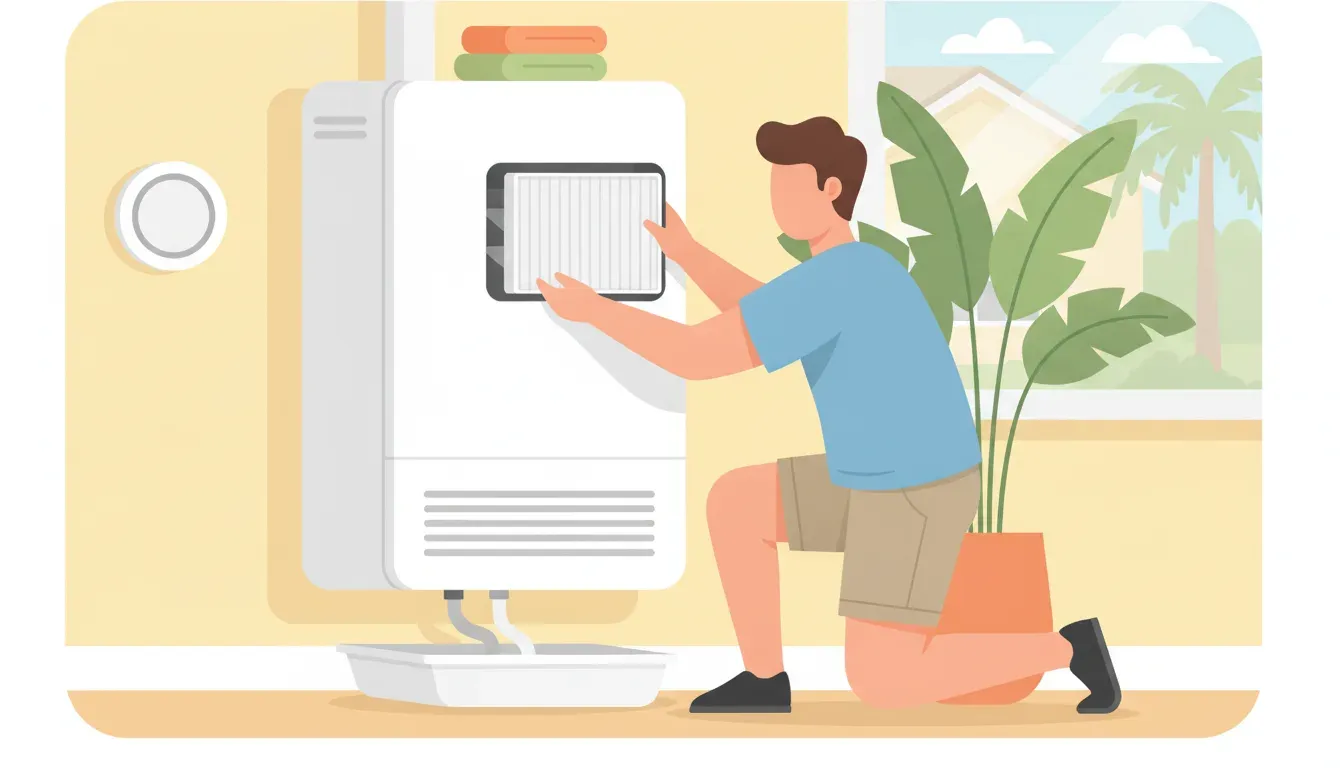
- Check the air filter. Follow the filter size and replacement schedule in your equipment instructions. Replace a visibly dirty filter sooner.
- Keep supply vents open. Confirm that furniture, rugs, and curtains are not blocking registers or return grilles.
- Clear the outdoor area. Remove leaves, grass, and loose debris around the outdoor cabinet. Leave service access around the unit.
- Look for standing water. Check around the indoor air handler and condensate discharge area. Water near the equipment deserves prompt attention.
- Listen during startup. Note new grinding, scraping, buzzing, or repeated clicking sounds. Turn the system off if a sound is severe.
- Review thermostat operation. Confirm the mode, setpoint, schedule, and fan setting match your comfort needs.
Do not remove electrical panels, test capacitors, add refrigerant, or open sealed controls. Do not pour cleaners into a drain unless the equipment instructions or a technician specifically recommends the product.
How Often Should a Heat Pump Be Serviced in Florida?
Most Florida homeowners should plan at least one professional heat pump service visit each year. Homes with heavy use, pets, allergies, coastal exposure, or recurring drainage issues may need a different schedule.
Ask a technician to align the schedule with the manufacturer instructions, equipment age, run time, and service history. Annual service is a starting point, not a guarantee that every system needs the same visits.
| Task | Suggested timing | Who should handle it |
|---|---|---|
| Check the filter | Monthly, or as the manufacturer directs | Homeowner |
| Clear loose outdoor debris | After storms and throughout the year | Homeowner, with the system off |
| Watch drainage and system behavior | During every heating or cooling cycle | Homeowner observation |
| Professional maintenance | At least annually, before the heavier season | Qualified HVAC technician |
Miranda's AC tune-up and maintenance service can help homeowners plan routine care for Florida equipment. A technician can explain whether your heat pump needs a specialized service interval.
Why Does Florida Weather Change the Maintenance Plan?
Florida heat, humidity, storms, and coastal air can increase the attention a heat pump needs. These conditions do not prove a problem, but they make airflow, drainage, and outdoor-unit checks especially useful.
Humidity means the system may remove substantial moisture while cooling. A clogged condensate drain can lead to water near the air handler, indoor humidity concerns, or a safety switch that stops operation.
Storms can leave leaves, branches, and windblown material around the outdoor unit. Never reach into the cabinet. With power off, remove only loose debris that you can safely reach from outside the unit.
Homes near the coast may experience salt-air exposure. Salt deposits and corrosion require professional inspection because the affected electrical and coil components are not safe DIY work.
When severe weather is expected, follow the equipment instructions and local safety guidance. If the outdoor unit has storm damage, do not restart it until a qualified technician evaluates the system.
What Should a Professional Heat Pump Tune-Up Check?
A professional heat pump tune-up should verify safe operation in the modes your system uses. The technician should document findings and explain recommended repairs before work begins.
- Thermostat and controls: Confirm settings, startup, shutdown, and changeover behavior.
- Airflow: Check the filter, blower operation, return path, and supply performance.
- Coils: Inspect and clean accessible indoor and outdoor coil surfaces as needed.
- Condensate drainage: Inspect the drain, pan, float switch, and discharge path.
- Electrical components: Check connections, voltage, current, and safe component operation.
- Refrigerant circuit: Evaluate operating conditions and look for signs of a leak.
- Reversing operation: Confirm the equipment changes between heating and cooling correctly.
- Outdoor cabinet: Check the fan, cabinet condition, clearances, and visible corrosion.
ENERGY STAR lists electrical connections, condensate drains, controls, coils, refrigerant, and airflow among typical maintenance checks. The ENERGY STAR maintenance checklist provides a useful reference for homeowners.
A tune-up is not the same as replacing a failed part. If the visit identifies a repair need, ask what failed, whether the system is safe to operate, and what options are available.
Ask Miranda to review your heat pump maintenance needs before the next season.
What Heat Pump Warning Signs Should You Not Ignore?
Call for professional help when a heat pump shows a new performance, sound, moisture, or safety concern. Prompt attention can reduce the chance of a small issue becoming a larger service problem.
- The system blows cool air during a heating call or warm air during a cooling call.
- The outdoor unit develops persistent ice during conditions that do not explain it.
- The system starts and stops repeatedly without reaching the thermostat setting.
- Water collects near the indoor unit, drain pan, or other unexpected location.
- Energy use rises without a clear change in weather, settings, or household use.
- The equipment makes a new grinding, screeching, rattling, or electrical buzzing sound.
- A burning smell, smoke, or damaged wiring appears near the equipment.
- The thermostat shows an alert, auxiliary heat runs often, or the system will not start.
Turn the system off and seek urgent help for smoke, burning odors, exposed wiring, major water leaks, or suspected refrigerant release. Miranda provides air conditioning repair and diagnosis for homeowners who need a professional assessment.
A visible symptom does not identify the failed component. A technician needs to inspect the equipment and operating conditions before recommending repair or replacement.
Is the 20-Degree Rule a Reliable Heat Pump Test?
The 20-degree rule is not a universal homeowner diagnostic. Indoor comfort depends on outdoor temperature, humidity, equipment size, airflow, thermostat settings, and the home's insulation.
Heat pumps can produce different supply-air temperatures than combustion systems. Comparing one vent temperature to a fixed number can create a false alarm or delay needed service.
Instead, watch for stable comfort, normal cycling, expected airflow, and unusual changes from your system's usual behavior. If performance changes suddenly, arrange an inspection.
How Can Homeowners Prepare a Heat Pump for Storm Season?
Storm preparation starts with safe access and a plan for debris, power interruptions, and water intrusion. Do not tie down, cover, or alter equipment in a way that blocks required airflow.
- Record the equipment information. Save the model number, filter size, service history, and technician contact details.
- Clear the surrounding area. Remove loose outdoor objects that could strike the cabinet during high winds.
- Protect indoor equipment from leaks. Check that the air handler area remains accessible and free of stored items.
- Follow power safety guidance. If officials advise shutting off power, follow their instructions and do not operate damaged equipment.
- Inspect before restart. After a storm, look for visible damage or flooding. Call a professional before restarting a damaged system.
Miranda's emergency HVAC service is available for urgent system concerns. Availability and response timing can depend on conditions during a major storm.
What Is the Best Heat Pump Maintenance Checklist for a Florida Home?
The best checklist combines simple monthly observations with professional service before the heavier heating and cooling seasons. It should reflect your equipment instructions, home conditions, and service history.
- Check the filter and replace it when dirty or when the manufacturer schedule requires it.
- Keep vents, returns, and the outdoor unit area clear of obstructions.
- Watch for water, ice, unusual sounds, odors, short cycling, or changing comfort.
- Schedule professional maintenance at least annually, or more often when recommended.
- Ask the technician to explain findings, safety concerns, and repair options in writing.
- Keep records so you can identify changes from normal system behavior.
Routine maintenance cannot prevent every breakdown. It can make developing concerns easier to notice and gives a technician better information during service.
Frequently Asked Questions
Is heat pump maintenance necessary in Florida?
Yes, routine heat pump maintenance is useful in Florida because equipment may run through long cooling seasons and occasional heating weather. Maintenance checks airflow, drainage, controls, electrical operation, coils, and refrigerant performance. Homeowners can handle filters and visual checks, while a qualified technician should handle testing and refrigerant work.
How often should a heat pump be serviced?
Most homeowners should plan professional service at least once each year. Your equipment instructions, run time, age, coastal exposure, pets, allergies, and service history may change that schedule. Ask a technician whether your system needs one visit or a more frequent plan.
Can I clean my heat pump myself?
You can replace the filter and clear loose debris from around the outdoor cabinet with the system off. Do not remove panels, spray electrical components, handle refrigerant, or clean inaccessible coils. A qualified HVAC technician should complete work that requires testing, tools, or access inside the equipment.
Why is my heat pump icing up?
Ice can have several causes, including airflow problems, drainage concerns, outdoor conditions, or a refrigerant issue. Do not assume the cause from the appearance alone. Turn the system off if needed and arrange a professional inspection, especially when ice returns or comfort changes.
What does a heat pump tune-up cost?
There is no reliable single price for every Florida home. Cost depends on the equipment, access, service scope, condition, and any repairs found. Ask Miranda for the current service scope and written estimate rather than relying on a generic online figure.
Keep Your Florida Heat Pump Ready
Heat pump maintenance is a practical mix of filter care, outdoor-area checks, performance observations, and professional inspection. Florida homeowners can use this checklist to spot changes early without taking unsafe equipment apart.
When the system needs a qualified assessment, Miranda Home Services can explain the next step for your Treasure Coast home. Contact the team with your equipment details, symptoms, and recent service history.
Contact Miranda Home Services to schedule heat pump maintenance.
Need plumbing or HVAC service on the Treasure Coast?
Contact Miranda Plumbing & Air