
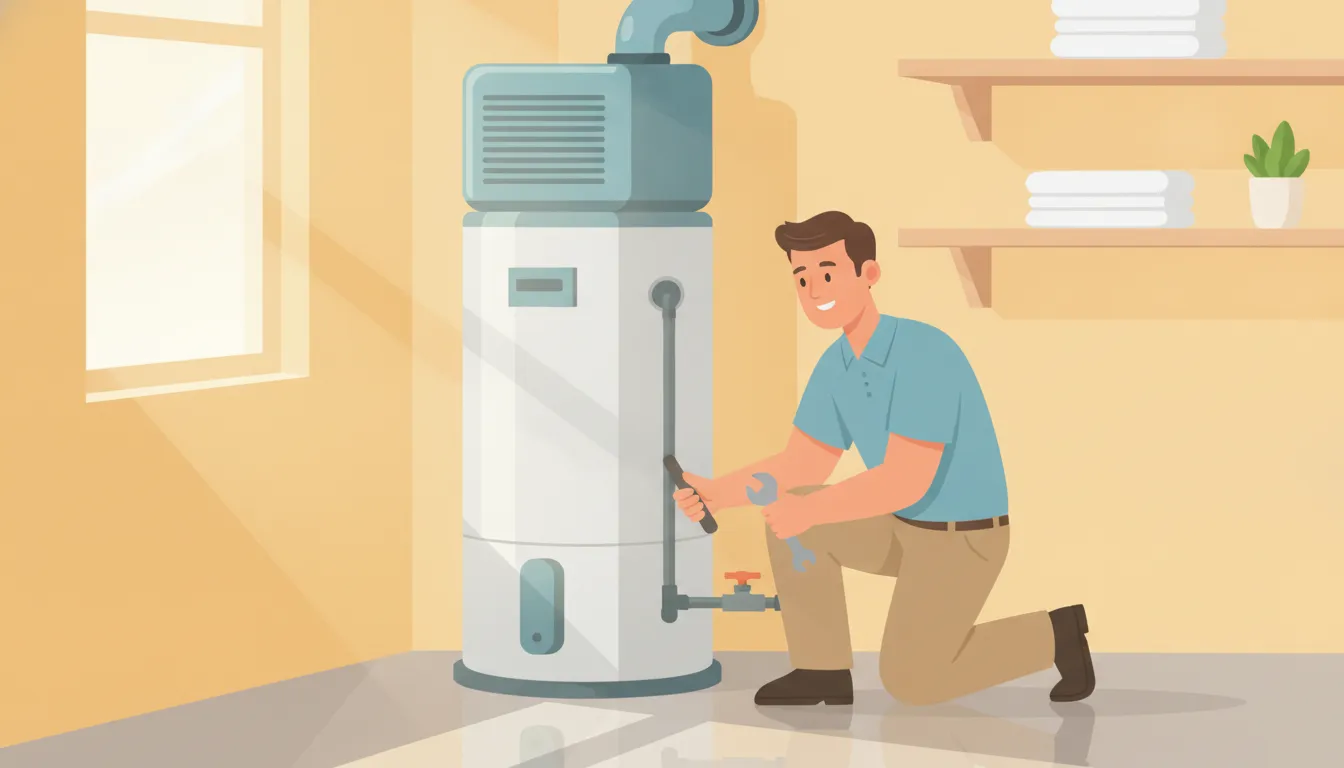
Energy Efficient Water Heater Florida: A Homeowner's Guide
In a Florida home, the water heater works through long stretches of heat, humidity, and daily demand. That climate makes efficiency more than a label on a product box. The right system can reduce wasted energy while still providing dependable hot water for showers, laundry, and dishes.
An energy efficient water heater florida homeowners commonly consider is a heat pump model, which draws heat from surrounding air instead of generating all of it directly. High-efficiency tankless and storage-tank models can also be practical choices, depending on household demand, available space, installation requirements, and budget. Some Florida utilities offer rebates for qualifying ENERGY STAR certified heat pump water heaters, and eligibility may depend on equipment ratings, a Home Energy Check, and licensed installation. Source: ENERGY STAR Rebate Finder.
Choosing well starts with understanding how efficiency is measured and how Florida conditions affect performance. Climate, water quality, household size, and maintenance needs all shape the best fit. So the first step is knowing what separates a genuinely efficient system from one that merely uses the term in its marketing.
What Makes a Water Heater Energy Efficient in Florida?
Energy efficiency starts with how much useful hot water a system produces for the energy it consumes. When comparing models, you may see an Energy Factor (EF) or Uniform Energy Factor (UEF) rating. A higher rating generally indicates that more of the energy entering the unit becomes usable hot water, with less lost during standby and operation. Some Florida utility rebate programs specify an EF of 0.81 or higher, so check current requirements before choosing a model. ENERGY STAR's rebate finder can help identify available program details.
How do heat pump water heaters work in Florida?
A heat pump water heater uses electricity to move heat from the surrounding air into the tank instead of creating all of that heat directly. Florida's warm climate gives this type of system a useful source of ambient heat. Which is why heat pump models can be a strong efficiency choice for local homeowners. Research from the University of Central Florida identifies heat pump water heaters as a significant energy-savings opportunity for Florida residents.
Placement still matters. The unit needs adequate surrounding air and should be installed where its cooling and dehumidifying effect is appropriate for the home. A professional can also confirm that the electrical service, condensate drainage, clearances, and water connections are suitable. In a state with year-round cooling needs and high humidity, the complete installation matters as much as the rating on the equipment.
Are tankless water heaters energy efficient?
Tankless systems heat water as it is needed, rather than maintaining a full tank at a set temperature. That can reduce standby losses and may work well in homes with the right demand pattern. However, energy savings depend on household usage, gas or electrical capacity, fixture flow rates, and correct sizing. A tankless unit is not automatically the best choice for every Florida home, especially if several showers or appliances may run at once.
What about high-efficiency storage tanks?
High-efficiency storage tanks remain a practical option when a household wants dependable stored hot water and a familiar system design. Improved insulation and efficient burners or heating elements can reduce heat loss compared with older equipment. High-efficiency tankless, heat pump, and storage-tank models can all be sensible choices for Florida homes when matched to the property's fuel source, space, hot-water demand, and budget. For help comparing those options, ask about energy efficient water heater installation and have the full system evaluated before purchasing.
Which Type of Energy Efficient Water Heater Is Right for a Florida Home?
Florida homeowners have three strong options when replacing a conventional water heater: a heat pump, a tankless unit, or a high-efficiency storage tank. The right choice depends on your household's hot-water demand, available space, electrical and gas service, installation budget, and how much you value long-term energy savings. Florida's warm, humid climate gives heat pump models an important advantage because they extract heat from the surrounding air instead of generating all of it directly. The University of Central Florida identifies heat pump water heaters as a significant energy-savings opportunity for Florida residents.
| Type | Energy source | Typical lifespan | Upfront cost | Potential savings | Florida climate fit |
|---|---|---|---|---|---|
| Heat pump (hybrid) | Electricity plus heat drawn from surrounding air | Often about 10 to 15 years with proper care | Higher | Very high compared with standard electric tanks | Excellent in warm, humid conditions; needs suitable space and airflow |
| Tankless on-demand | Natural gas, propane, or electricity | Often about 15 to 20 years with maintenance | Higher | High because it heats water only when needed | Very good when correctly sized for demand and available fuel service |
| High-efficiency storage tank | Electricity or gas | Often about 8 to 12 years with maintenance | Low to moderate | Moderate; lower purchase cost than many advanced systems | Good for straightforward replacement and predictable hot-water storage |
When is a heat pump water heater the best choice?
A heat pump is often the strongest fit for a Florida home with adequate installation space and a household that wants to reduce electric water-heating costs. It can also support demand-load shifting, helping manage consumption during peak periods in the Southeast. However, the unit needs an appropriate location with enough air volume and drainage. A technician should also confirm that the existing electrical service and condensate setup are suitable.
When should you choose tankless or high-efficiency storage?
Tankless is worth considering when continuous hot water, compact installation, or a long service life matters most. It must be sized for simultaneous showers, appliances, and fixtures, and it may require fuel-line or electrical upgrades. A high-efficiency storage tank can be the practical choice when the budget is tighter. The existing layout is convenient, or the home needs a familiar reserve of hot water. All three types are recognized as energy-saving choices for Florida homes, but performance depends on correct sizing and installation.
For help comparing equipment, space, and operating costs, Miranda technicians can recommend an energy efficient water heater installation based on your home and priorities.
How Much Can an Energy Efficient Water Heater Save You in Florida?
Your water heater is often working every day, which makes its efficiency an important part of your household energy costs. Water heating is typically the third-largest energy expense in a home, so replacing an older, inefficient unit can create a meaningful opportunity to reduce utility bills over time. The exact savings depend on your household size, hot-water habits, electric rates, fuel source, and the condition of your current system.
A high-efficiency model uses less energy to produce the same amount of hot water. Heat pump water heaters are especially well suited to Florida because they extract heat from the surrounding air instead of generating heat directly. Research from the University of Central Florida identifies heat pump water heaters as a significant energy-savings opportunity for Florida residents. In a warm climate, the surrounding air gives the system a dependable source of heat for water production.
What affects your potential monthly savings?
The largest difference usually comes from the gap between your existing unit and the replacement. An aging electric tank may lose more heat while it sits idle, while a newer high-efficiency tank. Tankless system, or heat pump model can reduce the energy required to deliver hot water. Your household's demand matters too. A large family with frequent showers and laundry loads may see more absolute savings than a smaller household, even if the percentage reduction is similar.
When comparing equipment, review the model's efficiency rating rather than relying only on the purchase price. Some Florida utility rebate programs require an Energy Factor of at least 0.81 for qualifying high-efficiency water heaters. Requirements vary by utility and equipment type, so check the current terms before choosing a model. A lower operating cost may also help offset a higher upfront price, particularly when a rebate is available.
Can a heat pump water heater help during peak demand?
Heat pump water heaters can also support demand-load shifting, which means heating can be managed to reduce electricity use during more expensive or heavily loaded periods. A Southeast-focused laboratory evaluation examined the demand-load-shifting potential of controlled heat pump water heaters. This does not guarantee a specific bill reduction for every Florida home, but it shows why system controls and usage timing can matter alongside the equipment's basic efficiency.
For a realistic estimate, have a professional compare your current energy use, hot-water demand, available installation space, and local utility requirements. Miranda can help you weigh operating costs against installation price and select an option suited to Florida's year-round heat and humidity. Explore energy efficient water heater replacement when your current unit is nearing the end of its service life.
Contact Miranda Plumbing & Air to discuss your water heater savings options.
What Florida Water Heater Rebates and Incentives Are Available?
If you are comparing an energy efficient water heater in Florida, check available rebates before choosing a model. Several Florida utilities, including Duke Energy and JEA, offer incentives for qualifying ENERGY STAR certified heat pump water heaters. Program details vary by utility, service address, equipment type, and purchase date, so confirm the current requirements before ordering.
Which equipment usually qualifies?
Many rebate programs focus on ENERGY STAR certified heat pump water heaters because they move heat from the surrounding air instead of creating heat directly. That design can be a strong fit for Florida's warm climate. Some utility programs also set a minimum efficiency threshold, such as an Energy Factor of 0.81 or greater. Do not assume that every efficient-looking model qualifies. Check the exact model number against the program's approved equipment list or the ENERGY STAR Rebate Finder before buying.
What should you check before applying?
- Confirm your utility: Start with the utility serving the property and review its current water heater incentive rules.
- Verify the model: Confirm ENERGY STAR certification, efficiency ratings, tank size, and any program-specific requirements.
- Review timing: Some rebates require pre-approval or an application within a set period after purchase and installation.
- Check the home assessment rule: Certain programs may require a Home Energy Check completed within the previous 24 months.
- Save your documents: Keep the itemized invoice, model and serial number, proof of installation, and any required forms.
Does the installation contractor affect rebate eligibility?
It can. Many Florida rebate programs require installation by a licensed and insured contractor. Using a qualified professional also helps ensure that electrical connections, temperature controls, drainage, ventilation, and safety components are handled correctly. Ask about the rebate paperwork before work begins, since missing documentation or an ineligible installation date can prevent approval.
Miranda Plumbing & Air is a licensed Ruud Pro Partner, with plumbing license CFC1427227 and HVAC license CAC1815486. Our team can help compare qualifying equipment, review the utility's requirements, complete the installation, and organize the documentation needed for your application. For a practical starting point, explore our high-efficiency water heater installation service.
Rebate amounts and rules can change, and approval is ultimately determined by the utility or program administrator. Treat the incentive as a potential benefit, not a guaranteed discount, until your eligibility is confirmed in writing.
Why Hard Water on the Treasure Coast Affects Your Water Heater Choice
A water heater on the Treasure Coast works in a demanding environment. Hard water can leave mineral deposits inside the tank, on heating elements, and around valves. Over time, that buildup can reduce efficiency, restrict heat transfer, and contribute to premature wear. Research from the University of Florida IFAS identifies hard water as a factor affecting water heater longevity in areas such as Port St. Lucie. It also emphasizes regular flushing as an important part of Florida water heater maintenance: read the Florida IFAS guidance.
That local condition should influence both the equipment you choose and the maintenance plan you follow. A high-efficiency model may use less energy, but it still needs to tolerate the mineral content in your water. Ask a plumber how the proposed tank, heating elements, anode rod, and service access will perform under local conditions. If you are comparing options, include the long-term cost of inspections, flushing, component replacement, and eventual service, not only the purchase price.
How Do Hard Water and Florida Climate Affect Longevity?
Hard water is only one part of the Treasure Coast equation. Coastal salt air can accelerate corrosion on exposed metal components, while Florida humidity creates a warm, damp environment around equipment and connections. These conditions do not make one water heater type automatically right for every home, but they make installation details and routine inspection more important. Proper drainage, corrosion-resistant connections, correct venting where applicable, and a dry, accessible installation area can all support safer service and longer equipment life.
Florida's year-round warmth and high humidity also shape the performance needs of efficient systems. Heat pump water heaters extract heat from surrounding air rather than generating it directly, which makes them well suited to warm climates. However, the unit still needs adequate space, airflow, condensate management, and a location that will not create moisture problems. A qualified installer can evaluate those requirements alongside your household's hot-water demand.
What Maintenance Should Treasure Coast Homeowners Plan?
Regular flushing helps remove sediment before it becomes a larger performance problem. A professional can also inspect the anode rod, connections, temperature and pressure relief components, heating elements, and signs of corrosion or leakage. The right service interval depends on water conditions, system design, and usage, so follow the manufacturer's recommendations and adjust the plan when local conditions warrant it. Scheduling water heater maintenance gives you an opportunity to address small issues before they become an outage or emergency replacement.
When selecting an energy efficient water heater in Florida, prioritize verified efficiency, suitable capacity, corrosion protection, serviceability, and a realistic maintenance plan. That combination is more likely to deliver dependable savings than choosing an efficiency label without accounting for the water and climate surrounding the equipment.
How Do You Pick the Right Size and Get a High-Efficiency Water Heater Installed?
The best system for your home is not necessarily the largest or most expensive model. An energy efficient water heater florida homeowners can rely on should match daily demand, available space, fuel source, and the home's plumbing and electrical systems. Oversizing can increase purchase and operating costs, while undersizing can leave your household short of hot water during busy periods.
Use this checklist when comparing equipment and planning the work:
- Estimate your peak hot-water demand. Count the people in the home and note when hot-water use overlaps. Consider showers, laundry, dishwashing, soaking tubs, and guests. A professional can translate this pattern into the right tank capacity or tankless flow rate instead of relying on household size alone.
- Choose the technology that fits the home. Heat pump models need suitable air circulation and room clearance, while tankless systems require adequate gas capacity or electrical service. High-efficiency storage tanks need enough installation space and properly configured connections. Florida's year-round heat and humidity also influence equipment placement and ventilation.
- Check efficiency and incentive requirements. Compare the model's efficiency rating and confirm current utility rules before purchasing. Some Florida rebate programs require an ENERGY STAR certified heat pump water heater, a recent Home Energy Check, or an Energy Factor of 0.81 or greater. Requirements vary, so verify them with the utility or rebate administrator before work begins. ENERGY STAR's rebate finder is a useful starting point.
- Plan for local water conditions. Hard water can affect components and shorten water heater life, particularly in parts of the Treasure Coast. Ask about filtration, anode protection, and a maintenance schedule. Regular flushing is an important part of protecting the system in Florida. The University of Florida IFAS explains why water heater maintenance matters in hard-water areas at its water quality guidance.
- Use a licensed professional for installation. Correct installation includes sizing connections, temperature and pressure relief protection, drainage, combustion or electrical requirements, code compliance, and safe commissioning. Many rebate programs require installation by a licensed and insured contractor, as ENERGY STAR notes in its rebate guidance. Improper installation or maintenance can also create health risks, which is why periodic inspection should not be overlooked.
- Confirm credentials and warranty support. Miranda Plumbing & Air is licensed under CFC1427227 for plumbing and CAC1815486 for HVAC, and is a Ruud Pro Partner. Before the work starts, confirm the equipment warranty, permit needs, haul-away plan, startup testing, and recommended maintenance. For a dependable project, request a professional high-efficiency water heater install that accounts for your home's actual demand and Florida conditions.
Frequently Asked Questions
What are the benefits of using a heat pump water heater in Florida?
A heat pump water heater collects heat from the surrounding air instead of creating heat directly. That approach is well suited to Florida's warm climate and can reduce electricity use compared with conventional electric resistance equipment. It may also support demand-load shifting during peak periods. Your home's available space, household size, and electrical setup should be reviewed before choosing a model. Research from the University of Central Florida identifies heat pump water heaters as a significant energy-savings opportunity for Florida residents.
Are there rebates for energy-efficient water heaters in Florida?
Potentially. Duke Energy, JEA, and other Florida utilities may offer rebates for qualifying ENERGY STAR certified heat pump water heaters. Eligibility, equipment requirements, application deadlines, and rebate amounts vary by utility. Check the current ENERGY STAR Rebate Finder before purchasing, and keep your equipment documents and installation invoice.
How much can I save on my utility bill with a high-efficiency model?
Your savings depend on the heater type, water-use habits, household size, energy rates, and the condition of your current system. Water heating is commonly the third-largest home energy expense, so improving efficiency can create meaningful bill reductions over time. A professional comparison can estimate operating costs for your home rather than relying on a generic savings promise. Florida energy guidance identifies high-efficiency water heaters as an opportunity to reduce overall energy costs.
Do I need a professional to install my energy-efficient water heater?
Professional installation is the safest choice and may be required for a rebate. Some programs require installation by a licensed and insured contractor, and an installer can verify sizing, electrical connections, drainage, safety controls, and code requirements. Ask about the exact documentation your utility needs before work begins. Rebate eligibility requirements are listed through the ENERGY STAR Rebate Finder.
What Energy Factor is needed for a Florida water heater rebate?
There is no single requirement for every Florida utility, but some programs require an Energy Factor of 0.81 or greater for high-efficiency equipment. Confirm the current threshold with your utility, because requirements can change and may differ by model or rebate category. The ENERGY STAR Rebate Finder is a useful starting point for checking current program details.
Ready to Choose a More Efficient Water Heater?
A professional recommendation can help you compare water heater options for your Florida home, household size, and daily hot-water needs. Book an appointment to upgrade to a high-efficiency water heater with Miranda Plumbing & Air. We can help you take the next step with a practical solution that fits your home.
Need plumbing or HVAC service on the Treasure Coast?
Contact Miranda Plumbing & Air