
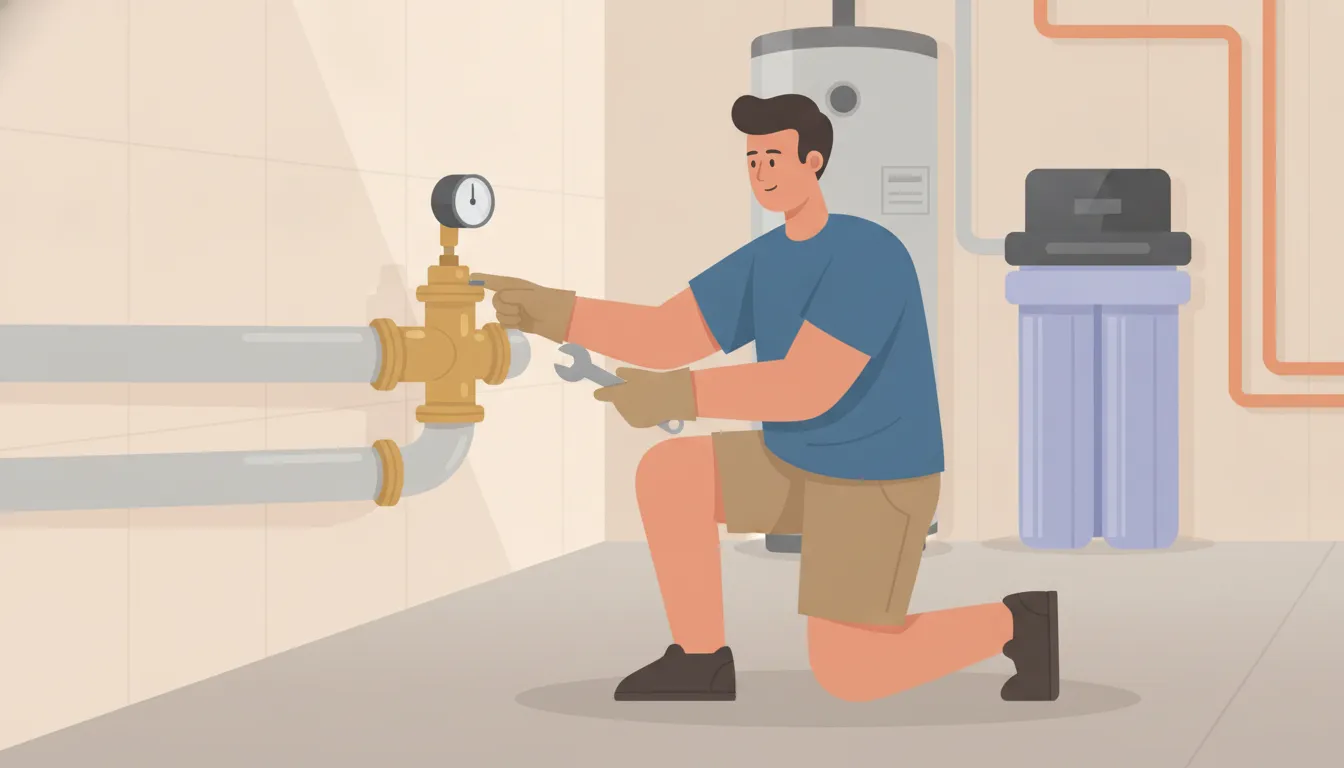
Water Pressure Reducer: When Your Home Needs One
Water pressure that feels unusually forceful can be more than a minor annoyance. It may affect faucets, appliances, pipes, and leak risk throughout a Treasure Coast home.
Contact Miranda Plumbing and Air for professional water pressure guidance.
A water pressure reducer, also called a pressure-regulating valve or PRV, lowers incoming water pressure so household plumbing receives a more controlled supply. The EPA says most U.S. plumbing codes require a PRV when supplied pressure exceeds 80 psi, while its recommended incoming service range is 45 to 60 psi. Those figures are useful reference points, not instructions to adjust a valve yourself.
Before calling for repairs, you can safely observe symptoms and check pressure with the right gauge point. The important next step is separating a whole-home pressure problem from an issue at one fixture, then deciding whether professional diagnosis is needed.
What Is a Water Pressure Reducer and How Does It Work?
A water pressure reducer is a plumbing valve that lowers incoming pressure before water reaches household fixtures. It is also called a pressure-regulating valve, or PRV. The valve helps provide lower, more consistent pressure throughout the home. Rainbow Municipal Water District explains that a PRV reduces pressure from the public water main.
This matters because supply pressure can change before it reaches your faucets, shower, water heater, and appliances. A properly functioning PRV responds to those changes and helps maintain functional household pressure. It does not create water or increase the flow available from a restricted pipe.
How does a PRV control water pressure?
Most residential PRVs use a spring-loaded diaphragm and disc inside a valve body. The incoming water enters the valve, while the spring and diaphragm respond to pressure on the household side. That movement controls the opening through which water passes.
When downstream pressure changes, the diaphragm shifts. The valve then restricts or allows flow to help keep pressure more stable. The U.S. Department of Energy's Building America Solution Center describes direct-acting valves as using a spring-loaded diaphragm. The same guidance explains that a PRV can maintain functional pressure even when incoming pressure fluctuates.
The regulator typically serves the plumbing supplied after the main connection. It is not the same as a filter or water softener. Those systems address water quality and hardness, while a PRV manages pressure. Miranda's water pressure and filtration installation information can help clarify that difference.
Where is a water pressure reducer located?
A whole-home regulator is commonly installed along the main water line. Its placement allows it to control pressure before water reaches multiple fixtures. The exact location depends on the home's plumbing layout and previous work.
Older homes may not have a PRV. A home may also have a regulator that is worn, blocked, or no longer controlling pressure consistently. Pressure symptoms can come from other causes, too. A fixture restriction, supply issue, leak, or water-treatment component may create a similar complaint.
For that reason, avoid treating the adjustment screw as a simple do-it-yourself fix. A qualified plumber can test the system, identify whether the issue is pressure-related, and explain the repair options. Miranda's professional plumbing services include on-site diagnosis and clear next steps before work begins.
When Is High Water Pressure a Problem?
High water pressure can feel convenient at first, but sustained pressure can strain the plumbing throughout your home. EPA WaterSense says excessive supply pressure can damage pipes, fixtures, and appliances. It can also increase water consumption, equipment failures, and leak risk.
As a general guardrail, most U.S. plumbing codes require a pressure-regulating valve when supplied pressure exceeds 80 psi. EPA WaterSense recommends incoming service pressure between 45 and 60 psi for efficient use and proper system function. These figures provide context, not a substitute for measuring your home's pressure or checking applicable local requirements.
Which warning signs should you watch for?
Pay attention when several fixtures show symptoms, especially if the changes appear throughout the home. Possible warning signs include:
- Water pressure feels unusually strong or remains high at multiple faucets and showerheads.
- Faucets, hose connections, or appliance supply lines begin leaking without another clear cause.
- Pipes make banging or hammering sounds when you turn water on or off.
- Water discharges from the water heater's pressure-relief valve.
- Dishwashers or washing machines become unusually noisy, or fixtures perform inconsistently.
High pressure can rupture pipes and damage fixtures. Keeping household pressure at or below 60 psi can reduce the likelihood of leaking faucets, ruptured pipes, and damaged hoses. It may also help preserve fixture performance and reduce appliance noise.
A persistent problem does not always mean the same repair is needed. A failing pressure regulator can cause constant high pressure, short bursts of unusually high pressure, hammering, or relief-valve discharge. The regulator may also be absent, especially in some older homes. A plumber can test the system and determine whether the issue involves the regulator, a fixture, or another component.
If water is actively leaking, the water heater relief valve is discharging, or pipe noises are sudden and severe, arrange professional plumbing help promptly. Miranda can explain the finding and outline the recommended next steps before work begins. For related symptoms, see the water heater pressure relief valve service information.
How Can You Check Water Pressure Without Guessing?
A pressure gauge can show what your plumbing is experiencing instead of relying on a strong spray or a weak faucet. This check helps separate pressure concerns from fixture problems.
- Choose a suitable test point. The EPA lists a hose bibb, the cold-water washing-machine hookup, or a first-floor cold faucet. Use a point that is easy to access without removing plumbing parts. See the EPA pressure-gauge guidance.
- Attach the gauge securely. Follow the gauge manufacturer's instructions. Make sure the connection does not spray or leak before reading it. Do not loosen a regulator, remove a valve, or change any setting during this check.
- Record the static pressure. First, keep water fixtures closed throughout the home. Static pressure means the supply pressure when water is not flowing, according to the Department of Energy's Building America Solution Center. Record the reading and the time.
- Observe the flowing pressure. Next, open one cold-water fixture briefly while watching the gauge. This reading shows how pressure behaves while water moves through the system. A large change may deserve professional diagnosis rather than a quick adjustment.
- Repeat the observation carefully. Note whether the reading changes when another fixture runs. Pressure can fluctuate because of elevation differences and changing system conditions. Rainbow Municipal Water District explains that these localized changes can occur at individual properties. Read the explanation of pressure fluctuations.
- Consider every water supply. Some homes have separate supplies, such as an independent irrigation source. The EPA recommends checking each supply when more than one serves the property. Do not assume a house reading represents every connected line.
- Compare the result with qualified guidance. The EPA recommends confirming service pressure with the public water supplier. Its guidance also says most plumbing codes require pressure-regulating valves when supplied pressure exceeds 80 psi. Review the EPA service-pressure recommendations.
Static and flowing readings answer different questions. Static pressure shows the available supply at rest. Flowing pressure shows what remains during use. A water pressure reducer may be part of the solution, but a gauge alone cannot identify the cause or authorize a safe repair.
If readings seem unusual, or symptoms include leaks, hammering, or inconsistent flow, have a licensed plumber evaluate the system. Avoid adjusting the regulator yourself. A professional can verify the pressure, identify the source, and explain the next step.
What If Pressure Is Low Only at One Fixture?
Low flow from one faucet or shower usually points to a local restriction, not a whole-home pressure problem.
Check whether other fixtures have normal flow at the same time. If sinks, toilets, and showers work normally, the affected fixture may have debris in its aerator, a worn cartridge, a partially closed stop valve, or a supply-line issue.
Weak flow can also develop inside a fixture after years of mineral buildup. Hard water and water pressure are separate concerns, however. A filtration or softening system addresses water quality, not pressure regulation. Do not assume filtration will correct low pressure.
| Pattern | What it may suggest | Practical next step |
|---|---|---|
| One faucet or shower | Local fixture issue | Compare nearby fixtures |
| Several fixtures | Main supply or PRV concern | Arrange system testing |
| Changes during use | Flow-related restriction | Compare gauge readings |
For a focused evaluation, Miranda can help with diagnosing low faucet water pressure. A plumber can compare the affected fixture with nearby fixtures and determine whether the restriction is at the faucet, valve, or supply connection.
Shower-only symptoms deserve a similar check. A clogged showerhead, faulty mixing valve, or buildup in the shower plumbing can reduce flow without affecting the rest of the home. Miranda also provides shower pressure and plumbing checks when the cause is not obvious.
Whole-home symptoms suggest a different path. If several fixtures lose pressure, the issue may involve the main supply, a shutoff valve, or a pressure-reducing valve. A PRV can maintain functional pressure despite changes in incoming pressure, according to the Pacific Northwest National Laboratory.
A malfunctioning regulator can also cause habitually low pressure, according to the City of Lincoln. That pattern is different from one weak faucet.
Notice when the symptom occurs, which fixtures are affected, and whether flow changes when another tap runs. Share those observations with a licensed plumber rather than adjusting a regulator yourself.
Should You Adjust, Repair, or Replace the Valve?
The right fix depends on what testing reveals. A pressure regulator may need adjustment, cleaning, rebuilding, or complete replacement. Those decisions belong to a plumber when the valve is malfunctioning.
The City of Lincoln recommends calling a plumber for a faulty regulator. Possible repairs include a simple adjustment, cleaning a plugged line, rebuilding the regulator, or replacing it.
Adjustment may be appropriate when the valve works but the pressure needs professional correction. Cleaning may help when debris restricts the valve or its connected line. Rebuilding or replacement may be considered when internal parts no longer control pressure reliably.
Do not assume a pressure symptom proves the valve has failed. A plumber should compare pressure readings, inspect the valve, and check whether the issue affects the whole home. Some older homes do not have pressure regulators at all.
When Is Replacement More Likely?
Replacement becomes more likely when the existing regulator cannot maintain stable pressure or shows repeated symptoms after service. A regulator may be near the water meter and service-line shutoff. It may also be near household or irrigation shutoffs.
Location alone does not confirm whether replacement is needed. The valve's condition, system layout, and pressure behavior all matter. A professional can also identify whether separate irrigation plumbing changes the diagnosis.
Installation requires more than fitting a new valve into the main line. PNNL says fixture connections should be downstream of the pressure-regulating valve. This placement helps the valve serve the intended household fixtures.
EPA also advises checking local plumbing codes for thermal expansion after PRV installation. A new valve can create a closed system, which may require additional planning.
Published guidance sometimes describes a setting around 50 psi as typical for a specific service area. That example is not a universal setting for every Treasure Coast home or every Miranda customer.
Miranda can assess the system, explain the recommended work, and outline the next steps before work begins. For broader needs, review Miranda's professional plumbing services.
If symptoms involve a water-heater relief valve, see the guidance on the water heater pressure relief valve before choosing a repair path.
Contact Miranda Plumbing and Air for professional water pressure diagnosis and valve service.
Frequently Asked Questions
What does a water pressure reducer do?
A water pressure reducer, also called a pressure-reducing valve or PRV, lowers incoming main-line pressure before water reaches household fixtures. It helps maintain steadier pressure when supply conditions change.
What signs suggest a pressure-reducing valve may be failing?
Watch for persistent high pressure, sudden pressure bursts, leaking fixtures, pipe hammer, or water discharge from the water heater relief valve. Habitually low pressure can also indicate a regulator problem. A licensed plumber should confirm the cause before repair or replacement.
How can I check my home's water pressure safely?
Attach a pressure gauge to a hose bibb, washing-machine cold-water hookup, or first-floor cold-water faucet. Check pressure when water is not flowing, then compare readings during normal use. The EPA WaterSense guidance also recommends confirming service pressure with the public water supplier.
Does every home need a water pressure reducer?
No. The need depends on measured pressure, plumbing layout, existing equipment, and local requirements. The EPA says most U.S. plumbing codes require a PRV when supplied pressure exceeds 80 psi. A plumber can evaluate the system and explain the options.
Should I adjust or replace the valve myself?
Do not alter the regulator based only on a symptom or one pressure reading. A plumber may recommend adjustment, cleaning, rebuilding, or replacement after diagnosis. Installation can also require attention to thermal expansion and local plumbing codes.
Ready to Contact Miranda About Water Pressure?
A professional diagnosis can help distinguish a pressure-reducer issue from a fixture or supply problem. Miranda can explain the next step before work begins.
Contact Miranda Plumbing and Air for a water-pressure assessment.
Need plumbing or HVAC service on the Treasure Coast?
Contact Miranda Plumbing & Air