
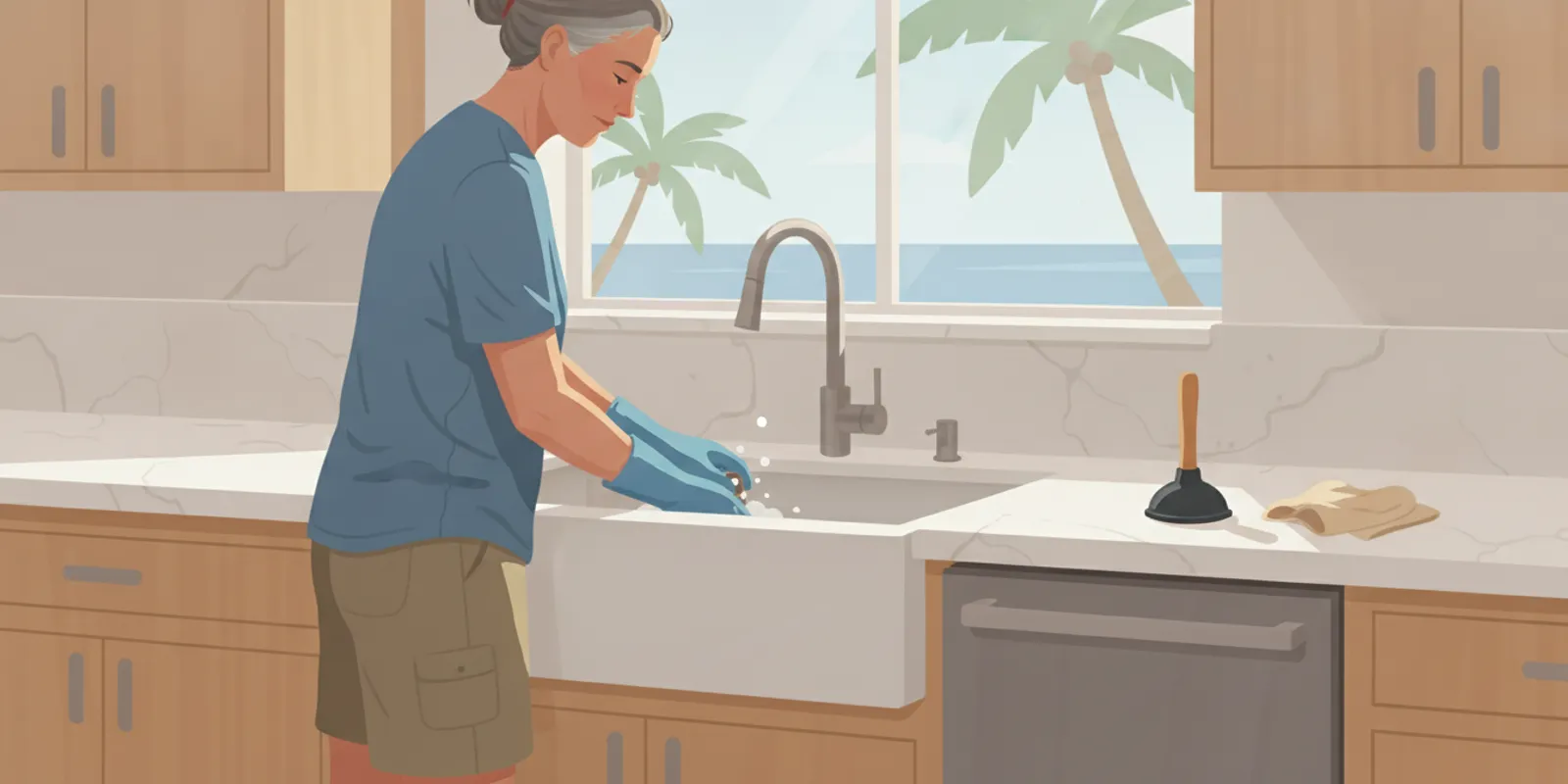
How to Unclog a Kitchen Sink Safely at Home
A clogged kitchen sink can make cooking and cleanup difficult, but the safest fix depends on where the blockage sits. If you are wondering how to unclog a kitchen sink, start with the simplest steps and stop if water backs up elsewhere or the problem returns. Avoid combining cleaners or forcing tools into the drain. A measured approach can clear a minor blockage while reducing the risk of damage.
Contact the Call Miranda Plumbing and Air team
What should you check before working on the sink?
Pause before reaching for a tool. Look at what the sink is doing, whether a disposal is present, and whether another fixture is affected. Those details help separate a local sink clog from a larger drain problem.
- Is one basin slow, or are both sides of a double sink draining poorly?
- Does water rise in the other basin when you run the faucet or disposal?
- Are nearby fixtures, such as a dishwasher connection or another drain, showing unusual backup?
- Is there a strong sewage odor, repeated gurgling, or water appearing where it should not?
- Has anyone already poured a chemical drain product into the sink?
Notice whether the problem began suddenly or developed gradually. A sudden blockage after rinsing food may be localized, while recurring slow drainage deserves a closer look. These clues cannot identify the exact cause, but they help you choose a safer next step.
If water is backing up through more than one fixture, stop running water. A blockage farther along the drain may need a plumber's assessment. Do not keep testing the line, since additional water can worsen an overflow.
For a localized problem, remove standing water from the basin with a cup or small container. Put it in a bucket rather than another slow drain. Clear dishes and food scraps from the sink, then check the drain opening without putting your fingers inside.
If the sink has a garbage disposal, switch it off before any inspection. Keep hands and utensils out of the disposal opening. If you need to inspect the unit, disconnect power at the breaker or unplug it only when the plug is safely accessible. Follow the manufacturer's instructions.
Protect the cabinet below the sink before any troubleshooting. Move stored items away, and place a towel where a small splash could land. Do not open a pipe connection simply to see what happens. Water held in the trap can spill quickly, and a loose joint may leak after reassembly.
Which first steps can show how to unclog a kitchen sink safely?
Begin with steps that do not require force, chemicals, or disassembly. If you know a cleaning product was used already, do not add another method. Follow its label and tell a plumber what was applied.
Remove visible material at the drain opening
Put on household gloves and use a flashlight to look at the drain strainer. Lift out visible food or debris that you can reach without inserting your hand into a disposal. Place it in the trash, not deeper into the drain.
Do not pull at anything that is stuck, sharp, or below the opening. Stop if you see standing water that may contain a chemical product. Avoid splashing it, and keep children and pets away from the area.
Try a sink plunger correctly
A cup-style sink plunger can sometimes move a small blockage near the drain. It works best when the cup seals around the drain and water covers its rim. Do not use a toilet auger or a plunger with a flange designed for a toilet.
- For a double-basin sink, seal the second drain with a stopper or a wet cloth held firmly in place.
- Add enough water to cover the plunger cup, if the basin is not already holding water.
- Center the cup over the affected drain and press gently to form a seal.
- Use several controlled up-and-down strokes without lifting the cup from the opening.
- Remove the plunger and see whether the water drains; repeat only a few times if it improves.
Keep the seal secure on the other basin so pressure does not simply escape through it. If water splashes out, the seal will not hold, or plunging makes another drain back up, stop. Forceful plunging is not a substitute for locating a stubborn blockage.
After a successful attempt, let the remaining water drain before testing with the faucet. Start with a brief, low flow and watch the basin. If the level rises, turn the faucet off rather than adding more water. A temporary improvement is not enough if the sink slows again immediately.
Use warm water cautiously
If there is no disposal issue and no chemical cleaner in the drain, a small amount of warm tap water may help loosen some soft residue. Do not pour boiling water into the sink. Very hot water can pose a scald risk and may stress some plumbing materials or seals.
Let warm water run briefly, then check the drain. If the basin level rises, turn the faucet off. Do not continue adding water to a sink that is not draining.
Warm water is not a fix for a solid object, a packed blockage, or a problem beyond the sink branch. Avoid repeatedly pouring water into a full basin. The extra volume can spill over the rim or leak through a weak connection below the sink.
Can baking soda and vinegar unclog a kitchen sink?
Baking soda and vinegar are often mentioned in household drain-cleaning advice. Consumer Reports describes using those two ingredients in a kitchen sink and drain cleaning approach. That does not mean the mixture will clear every blockage.
A reaction in the drain is not proof that grease, food, or an object has been removed. Treat this method as a limited cleaning option, not a guaranteed clog repair. Never combine it with a commercial drain opener, bleach, or another cleaner.
If you choose to use household ingredients, check that the sink is free of chemical drain products first. Follow reliable product guidance, avoid splashing, and do not add ingredients when you cannot identify what is already in the drain. If the sink remains blocked, stop experimenting and seek help.
Read Consumer Reports' kitchen sink and drain cleaning guidance for its stated cleaning approach. A persistent clog may need mechanical clearing or diagnosis rather than another home mixture.
Which methods should you avoid?
Some quick fixes can create a second problem. Avoid using a method when you are unsure what is in the drain or how the plumbing is configured.
- Do not mix drain products. Never combine chemical cleaners with each other, bleach, vinegar, or other household products.
- Do not plunge after adding a chemical cleaner. Pressure can splash caustic liquid onto skin or into eyes.
- Do not pour boiling water into the sink. It can cause burns and may damage some components.
- Do not force a wire hanger or improvised tool down the drain. It can scratch surfaces, snag components, or push material deeper.
- Do not put a hand into a garbage disposal. Switch off power and use the manufacturer's directions for any troubleshooting.
- Do not keep running the faucet when water is backing up. More water can overflow the basin or reach cabinets and flooring.
If a chemical product has already been used, do not plunge, remove the trap, or add another substance. Keep the area clear and tell the plumber the product name, if known, and when it was applied.
Also avoid using a powered drain machine unless you know how to select and handle the equipment. A cable can catch, kink, or damage piping when pushed carelessly. A tool that reaches farther is not necessarily a safer choice for an unfamiliar drain.
Should you remove and clean the sink trap?
The curved pipe beneath a sink, often called the P-trap, can collect debris. A homeowner with basic plumbing experience may choose to inspect an accessible trap, but it is not the right step for everyone.
Do not open the trap if chemical cleaner may be present, if pipes are corroded or difficult to reach, or if you cannot contain water. Older fittings can be brittle, and a loose connection can leak after reassembly. If you are uncertain, leave the piping undisturbed.
If you decide to proceed, clear the cabinet and place a wide bucket beneath the trap. Take a photo of the connections before loosening anything. Wear gloves and eye protection, and loosen only fittings you can handle without force.
Let trapped water drain into the bucket. Remove debris without pushing it farther into the wall pipe, then rinse the trap in a separate basin. Check the washers and put the parts back in their original positions. Hand-tighten plastic slip nuts unless the fitting instructions say otherwise.
Run a small amount of water and check every connection for leaks. If a fitting will not seat, a washer looks damaged, or water continues to escape, stop using the sink and arrange repair. Do not overtighten plastic connections to compensate for a poor fit.
Do not assume the trap is the source just because it is accessible. A clear trap does not rule out a blockage farther into the branch drain. If removing and cleaning it does not restore normal drainage, avoid repeating the disassembly or pushing debris toward the wall.
For a broader look at available plumbing help, see plumbing services. If the sink itself or its drain fittings need attention, review sink repair and installation. A plumber can inspect a blockage when a simple, accessible check does not resolve it.
How can you tell where the blockage may be?
These clues do not confirm the location, but they can help you describe the issue accurately. A plumber may need to inspect the piping before recommending a repair.
| What you notice | Possible area to investigate | Sensible next step |
|---|---|---|
| One basin drains slowly, with no other symptoms | Drain opening, stopper, or nearby branch | Remove visible debris and try a controlled sink-plunger attempt |
| Both sides of a double sink back up together | Shared drain connection or a blockage beyond the basins | Stop adding water and arrange an assessment if it persists |
| Water backs up when the disposal runs | Disposal outlet, trap, or downstream drain | Turn the disposal off; do not reach inside or keep running it |
| Other fixtures gurgle or drain poorly too | A larger drain line or shared system | Stop using affected fixtures and contact a plumbing professional |
| Leak appears beneath the sink after clearing | Trap connection, washer, or pipe joint | Stop running water and have the connection checked |
Symptoms can overlap. A slow basin does not prove that a clog is inside the trap, and gurgling alone does not identify a failed component. Do not buy replacement parts based only on a symptom.
Pay attention to the timing of a backup. If water rises in the second basin only while the first drains, the shared connection may matter. If several fixtures are slow at the same time, the issue may be beyond the kitchen branch. These observations help narrow the discussion, but they are not a diagnosis.
If a disposal is the main concern, review the service information for garbage disposal repair and installation. Keep the unit switched off if it hums, jams, leaks, or behaves unusually.
How can you help prevent another kitchen sink clog?
Habits at the sink can reduce the amount of material entering the drain. They cannot prevent every blockage, especially when a clog is farther inside the plumbing. Still, a few routine practices make recurring problems less likely.
- Scrape plates and cookware into the trash or compost before rinsing them.
- Wipe cooled grease and cooking oil into a disposable container rather than pouring it down the drain.
- Use a sink strainer to catch food scraps, and empty it into the trash often.
- Avoid treating the disposal as a way to process every leftover or fibrous scrap.
- Run water according to the disposal manufacturer's guidance when using the unit.
Grease can leave residue as it cools, while food particles can collect around bends and fittings. A small amount sent down once may not cause an immediate backup. Repeated disposal of scraps can build a pattern that eventually slows drainage.
Notice changes rather than waiting for a complete blockage. If a sink that usually clears quickly begins to drain more slowly, remove visible debris and reassess water use. A drain that improves briefly and then slows again is a reason to investigate, not a reason to repeat the same method indefinitely.
For homes with a disposal, follow its own care and safety instructions. Do not put hands inside the chamber, even when the switch is off. If you are not sure whether the unit has power, do not reach into it or try to dislodge an item by hand.
What should you do next when learning how to unclog a kitchen sink?
Stop do-it-yourself work when the drain stays blocked after a few gentle attempts, when water returns quickly, or when another fixture is affected. Repeated clogs may point to a problem that is not reachable from the sink opening.
- Water is backing up in multiple fixtures or overflowing from a floor drain.
- The sink remains full, or the blockage returns soon after it briefly clears.
- You notice a persistent sewage odor, repeated gurgling, or a visible leak.
- A chemical drain product has been used and the line remains blocked.
- The disposal makes an unusual sound, will not operate normally, or leaks.
- You cannot safely access the trap or do not feel comfortable taking it apart.
Call Miranda Plumbing and Air serves homeowners with plumbing needs on the Treasure Coast. For an urgent plumbing issue, the company lists emergency plumbing service. Availability and the right response depend on the circumstances.
When you request help, explain which basin is affected, when the problem began, whether other fixtures are involved, and what you have already tried. Mention any chemical product before anyone works on the drain. These details help the plumbing team plan a safe inspection.
It can also help to describe whether the sink has a disposal and whether the issue happens during disposal use or ordinary faucet use. If water is leaking, say where it appears and whether it continues when the faucet is off. Do not take apart a wet or damaged connection to gather more information.
Contact the Call Miranda Plumbing and Air team for plumbing help
Frequently asked questions
Is it safe to use a plunger on a kitchen sink?
A cup-style sink plunger can be a reasonable first step for a localized clog. Seal the second basin on a double sink, use controlled strokes, and stop if water backs up elsewhere. Never plunge after using a chemical drain cleaner.
Can I use a drain snake in the kitchen sink?
A suitable hand auger may reach some clogs, but using the wrong tool or forcing it can damage piping or push debris farther in. Avoid using improvised wire. If you do not know the drain layout, or the line has chemical cleaner in it, contact a plumber instead.
Why does my kitchen sink keep clogging?
Repeated blockage can involve accumulated food or grease, a restricted drain, or another issue farther along the piping. Avoid sending grease and large food scraps down the sink. If basic clearing only helps briefly, ask a plumber to identify the cause.
Can I keep using the sink while it drains slowly?
Use as little water as possible while you assess a slow drain. Stop if the basin level rises, another fixture backs up, or water leaks below the sink. Continuing to run water can turn a slow drain into an overflow.
What should you remember before clearing a kitchen sink?
Start with visible debris and a careful, limited attempt with a sink plunger. Avoid chemical combinations, boiling water, force, and any work that feels unsafe. If the blockage persists or affects other fixtures, a professional inspection is the safer next step.
Call Miranda Plumbing and Air is family-owned and operated and has served homeowners since 1981. Its Florida plumbing license is CFC1427227, and its HVAC license is CAC1815486.
Contact the Call Miranda Plumbing and Air team for help with a persistent kitchen sink clog.
Need plumbing or HVAC service on the Treasure Coast?
Contact Miranda Plumbing & Air