
How to Fix a Leaky Garbage Disposal Without Guessing
A leak beneath the sink can look like one problem, even when water is coming from several different parts. If you are wondering how to fix a leaky garbage disposal, first identify where the water begins, then decide whether the source is a simple, safe connection or a repair that needs a plumber.
Ask for help with a disposal leak
What should you do first when the disposal is leaking?
Stop using the disposal as soon as you notice water. If water is dripping near an outlet, cord, switch, or other electrical component, do not touch the wet area. Avoid turning the disposal on to test it.
If the area is safe to approach, clear items from the cabinet and place a shallow container or towels under the leak. Keep children and pets away. Do not reach into the disposal opening, even when the unit appears to be off.
Turn off power to the disposal before inspecting it. Use the wall switch only if the surrounding area is dry and safe. For added protection, switch off the disposal's circuit at the electrical panel. If you cannot identify the correct breaker, do not experiment around a wet cabinet.
Next, turn off the water at the sink faucet. This will not stop every possible leak, but it prevents additional water from entering the sink and drain while you inspect. If water continues to collect, use the sink no further and arrange professional help.
Dry the cabinet floor and the outside of the disposal. A dry surface makes it easier to see the first new drop. Note whether the water appears only after running the faucet, only during disposal use, or even when everything is off. Those details help narrow the source.
How can you locate the source of the leak?
Do not assume the disposal body itself has failed. Water can travel along a pipe, mounting ring, or cabinet surface before dripping at a lower point. Look for the highest fresh wet spot, not just the puddle on the cabinet floor.
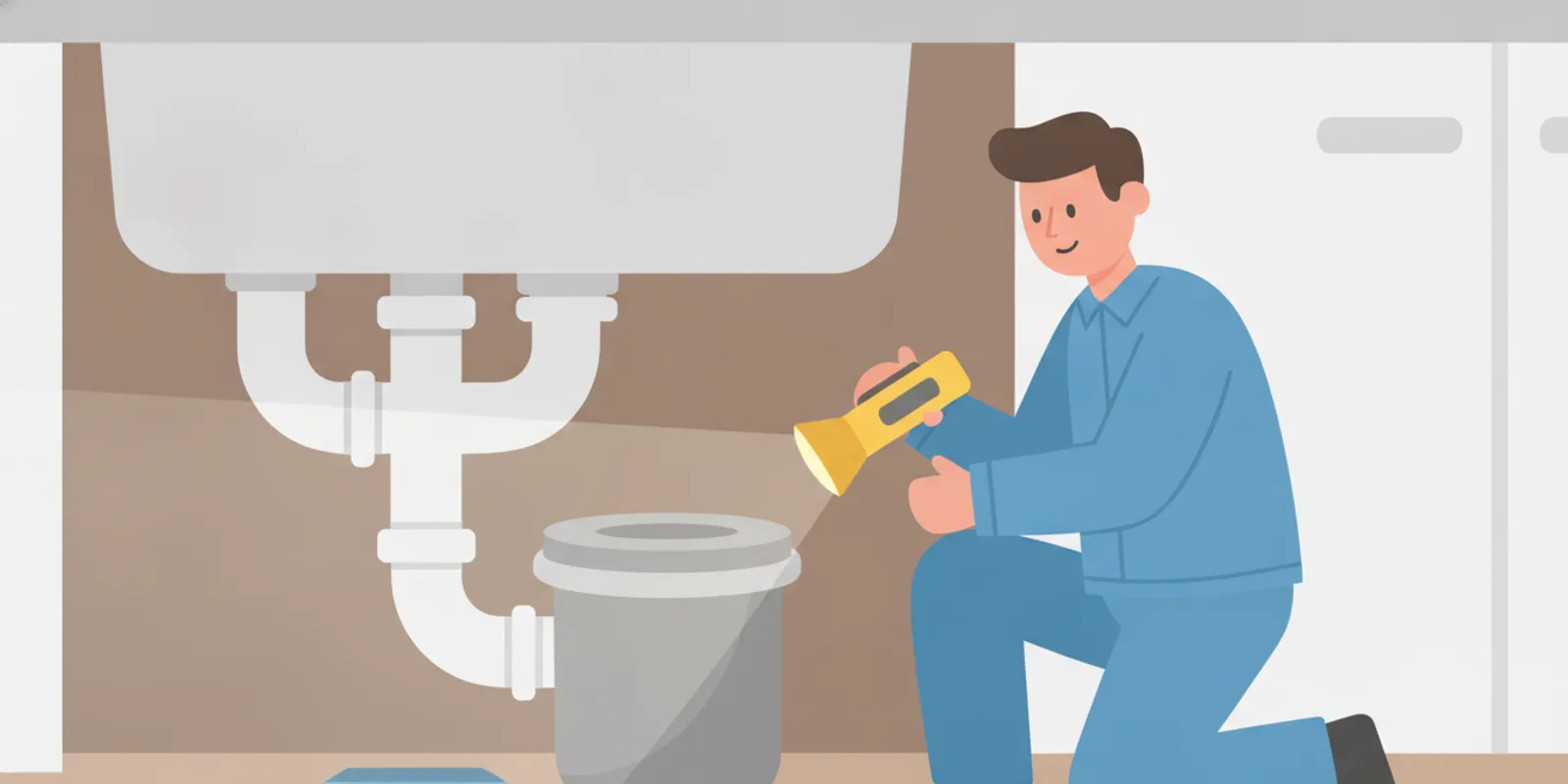
With the power off and the cabinet dry, inspect the outside surfaces using a flashlight. Look around the sink opening above the disposal, the dishwasher connection, the drain outlet, nearby joints, and the bottom of the unit. Keep your hands outside the disposal chamber.
You can use a dry paper towel to check the outside of an accessible connection. Touch the towel to the outside of the fitting, rather than putting fingers inside or underneath moving parts. A new wet mark can reveal which connection needs closer attention.
For a controlled check, have another adult run a small amount of water into the sink while you watch from a safe position. Keep the disposal switched off. Stop the faucet if water starts reaching an electrical area or accumulating quickly. Do not run the disposal just to reproduce a leak.
Some leaks appear only when water drains through the assembly. Others start when the sink basin holds water, or when a connected appliance sends water through its hose. Record what was happening immediately before the leak appeared. This simple observation is safer and more useful than repeatedly cycling the disposal.
Which disposal leak locations are most common?
The location of the first wet spot offers clues, but it does not prove which part has failed. A plumber may need to inspect the assembly and test connections before recommending a repair. The table below helps organize what you see without treating a symptom as a diagnosis.
| Where water first appears | Possible source | What you can safely observe | Next step |
|---|---|---|---|
| At the sink opening above the unit | Sink flange or mounting seal | Check whether water appears around the top edge after water sits in the basin. | Stop using the sink if the leak returns. Ask a plumber to assess the seal and mounting. |
| At a drain connection on the side | Drain outlet fitting, gasket, or pipe joint | Look for a fresh wet mark while a small amount of water drains with the disposal off. | A connection may need adjustment or a part may need replacement. |
| At the dishwasher hose connection | Hose, clamp, or inlet connection | Note whether water appears during a dishwasher cycle. Do not disconnect a wet or energized appliance. | Stop the dishwasher and have the hose connection checked. |
| From the lower part of the unit | Internal seal or housing failure | Look for water emerging from the unit itself, rather than running down from above. | Keep the disposal off. A plumber can determine whether repair or replacement is appropriate. |
| On a cabinet wall or floor away from the unit | Nearby plumbing or water traveling from another source | Trace visible water upward without removing plumbing parts. | Consider a broader plumbing inspection if the source is unclear. |
How can you protect the cabinet while you wait?
Once you have stopped the water and disposal, focus on limiting contact with standing water. Move cleaning products, paper goods, and stored items away from the wet area. Do not place items back until the cabinet is dry and the leak has been addressed.
Use towels to absorb water from a dry, safe surface. Replace them as they become wet. If water has spread beneath the cabinet or into an adjacent room, do not assume the visible puddle is the full extent of the moisture. Keep note of the affected areas and share that information with the plumber.
A small fan may help air circulate in a dry area, but do not position electrical equipment near standing water or a wet outlet. Do not use a household appliance if its cord, plug, or surrounding floor is wet. Safety comes before drying speed.
Check the cabinet periodically without touching plumbing or wiring. If water continues to appear, increases quickly, or reaches an electrical component, stop checking and seek prompt assistance. If you can safely close a shutoff valve serving the affected fixture, do so; otherwise, do not force a valve that is stuck or unfamiliar.
Photographing the cabinet before cleanup can help you remember where water traveled. Take pictures only from a safe, dry position. Do not delay stopping active water simply to document it.
What can you check safely without taking the disposal apart?
Homeowners can make a careful visual check, but the safe boundary matters. Do not remove the disposal, loosen pipes, open its housing, or work on wiring. Internal repairs can expose sharp components and electrical hazards. A unit that looks simple from below is still connected to plumbing and power.
Start with what is visible. Check whether the drain fitting or hose looks displaced, whether there is a crack in an exposed pipe, or whether water is coming from the unit's lower housing. Look for corrosion, mineral residue, swollen cabinet material, and signs that water has been present for some time.
Do not tighten every visible fastener as a test. Excess force can damage a fitting or make a small leak worse. If a connection appears loose, take a clear photo and ask a qualified plumber whether it is suitable for a homeowner adjustment.
Do not apply sealant, putty, or tape over the outside of a leaking disposal. Covering the drip may hide the source while water continues to enter the cabinet. Products applied externally may also interfere with a proper inspection or repair.
Never put a hand into the disposal opening. If an object is visible, leave it in place until power is disconnected and a trained person can advise you. Do not rely on a wall switch alone if someone could turn it on while you are inspecting the unit.
If the unit has a reset button, it is not a leak repair. Resetting the disposal will not address a failing seal, damaged hose, or leaking fitting. Because the concern here is water, leave the power off until you understand the source.
How do you tell whether a fitting or the disposal itself is leaking?
A fitting-related leak often starts at a visible joint or connection. You may see water around the sink flange, a drain outlet, or the dishwasher hose. The unit's body may remain dry above that point. A connection can still require replacement parts or proper resealing, so appearance alone cannot confirm the fix.
A leak from the lower housing can point to an internal failure. Water may appear at the bottom even when the visible pipe connections seem dry. In that situation, avoid operating the disposal and request an assessment. The technician can check the source and explain whether a repair is practical.
Water may also be coming from another fixture or pipe under the sink. A faucet supply line, sink drain, or nearby plumbing connection can drip onto the disposal. Follow the water upward only as far as you can see safely. If you cannot trace it clearly, treat the source as unknown instead of guessing.
Timing can help distinguish these possibilities. A leak that appears only while the basin drains suggests checking the drain path and its connections. A leak that appears after the dishwasher runs may involve the connected hose or its route. Continuous dripping deserves prompt attention, especially if it is near electrical components.
When should you stop troubleshooting and call a plumber?
Stop and arrange service if water reaches an outlet, cord, switch, or electrical connection. Do not touch wet electrical components or attempt to dry them while power is on. If you can safely reach the electrical panel without crossing a wet area, switch off the relevant circuit. Otherwise, keep clear and seek immediate professional guidance.
Call a plumber when water comes from the disposal housing, the leak continues after the faucet is off, a pipe or hose looks cracked, or the source remains uncertain. A growing puddle can damage the cabinet and spread beyond the visible drip. Prompt attention helps limit further exposure.
Professional help is also sensible if the unit shifts, the mounting assembly appears damaged, or access requires moving the disposal or disconnecting plumbing. The disposal is heavy and attached to both plumbing and electrical components. Removing it without the right preparation can create more problems.
Miranda Plumbing and Air provides plumbing services, including garbage disposal repair and installation. You can review the available garbage disposal repair options or explore the broader plumbing services. If the leak seems to involve a nearby supply line, the water leak detection and repair information may also be useful.
Call Miranda Plumbing and Air, licensed in Florida under CFC1427227 for plumbing and CAC1815486 for HVAC. Learn more about the company's background on the company information page.
What should you tell the plumber before the visit?
A few simple notes can make the service conversation clearer. Tell the plumber where you first saw water, when it appears, and whether it continues when the sink is off. Mention any recent changes, such as a new dishwasher hose or work beneath the sink, if applicable.
Take a photo of the leak location and any visible wet connections, if you can do so without touching water or electrical components. A short video may show whether a drip occurs while water drains, but do not run the disposal to create one. Keep the area clear so the plumber can inspect it.
Ask what the proposed work includes. A clear explanation should identify the suspected source, the parts or connections involved, and whether the technician recommends repair or replacement. Ask whether additional work could be needed if inspection reveals a different leak point.
It is reasonable to ask whether the disposal should remain off and whether the sink can be used before the visit. Follow the technician's advice. Do not resume use simply because the cabinet floor has dried.
How should you check the area after a repair?
Follow the technician's instructions for testing the sink or disposal. Do not switch the unit on until the plumber says it is appropriate. If the repair involves a drain connection, the technician may explain how to check for moisture during normal use.
Once you have permission to use the fixture, look beneath the sink from a dry, safe position. Check the cabinet floor and visible outside connections for fresh water. Do not reach into the unit or touch electrical parts while checking.
If you notice moisture again, stop using the disposal and write down when it appeared. Note whether the faucet, dishwasher, or disposal had been used just before the drip. Contact the plumber who completed the work and describe the new observation.
A dry cabinet immediately after service is a useful sign, but it does not replace any follow-up guidance the technician provided. Keep the area accessible for a short period. Avoid storing items beneath the sink until you are confident the leak has stopped.
How can you prepare for a clear repair decision?
Before agreeing to work, ask the technician to show you the leak source when practical. A clear explanation can connect the visible symptom to the part that needs attention. You can also ask what other possible causes were ruled out during the inspection.
Ask whether the proposed repair addresses the source or only a visible symptom. For example, an external drip may come from a connection above the point where water collects. Understanding the path helps you evaluate whether the recommendation fits what you observed.
If the disposal is older, damaged, or leaking from its housing, ask what factors support repair or replacement. The answer may depend on the unit's condition, parts availability, the leak location, and the work required to access it. Compare the scope of each option rather than relying on a single symptom.
Ask the plumber to explain any limits on the assessment. A leak that appears intermittently may be difficult to reproduce, and a nearby connection can complicate diagnosis. Make sure you understand what the technician recommends if water returns after the work.
When the work is complete, ask what was repaired and whether you should watch for anything specific. Keep the cabinet clear during any recommended observation period. If you see new moisture, stop using the disposal and report when it appeared.
If you need help identifying the correct service path, use the contact page to reach the team. For a broader overview of plumbing contractor resources, the Plumbing-Heating-Cooling Contractors Association is a professional organization.
Contact Miranda about a leaking disposal
Frequently asked questions about a leaky garbage disposal
Can I keep using the sink if the disposal is leaking?
It is safer to stop using the sink until you know where the water is coming from. Continued draining can add water to a cabinet that is already wet. Do not use the disposal while a leak is present, especially if water is near electrical parts.
Is a leak from the bottom of the disposal repairable?
A leak at the lower housing can indicate an internal seal or housing problem, but only an inspection can establish the cause. Keep the unit off and ask a plumber to assess it. The right option depends on the condition of the unit and the source of the leak.
Why does the disposal leak only when the dishwasher runs?
The dishwasher and disposal may share a drain connection. Water that appears during a dishwasher cycle can point to the hose, clamp, or inlet connection, though another nearby source is possible. Stop using the dishwasher and have the connection checked if water returns.
Can I seal a disposal leak from the outside?
External sealant can conceal the drip without stopping water at its source. It may also make diagnosis more difficult. Leave the unit off and have the leaking connection or component inspected instead.
What is the sensible next step?
A safe first response is to stop using the disposal, keep clear of wet electrical parts, and identify the first visible water without taking the unit apart. If the leak persists or its source is unclear, contact a plumber and describe what you observed. Call Miranda Plumbing and Air for help deciding what to do next.
Need plumbing or HVAC service on the Treasure Coast?
Contact Miranda Plumbing & Air