
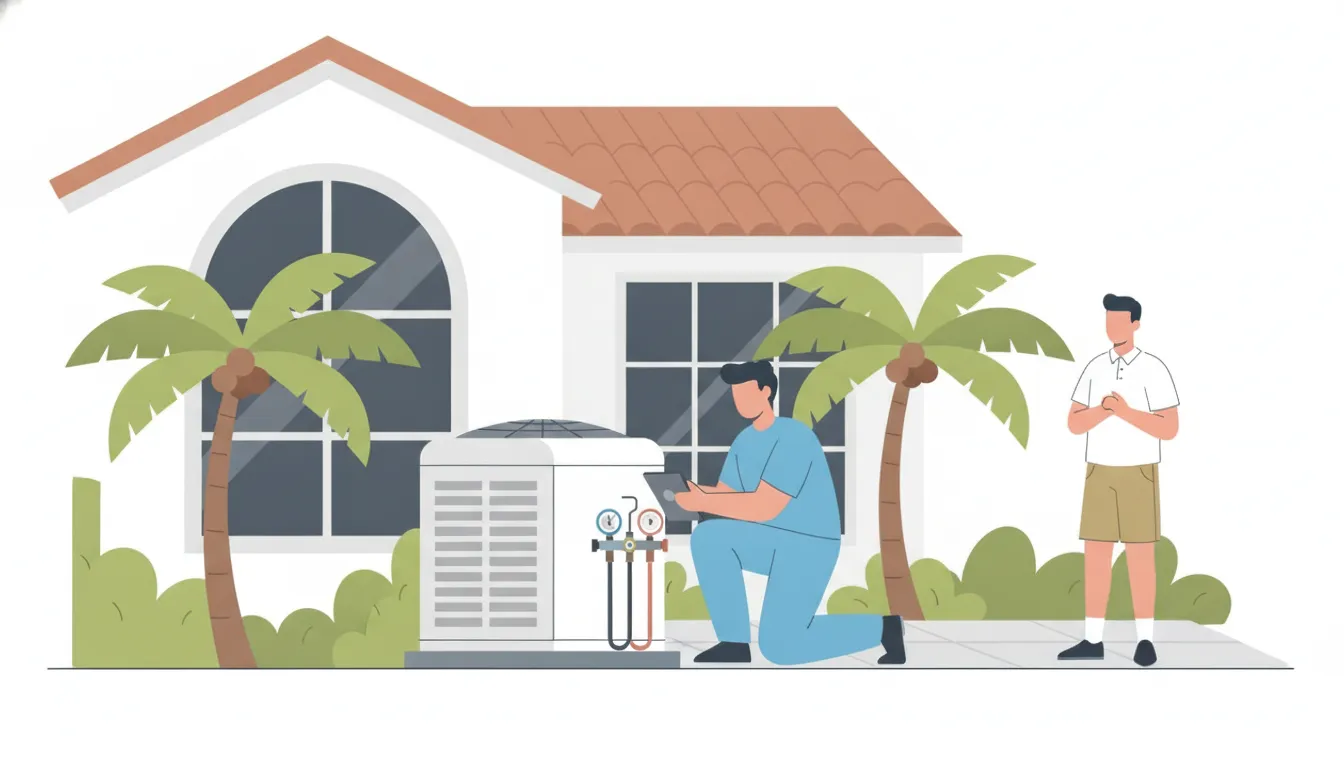
Heat Pump Replacement: Signs and Timing Guide
Florida heat and humidity can keep an aging HVAC system working through much of the year. That makes changes in comfort, noise, moisture control, and energy use worth noticing before a breakdown forces a rushed decision.
Heat pump replacement may be appropriate when a system is more than 10 years old, needs frequent repairs, or no longer maintains comfortable temperatures efficiently. ENERGY STAR also notes that humidity issues, rising energy bills, and uneven rooms can reflect equipment, duct, or insulation problems. A professional diagnosis should come before choosing repair or replacement.
For Treasure Coast homeowners, the right decision depends on more than the outdoor unit's age. Understanding how the system operates, how its size matches the home, and what an installation evaluation should cover can make the next conversation clearer and more productive.
Schedule a heat pump evaluation
What Is Heat Pump Replacement and When Should You Consider It?
Heat pump replacement means removing an aging or failing system and installing a modern unit in its place. A heat pump provides heating and cooling by moving heat instead of converting fuel. During summer, a central air-source heat pump operates like a central air conditioner.
That dual role matters in Florida, where heat and humidity can challenge home comfort. Humidity problems may come from equipment operation, inadequate capacity, or leaky ductwork. These possibilities make a careful evaluation more useful than assuming the equipment itself has failed.
When replacement becomes worth considering
Age is one practical starting point. ENERGY STAR identifies a heat pump more than 10 years old as a reason to consider replacement. That age does not prove the unit needs replacement. It signals that planning may be sensible, especially before a major failure.
Frequent repairs combined with rising energy bills can point to declining equipment efficiency. Uneven temperatures may instead result from improper operation, duct problems, or inadequate insulation. A noisy system can also involve undersized ducts or an indoor-coil problem.
These signs do not automatically call for a new heat pump. A repair may restore performance when the underlying issue is isolated and the equipment remains a good fit. Replacement becomes a stronger possibility when several concerns appear together, the unit is older, or repairs keep returning.
A professional assessment should examine the system, ductwork, controls, and comfort symptoms before recommending either path. Miranda provides HVAC repair, replacement, and maintenance services for Treasure Coast homeowners. A written evaluation can clarify what failed, what can be repaired, and what a replacement would involve.
For homeowners comparing options, AC installation and replacement information can also help explain sizing, removal, installation, and performance testing.
Which Warning Signs Mean Your Heat Pump May Need Replacement?
A heat pump can show several warning signs before it stops working completely. One symptom does not automatically mean replacement is necessary.
Some problems come from ducts, insulation, controls, airflow, or incorrect operation. A professional diagnosis helps separate an equipment issue from a home-performance issue.
- The system is more than 10 years old. ENERGY STAR lists age beyond 10 years as a reason to consider replacement. Age alone is not proof of failure, but it changes the repair decision.
- Repairs are becoming frequent. Repeated service calls can signal that an aging system is losing reliability. When repairs occur alongside higher energy bills, declining efficiency may be involved.
- Energy bills rise without a clear change in use. Weather, thermostat settings, and utility rates can affect bills. A steady increase still deserves an inspection when comfort has also declined.
- Rooms feel unevenly comfortable. Hot and cold rooms may reflect equipment operation, duct problems, or inadequate insulation. Replacing the heat pump without checking those conditions may leave the comfort problem unresolved.
- Indoor humidity stays uncomfortable. In Florida, a system that cannot control summer moisture deserves attention. Poor operation, inadequate equipment, or leaky ductwork can all contribute to excess humidity.
- Dust returns quickly after cleaning. Leaky ducts can pull particles from attic or other unconditioned areas and distribute them through the home. This symptom points to an airflow or duct evaluation, not automatically a new unit.
- The system becomes unusually noisy. New rattling, whistling, or persistent airflow noise can have several causes. ENERGY STAR notes that undersized ducts or an indoor-coil problem may be involved.
These signs are useful for deciding when to schedule an evaluation, not for making a final diagnosis. Ask the technician to inspect the indoor and outdoor equipment, ductwork, insulation, airflow, drainage, and controls.
ENERGY STAR's replacement guidance also emphasizes checking the cause behind comfort and efficiency problems. That approach can show whether repair, duct improvements, insulation work, or heat pump replacement makes the most sense.
How Should You Plan Heat Pump Replacement for Your Home?
The right replacement starts with the home, not the old equipment label. A contractor should evaluate how your house gains and loses heat, how air moves through each room, and how the equipment will operate during Florida's long cooling season.
Ask whether the recommendation includes a load calculation. This assessment helps determine the capacity the home needs. Matching the old unit's tonnage can repeat an existing sizing problem, especially if the home, insulation, windows, or ductwork have changed.
What should the evaluation cover?
- Capacity and efficiency: Review the recommended heating and cooling capacity, efficiency ratings, and expected operating conditions. ENERGY STAR explains that certified air-source heat pumps provide both heating and cooling in one integrated system. See the ENERGY STAR heat pump fact sheet for an overview of how the technology works.
- Indoor and outdoor compatibility: The outdoor unit, indoor air handler, coil, controls, and refrigerant system should be designed to work together. A mismatched combination can affect comfort, efficiency, and serviceability.
- Ductwork and airflow: Inspect supply and return ducts for leaks, restrictions, insulation problems, and inadequate sizing. A central air-source heat pump can connect to conventional forced-air ductwork, but the existing system still needs evaluation.
- Electrical and drainage: Confirm that the electrical service, disconnect, wiring, breakers, condensate drain, and overflow protection can support the selected equipment. Salt air and humidity also make installation details important on the Treasure Coast.
- Controls and permits: Discuss thermostat compatibility, zoning, backup heat, required permits, and final performance testing. The written proposal should identify required modifications and exclusions.
| Evaluation item | Question to ask | Why it matters |
|---|---|---|
| Load calculation | How was capacity determined? | Helps prevent short cycling, poor humidity control, and uneven comfort. |
| Efficiency rating | Which ratings apply to this climate and system combination? | Allows meaningful comparison between compatible equipment options. |
| Ducts and airflow | Do the existing ducts need sealing, insulation, or changes? | Supports quieter, more even delivery of conditioned air. |
| System compatibility | Are the air handler, coil, controls, and outdoor unit matched? | Helps the complete system perform as designed. |
| Installation requirements | Are electrical work, drainage, permits, and testing included? | Reduces surprises and clarifies the project scope. |
For help comparing equipment and installation requirements, review Miranda's AC installation and replacement information. Homeowners who need a broader evaluation can also explore Port St. Lucie HVAC services.
What Happens During a Heat Pump Replacement?
A professional replacement should follow a clear sequence. The exact work depends on your home's layout, existing equipment, ductwork, electrical setup, and comfort needs. A typical process includes these stages:
- Evaluate the existing system. The technician reviews the current heat pump, indoor air handler, thermostat, ductwork, drainage, electrical connections, and overall comfort concerns. This evaluation helps determine whether replacement is appropriate and identifies conditions that could affect the new system.
- Select compatible equipment. Replacement is more than matching the old unit's tonnage. The equipment should be sized for the home and matched to the indoor components, controls, and duct system. The proposal should explain the selected equipment, efficiency ratings, scope of work, warranty terms, and any required modifications.
- Prepare the work area. Before installation begins, the technician confirms access, protects nearby surfaces, reviews the work plan, and prepares connections for the new equipment. The team may also identify drainage, electrical, or ductwork items that need attention.
- Remove the old heat pump. The existing outdoor and indoor equipment is disconnected and removed safely. Proper removal keeps the work area organized and allows the installer to inspect components that will remain in service.
- Install the new system. The installer positions the replacement equipment, connects the refrigerant lines, electrical service, ductwork, thermostat or controls, and condensate drainage as applicable. Miranda's replacement process includes right-sized installation and removal of old units. Learn more about AC installation and replacement services.
- Test performance and operation. After installation, the technician checks system operation, airflow, temperature response, controls, drainage, and other relevant connections. Performance testing helps confirm that the equipment operates as intended before the visit is finished.
- Complete the homeowner walkthrough. The technician explains the system's basic operation, thermostat settings, maintenance needs, and any relevant documentation. Miranda's stated process includes quality verification, written estimates before work begins, and a final customer walkthrough.
Ask questions during each stage, especially if the proposal includes ductwork, electrical changes, or control upgrades. A careful evaluation and documented handoff make it easier to understand what was installed and how to operate it.
What Affects Heat Pump Replacement Cost?
There is no single replacement price that fits every home. The final investment depends on the equipment selected, the condition of the existing system, and the work required to install it correctly.
Equipment size and efficiency
A heat pump should be sized for the home rather than matched automatically to the old unit. Oversizing or undersizing can affect comfort, humidity control, cycling, and system performance. Efficiency ratings also influence equipment selection. A higher-efficiency model may require a different budget, but the right choice should consider expected use and long-term operating goals.
The indoor air handler matters too. The outdoor heat pump and air handler need to work as a compatible pair. Features such as variable-speed operation, advanced controls, and smart thermostats can change the equipment scope.
Condition of the existing installation
Some replacements are straightforward. Others require changes before the new equipment can perform properly. A technician may need to evaluate the following:
- Whether the ductwork is properly sized, sealed, and in usable condition
- Whether electrical service, disconnects, wiring, or controls need updates
- Whether drainage, airflow, and thermostat connections are compatible
- Whether the old equipment can be removed safely from its current location
- Whether permits, code requirements, or inspections apply to the project
Access also affects installation complexity. Tight equipment closets, attic locations, long line sets, difficult outdoor-unit placement, and limited removal paths can add labor. These conditions should appear clearly in the proposal rather than becoming surprises during the work.
Questions to ask before approving a proposal
Ask what equipment is included, how sizing was determined, and whether the air handler is part of the replacement. Confirm the efficiency ratings, thermostat or control changes, duct or electrical work, removal and disposal, permits, warranty terms, exclusions, and testing process.
A complete written proposal should identify the work before installation begins. Miranda describes a process that includes a written estimate, replacement work, quality verification, and a final walkthrough. Review AC installation and replacement details when comparing the proposed scope.
How Can Florida Homeowners Prepare for a Replacement Evaluation?
A little preparation helps the technician understand your home's comfort needs. It also makes the evaluation more useful than simply comparing equipment labels.
Before the appointment, gather these details:
- System records: Note the heat pump's approximate age, model information, repair history, maintenance visits, and any recent service invoices.
- Comfort symptoms: Write down rooms that feel too warm, humidity concerns, unusual cycling, weak airflow, dust, or new noises. These symptoms can involve equipment, ductwork, insulation, or controls.
- Filter information: Tell the technician how often you replace the filter and whether it becomes dirty unusually quickly.
- Access details: Clear a path to the indoor unit, outdoor unit, thermostat, electrical panel, and any attic or closet equipment. Mention access limits before the visit.
- Timing needs: Share travel dates, home-sale plans, renovations, seasonal occupancy, or other scheduling constraints. Florida systems may run for much of the year, so planning before a failure can reduce disruption.
Questions to ask during the evaluation
Ask how the technician will determine the correct system size. Replacement should not rely only on matching the old unit's tonnage. Discuss the home's load, duct condition, electrical requirements, indoor and outdoor compatibility, drainage, controls, and permit needs.
Request a written proposal that identifies the equipment, efficiency ratings, work included, required modifications, warranty terms, and exclusions. Ask which items are recommendations and which are necessary for a safe, code-compliant installation.
Miranda's stated process includes on-site diagnosis, a written estimate, installation, quality verification, and a final walkthrough. You can also review related HVAC services before scheduling. Confirm current warranty details and any follow-up terms in writing.
Talk with Miranda about your heat pump replacement options
Frequently Asked Questions
How often does a heat pump need to be replaced?
A well-maintained heat pump commonly lasts about 10 to 15 years. Consider an evaluation sooner if repairs become frequent, comfort declines, or energy bills rise. ENERGY STAR identifies equipment older than 10 years as a reason to consider replacement: ENERGY STAR replacement guidance.
How much does heat pump replacement cost?
There is no reliable universal price. The total depends on system size, efficiency, air-handler pairing, duct condition, electrical work, permits, access, and required modifications. A complete written proposal should identify equipment, scope, warranty terms, and exclusions before work begins.
Does a 2,000-square-foot home need a specific heat pump size?
Home square footage alone does not determine the right size. An HVAC professional should evaluate the home's layout, insulation, windows, ductwork, orientation, and other load factors. Oversized or undersized equipment can affect comfort, humidity control, runtime, and efficiency.
Should I repair or replace my heat pump?
Start with a diagnosis rather than assuming replacement is necessary. Repair may make sense when the system is younger and the issue is limited. Replacement deserves consideration when an older unit has repeated repairs, rising operating costs, uneven temperatures, or persistent humidity concerns. Those symptoms can also involve ducts, insulation, controls, or installation problems.
Does a new heat pump include the air handler?
It depends on the existing equipment and the proposed system. Many heat pumps pair with an indoor air handler, so compatibility and condition should be reviewed together. Ask whether the proposal includes the air handler, controls, drainage, electrical work, testing, and removal of the old equipment.
Schedule Your Heat Pump Replacement Evaluation
A professional evaluation can help you compare repair and replacement options based on your home's comfort needs, equipment condition, and installation requirements. Bring your recent concerns, repair history, and questions about sizing or efficiency so the conversation stays focused.
You can discuss the next practical step without committing to a specific system before the home has been evaluated.
Need plumbing or HVAC service on the Treasure Coast?
Contact Miranda Plumbing & Air