
Gas Leak Repair: Safety Steps for Homeowners
A suspected gas leak is an emergency, not a routine plumbing problem. Fast, careful decisions can protect your household while trained responders assess the danger.
Contact Miranda Plumbing & Air for emergency plumbing service.
Short answer: Leave the building immediately if you smell gas or hear hissing. Avoid switches, flames, vehicles, and phones inside. Call 911 and your gas utility from a safe location. After the area is declared safe, a licensed professional can locate the leak, isolate the affected line, and recommend compliant gas leak repair.
What Should You Do If You Suspect a Gas Leak?
Trust your senses and treat the situation seriously. Natural gas is odorized so people can notice a leak before it becomes more dangerous.
- Leave immediately. Tell everyone to move outside. Do not stop to search for the source.
- Avoid ignition sources. Do not light matches, smoke, start a vehicle, or use a garage door opener.
- Do not touch switches. Avoid turning lights or appliances on or off. Do not plug in or unplug devices.
- Do not use a phone inside. Move away from the building before making calls.
- Call 911 from outside. Report the suspected leak and follow the emergency operator's instructions.
- Call the gas utility from a safe location. The utility can control the supply and assess public-side equipment.
- Do not reenter. Wait for emergency personnel or the utility to say it is safe.
Official state safety guidance gives similar instructions. It says to evacuate, avoid electrical switches, and call 911 from outside. The same basic sequence applies even when the odor seems weak or the source is unclear.
The right response depends on where the suspected release is located. In every situation, distance and emergency communication come before diagnosis.
| Situation | Immediate priority | Next responsible party |
|---|---|---|
| Indoor gas odor or hissing | Evacuate without operating switches, appliances, or phones. | 911 and the gas utility from a safe location. |
| Outdoor odor, bubbling, or blowing soil | Move away and keep people, vehicles, and tools clear. | 911 or the gas utility, based on the hazard. |
| Utility equipment or meter concern | Do not approach, adjust, or test the equipment. | The gas utility or emergency responders. |
| Private indoor piping after shutoff | Wait for an official all-clear before reentry or repair planning. | A qualified plumbing professional after utility coordination. |
Mass.gov gas safety guidance provides a clear checklist for suspected natural gas odors.

What Are the Signs of a Possible Gas Leak?
The familiar rotten-egg smell is one warning sign. Utilities add an odorant because natural gas itself has no natural smell.
You may also notice a hissing or whistling sound near a pipe, appliance, meter, or connection. A leak can also disturb dust near a line.
Outdoor signs may include blowing dirt, bubbling water, dying vegetation, or an unusual vapor cloud. Never approach a suspected outdoor release to investigate. Move away before calling for help, and keep other people and vehicles clear of the suspected area.
These clues can overlap with ordinary appliance odors, plumbing sounds, or outdoor conditions. That uncertainty is another reason to leave first. Homeowners do not need to identify the exact source before calling for help.
PHMSA pipeline leak guidance lists several warning signs and advises moving to safety before calling emergency services.
Physical symptoms can include headache, dizziness, nausea, weakness, or confusion. These symptoms can have many causes, but they require fresh air and medical attention when gas exposure is possible.
Carbon monoxide is different from natural gas. It has no color or smell, and it can come from incomplete combustion. A carbon monoxide alarm adds an important layer of protection.
Never rely on smell alone. Odor can fade, ventilation can reduce it, and some people may not detect it. Leave first when a leak is possible.
Children, older adults, and pets may not recognize the warning signs. Assign one adult to guide everyone outside if conditions allow. Do not delay evacuation while searching for a pet, gathering belongings, or checking another room.
Why Should You Avoid DIY Gas Leak Repair?
Gas piping and appliances can create fire, explosion, and carbon monoxide hazards when they are altered incorrectly.
A homeowner may also misidentify the source. A smell near an appliance does not prove that the appliance caused the leak.
Opening a fitting, applying sealant, moving an appliance, or testing a line can worsen the release. A spark from a tool can ignite accumulated gas.
Even a repair that appears small can affect the pressure, ventilation, or operation of connected equipment. The safe boundary is simple: evacuate during the emergency, then let qualified responders and professionals determine what can be inspected.
Gas work also involves equipment, codes, permits, ventilation, pressure testing, and safe restoration. The exact requirements depend on the system and local authority.
Those requirements are difficult to judge from a homeowner's perspective. A professional can explain which parts fall within the private system and whether another authority must inspect or restore service before the home is occupied again.
Do not attempt to confirm a leak with a lighter, match, household spray, or an improvised test. Do not bury, cap, or reconnect a gas line yourself.
After the emergency response, use a licensed professional for diagnosis and repair. A professional can document the problem and explain which parts need service.
How Do Professionals Find a Gas Leak?
Professional gas leak detection begins only after the immediate emergency has been managed. The technician first confirms that conditions are safe enough to inspect.
The technician reviews what the homeowner noticed. Useful details include the smell location, sounds, appliance use, recent work, and any symptoms.
Next, the technician checks accessible piping, valves, appliance connections, regulators, and related components. The inspection follows the system layout instead of guessing from one odor location.
This evaluation is not just a search for one loose connection. It considers how the line, appliance, shutoff, and nearby components work together. That broader view helps prevent a temporary fix from leaving another unsafe condition undiscovered.
Specialized detection equipment can help identify gas concentrations that people cannot see. Technicians may also use pressure testing or other approved diagnostic methods.
Some leaks occur below ground or outside the home. These problems can require utility coordination, locating equipment, controlled excavation, or additional testing. The work should begin only after the area is controlled and the responsible party is identified.
The goal is to identify the actual leak point without creating a new hazard. A professional should explain the findings before recommending the repair.
Ask the technician to separate confirmed findings from areas that need further testing. That distinction keeps the repair plan clear and helps the homeowner understand why access, isolation, or utility coordination may be necessary.
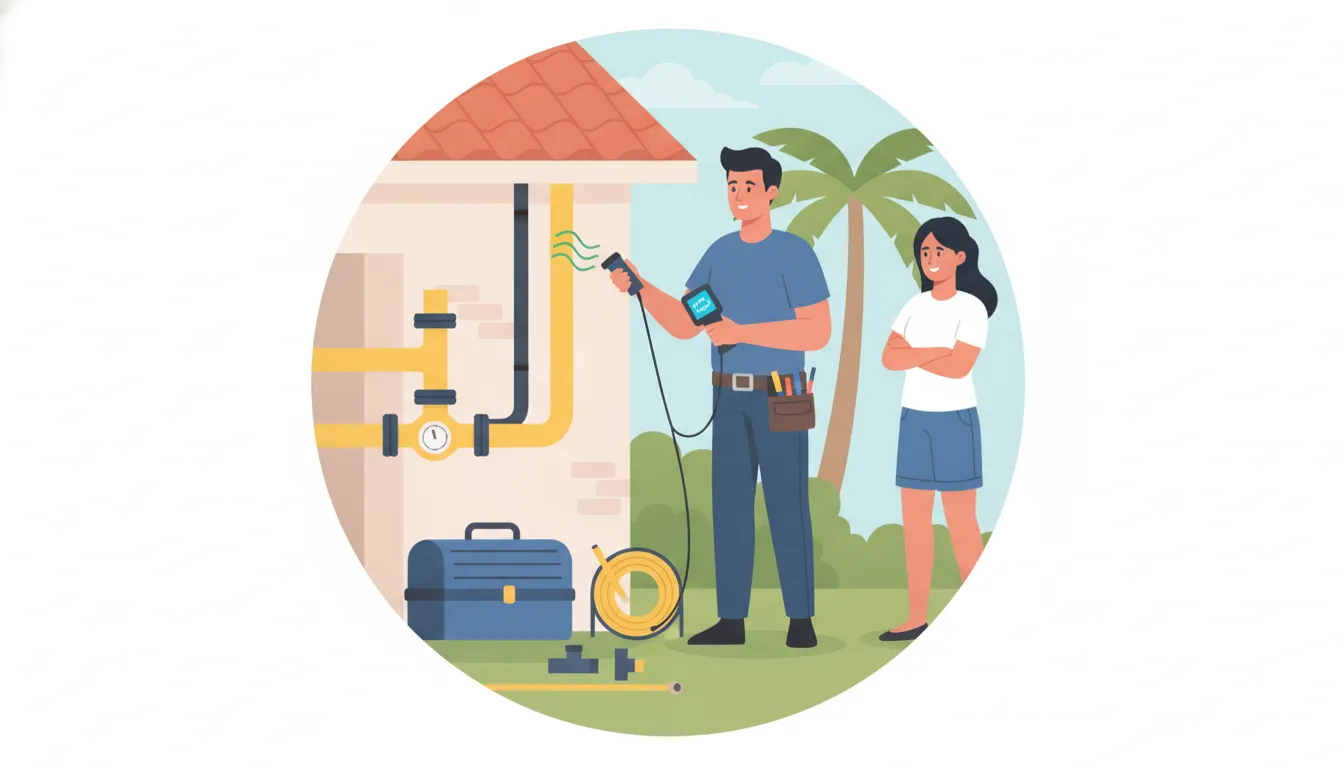
What Does Gas Leak Repair Usually Involve?
The repair process depends on the leak location, the damaged component, and the condition of the surrounding system. A qualified professional should explain the proposed scope after the source has been confirmed.
- Safety confirmation: Emergency responders or the utility address immediate danger before routine repair begins.
- System isolation: The appropriate supply section is shut down using an approved procedure.
- Leak diagnosis: The professional confirms the source and checks nearby connections for related problems.
- Repair recommendation: The technician explains whether the issue involves a fitting, valve, appliance connection, or line section.
- Code-compliant work: The repair uses approved materials and methods for the specific piping system.
- Testing: The repaired section is tested before service is restored.
- Final review: The homeowner receives safety information and guidance about any remaining work.
Some repairs are localized. Others require replacement of a damaged section or correction of an installation problem. The safest option depends on the verified cause, system condition, and requirements that apply to the property.
Underground gas line concerns may need a coordinated response. Never assume a private plumbing repair can address a utility-owned line.
Miranda's plumbing services can help homeowners understand the next step after an emergency assessment. The team also handles urgent plumbing needs through its emergency plumbing service.
When Should You Call Emergency Plumbing Service?
Call 911 first when you smell gas inside, hear a strong release, see flames, or believe people may be exposed.
Call the gas utility when the meter, street-side equipment, or utility supply may be involved. Follow its instructions before arranging additional work.
Contact a licensed plumbing professional after the immediate hazard is controlled. This is especially important when a damaged appliance connection, indoor gas line, or private piping needs evaluation.
Emergency plumbing service may also be appropriate after a utility shutoff. The home may need a documented repair, pressure test, or safe restoration before normal use resumes.
Keep the roles clear when you make those calls. Emergency responders address immediate danger, the utility controls its equipment, and a plumbing professional evaluates eligible private piping or appliance connections.
Do not delay because the smell disappears. Odor can move, fade, or become harder to notice. The underlying problem may remain.
Write down what happened after everyone is safe. Note the time, location, sounds, appliance use, and instructions from emergency personnel or the utility. These details can help the next professional start with a better picture.
Request professional help with a suspected gas line problem.
How Are Indoor and Outdoor Gas Leak Responses Different?
An indoor odor requires immediate evacuation. Do not stay inside to identify the room, inspect an appliance, or open windows.
Move everyone outside and increase distance from the building. Call 911 and the gas utility only after you reach a safe location.
An outdoor odor still requires caution. Move away from the suspected release and keep other people away from the area.
Do not approach a meter, excavation, pipe, or utility marker. Do not start a vehicle near the suspected release.
Outdoor gas lines can involve private piping or utility equipment. The gas utility and emergency responders can determine who should control the area. Their direction takes priority over a homeowner's attempt to trace the line or locate the release.
Ownership can change along the route from the street to the home. Never assume that a visible pipe, meter, or shutoff belongs to the same provider as the indoor piping. Let the responsible authority identify the boundary.
When a buried line may be involved, keep people and equipment away until the location receives professional attention. Never dig to investigate.
The response may differ for propane, natural gas, and other fuel systems. Tell emergency personnel which fuel your home uses if you know it.
What Happens After You Call for Help?
The first priority is life safety. Emergency personnel may establish a safe perimeter and determine whether anyone needs medical attention.
The gas utility may inspect its equipment and control the supply. Utility staff can also explain when the property is safe to approach.
Once the immediate danger is controlled, a licensed professional can assess private piping or appliance connections. This step separates emergency response from repair planning.
That handoff can feel frustrating when the household wants one person to solve everything. Ownership boundaries exist for safety. The responsible provider must be able to control, test, and restore the equipment involved.
- Information gathering: Share where the odor or sound started and when you noticed it.
- Utility coordination: Confirm whether the meter, service line, or public-side equipment requires utility work.
- Private-system inspection: A professional checks accessible piping, connectors, valves, appliances, and related components.
- Repair scope: The technician explains the damaged part and the safest compliant solution.
- Testing plan: Ask what testing will confirm that the repaired section is safe.
- Restoration: Service resumes only after the responsible professional or utility authorizes the next step.
You may need more than one provider when a leak crosses ownership boundaries. A plumbing contractor cannot replace utility-owned equipment without authorization.
Keep the emergency report, utility instructions, and repair documentation together. These records can help clarify what was inspected and what remains.
Could a Gas Problem Also Involve Carbon Monoxide?
Natural gas and carbon monoxide are different hazards. Natural gas is fuel, while carbon monoxide is a poisonous combustion byproduct.
Carbon monoxide has no color or smell. A damaged vent, blocked flue, or malfunctioning appliance can allow it to collect indoors.
Because the warning signs differ, a home can have a combustion hazard without a natural gas odor. Keep alarms working and take every alarm seriously, even when nobody notices a smell.
Leave immediately and call 911 when a carbon monoxide alarm sounds or anyone feels dizzy, weak, nauseated, confused, or unusually tired.
A carbon monoxide alarm can warn you about a combustion problem even when there is no gas odor. Treat an alarm as an emergency signal, leave the home, and wait for qualified responders before investigating the appliance.
Do not silence an alarm and continue using the appliance. Do not assume that a gas smell must be present.
After emergency responders address the immediate danger, qualified professionals can inspect the appliance and venting system. The inspection should identify the cause before normal use resumes.
Install carbon monoxide alarms near sleeping areas and follow the manufacturer's replacement guidance. An alarm does not replace safe appliance maintenance.
How Can You Reduce Gas Leak Risks at Home?
Prevention starts with attentive maintenance and safe appliance use. Keep these habits simple and consistent.
- Keep flammable items away from gas appliances and vents.
- Never use an appliance with a damaged connector, missing panel, or unusual flame.
- Do not move gas appliances without qualified help.
- Schedule service when an appliance smells unusual, performs poorly, or makes new sounds.
- Keep carbon monoxide alarms installed near sleeping areas.
- Replace alarms according to the manufacturer's instructions.
- Know how to leave the home quickly during an emergency.
- Keep the gas utility emergency number available outside the home.
- Tell contractors about buried lines before excavation or landscaping.
Routine attention cannot prevent every failure. It can help homeowners notice changes before a small problem becomes a larger safety concern.
Share unusual sounds, smells, or appliance behavior during service visits. Early details can help a technician decide which equipment deserves closer inspection.
What Should You Ask a Gas Leak Repair Professional?
Clear questions help you understand the work without attempting the repair yourself. They also create a useful record of what the technician found, tested, and recommended after the emergency response.
- Where did you identify the leak?
- Was the affected line or appliance isolated?
- What repair is recommended, and why?
- What testing was completed after the repair?
- Does the utility or local authority need to inspect anything?
- Are there additional safety concerns near the repair area?
- What signs should prompt an immediate call after service?
A trustworthy professional should explain the findings in plain language. The explanation should match the observed issue and the completed testing.
You should know what was inspected, what was repaired, and what remains outside the current scope. Clear records are useful when a utility, inspector, or another professional must continue the work.
Do not choose a repair based only on speed. Safety, licensing, appropriate testing, and clear communication matter more than a quick promise. Ask for a clear explanation of the work before normal use resumes.
Schedule licensed plumbing support for your Treasure Coast home.
Frequently Asked Questions About Gas Leak Repair
Can I stay in my house during a suspected gas leak?
No. Leave immediately when you suspect a leak inside the home. Call 911 from outside and wait for an official all-clear.
How do professionals repair a gas leak?
They identify the source, isolate the affected section, complete approved repairs, and test the system before restoration.
Can a gas leak repair professional find a hidden leak?
Trained professionals use approved diagnostic equipment and testing methods to locate many hidden leaks. Underground problems may require utility coordination.
Should I turn off the gas myself?
Do not attempt to shut off gas during an active emergency unless emergency personnel or the utility instructs you to do so.
Can a gas leak smell disappear?
Yes. Odor can fade or move through a building. A disappearing smell does not prove that the leak stopped.
What is the safest first step after smelling gas?
Leave the building without operating switches or appliances. Call 911 and the gas utility from a safe location.
Gas leak concerns deserve immediate attention and professional follow-through. Protect your household first, then arrange qualified help for the underlying problem.
Keep the safety sequence in mind: leave, call from outside, wait for clearance, and use qualified help for private-system repairs. That order matters more than diagnosing the leak yourself.
Contact Miranda Plumbing & Air to discuss your next safe step.
Need plumbing or HVAC service on the Treasure Coast?
Contact Miranda Plumbing & Air