
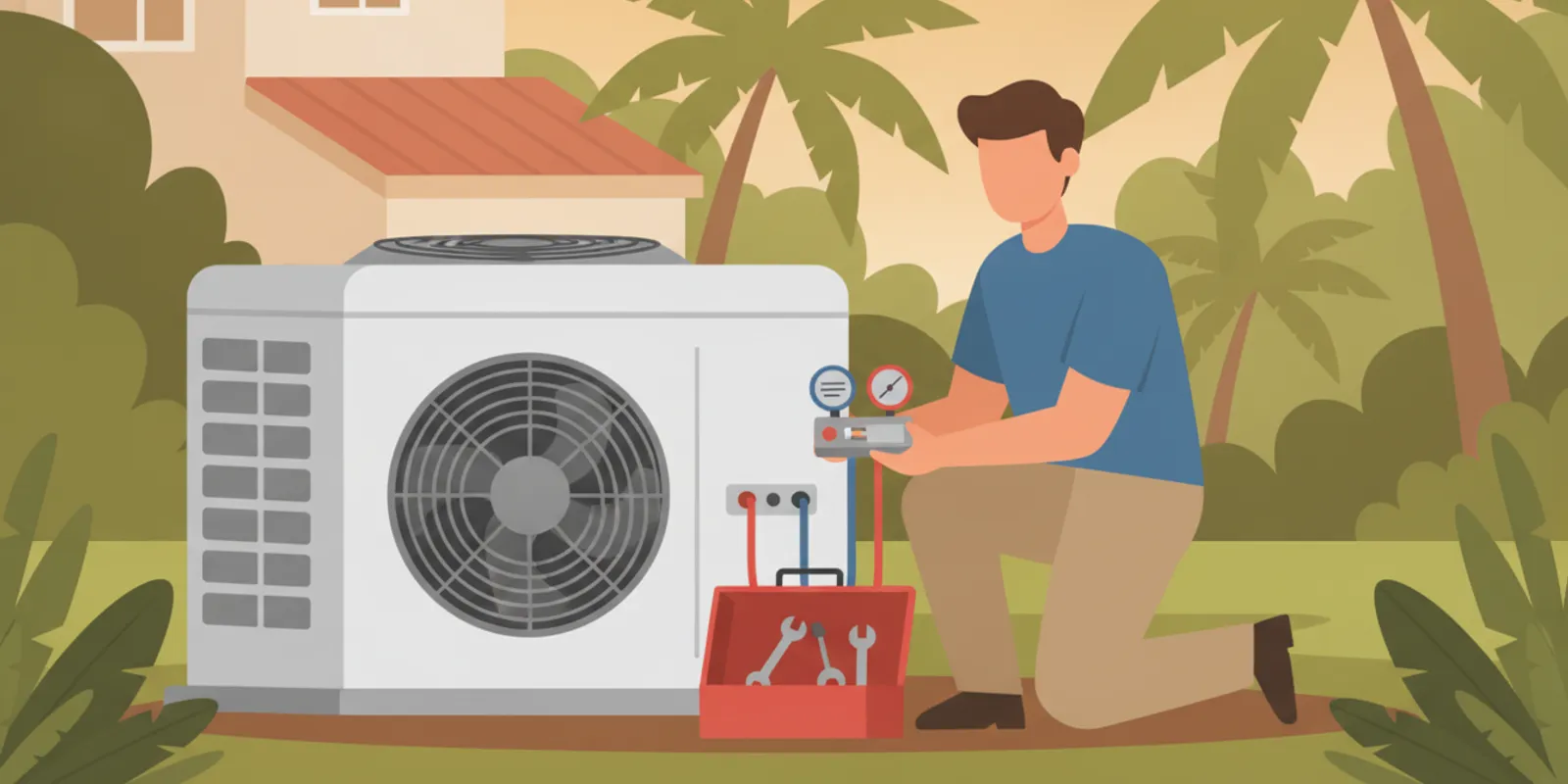
Emergency AC Repair: What to Check When Cooling Stops
When cooling suddenly stops in Florida, the indoor temperature can climb quickly. Before you request emergency ac repair, make a few safe observations, check simple controls, and look for warning signs that mean you should stop troubleshooting. Never open electrical panels or handle refrigerant. These steps can help you explain what is happening and decide what to do next.
Call Miranda Plumbing and Air to discuss AC service.
What should you check first when the AC stops cooling?
Start with the thermostat and the air coming from the supply vents. Keep your checks to visible controls and filters you can reach without tools. If anything smells hot, sparks, leaks heavily, or makes a harsh mechanical sound, stop and use the safety guidance below.
- Confirm the thermostat setting. Set the mode to cool and the temperature below the current room temperature. Check that the display is on and the schedule has not changed the setting.
- Check whether the system has power. Look for a blank thermostat or a stopped indoor unit. You may check an accessible breaker once, but do not repeatedly reset a breaker that trips again.
- Inspect the return-air filter. If it is visibly clogged, replace it with the correct size and direction shown on the frame. A blocked filter can reduce airflow, but it does not explain every cooling failure.
- Look at the outdoor unit from a safe distance. Note whether its fan is running, whether leaves or other visible debris surround it, and whether there is water nearby. Do not reach through the grille or remove panels.
- Check for a clogged drain symptom. Some systems stop when a condensate safety switch responds to drainage trouble. Look for visible water near the indoor equipment, but do not dismantle the drain line.
- Notice airflow in several rooms. Weak airflow at every vent points to a different set of possible issues than one closed or obstructed register. Do not close many vents to force air elsewhere.
Write down what you observe, including when cooling stopped and whether the system runs continuously or cycles off. ENERGY STAR explains that quality HVAC installation includes correct sizing, airflow, refrigerant charge, and duct considerations. Poor cooling, unusual sounds, and water leaks are symptoms worth noting.
When is an AC problem an emergency?
Not every warm room requires an emergency visit, but some conditions need immediate attention. Protect people and property first. If there is smoke, a burning odor, visible arcing, or a strong electrical sound, stay clear of the equipment and contact emergency services when there is a fire risk.
- Stop using the system if you smell burning. Turn it off at the thermostat if you can do so safely. Do not touch a hot unit or an electrical panel.
- Act quickly if water is threatening property. If you see active leakage near ceilings, walls, or electrical equipment, avoid the wet area and seek prompt help.
- Take unusual noises seriously. A sudden grinding, banging, or loud buzzing sound is a reason to turn the system off and request professional guidance rather than keep testing it.
- Consider who is in the home. Young children, older adults, and people with health conditions may be more vulnerable to heat. Arrange a cooler safe place while deciding on service.
- Do not wait on a recurring breaker trip. Leave the system off if a breaker trips again after one reset. Repeated resets can expose a more serious electrical problem.
If the home is uncomfortable but there are no danger signs, you can still contact an HVAC professional and describe the symptoms. Call Miranda Plumbing and Air lists emergency HVAC service; ask about current availability and the next appropriate step.
What can you safely do while waiting for help?
Keep people comfortable without putting yourself at risk or making the equipment problem worse. A few practical measures can help while a service visit is arranged.
- Close blinds and curtains on sunny windows, especially where direct sunlight is warming the room.
- Limit oven use and other activities that add heat indoors.
- Use portable fans only in dry areas, away from water and damaged cords.
- Keep interior doors open if that helps air move through the home, unless a room has a safety reason to remain closed.
- Move people who are becoming overheated to a cooler location. Seek medical assistance for signs of heat illness.
- Leave the AC off if it has a burning smell, repeatedly trips a breaker, or makes a severe mechanical noise.
Do not pour chemicals into a condensate drain, attach a hose to the equipment, or try to thaw a suspected frozen coil with tools. Do not remove access panels or attempt electrical repairs. A technician can determine whether a drain, airflow, electrical, or refrigerant issue is involved.
Which observations help a technician diagnose the problem?
Clear details make it easier to understand the issue before anyone arrives. You do not need to identify the failed part. Record what the system did, what changed, and what you observed from a safe distance.
| Observation | What to note | What to do |
|---|---|---|
| No air from vents | Whether the indoor unit is silent, the thermostat is blank, or airflow stopped suddenly. | Check the thermostat and note any breaker trip. Do not open electrical compartments. |
| Air moves but feels warm | Whether the outdoor unit is running, and when the air first felt warmer. | Confirm the cooling setting and filter condition. Avoid repeated on-off cycling. |
| Weak airflow | Whether the issue affects all rooms or only specific vents. | Check the accessible filter and make sure supply vents are not blocked. |
| Water near indoor equipment | Where water appears, how much there is, and whether it is spreading. | Keep clear of wet electrical areas and report active leakage promptly. |
| Noise or odor | When it starts, how long it lasts, and whether it is getting worse. | Turn the system off for burning odors or severe noises and describe the symptom. |
Also note the system's approximate age if you know it, the last time it received maintenance, and any recent power interruption. If you have a recent service record, keep it available. Do not guess at a cause; precise observations are more useful than a self-diagnosis.
How can you prepare for an HVAC service visit?
Once you have requested help, focus on making the inspection straightforward and sharing accurate details. You do not need to troubleshoot further while waiting. Keep the thermostat setting and the system's on-or-off status consistent with the guidance you received.
- Make a clear path to the indoor equipment and thermostat, and keep the outdoor unit accessible from a safe distance.
- Secure pets and let household members know when a technician is expected.
- Gather notes about the symptom, the time it began, and any recent power interruption or change in operation.
- Keep any prior service records nearby if they are easy to find. Do not delay an urgent request to search for paperwork.
- Tell the technician about water, sounds, odors, or breaker trips you observed. Explain any action you already took, including replacing a filter.
Ask the technician to describe the inspection findings in plain language. Before work begins, confirm which repair is proposed, what it is intended to address, and whether there are other options. If the diagnosis changes after inspection, ask what new information led to that change. A careful explanation helps you make an informed choice without guessing at the cause yourself.
Why might cooling stop even when the AC still runs?
A system that turns on but does not cool can have several causes. A dirty filter or obstructed airflow may be part of the problem. Other possibilities include a thermostat issue, drainage safety shutoff, electrical fault, outdoor-unit problem, or a refrigerant issue that requires qualified diagnosis.
These symptoms can overlap. For example, weak airflow does not prove that the filter is the only problem. A running fan does not confirm that the system is removing heat. Do not add refrigerant or continue operating equipment that is making a concerning noise.
For a broader overview of air conditioning repair, review the service information and note which symptoms match your home. If the system has stopped cooling entirely, explain that clearly when you call.
Florida's warm, humid conditions can make a cooling interruption feel especially uncomfortable. Still, the outdoor temperature does not reveal which component has failed. Note whether the issue started during heavy use, after a storm or power interruption, or after the system had been off for a while. These details may help the technician understand the timeline, but they are not a diagnosis.
Once service is complete, ask whether the technician noticed a maintenance concern that could affect airflow or drainage. Follow the equipment instructions for routine filter care, and ask which filter size and replacement interval suit your system. If a drain or coil needs professional attention, ask what service is recommended and why. Call Miranda Plumbing and Air provides AC tune-up and maintenance information for homeowners who want to learn about scheduled care. See AC tune-up and maintenance service details.
How can you tell whether this is a repair or replacement discussion?
A sudden failure alone does not tell you whether the system should be repaired or replaced. A technician needs to assess the equipment, the cause of the failure, its condition, and your home's cooling needs. Ask for a clear explanation of the findings and the options that fit the system.
Before deciding, consider these questions:
- What specific part or condition caused the loss of cooling?
- Is the repair expected to address the cause, or are there other observed concerns?
- What work is included in the recommended repair?
- If replacement is suggested, what about the equipment condition supports that recommendation?
- What are the practical differences between the available options for your home?
For a system replacement, ask how the proposed equipment and installation scope match the home's needs. Call Miranda Plumbing and Air provides information about AC installation and replacement. Financing details are also available on the company's financing page; review current terms with the provider before making a decision.
How should you review a recommended AC repair?
Once the cause has been inspected, take a moment to understand the proposed work. A useful recommendation should connect the observed problem to the repair being offered. Ask for an explanation that separates what the technician confirmed from what is only a possibility.
- Clarify the diagnosis. Ask what test or visible finding supports the recommendation and whether the system was operating during the inspection.
- Understand the scope. Ask which parts or tasks are included, and whether the system will be checked again after the work.
- Compare appropriate choices. If more than one option is available, ask how each affects operation, expected next steps, and the total work involved.
- Discuss timing. Ask which work should be handled promptly and whether any limited temporary measure is safe while you decide.
- Ask about terms. If a warranty or service guarantee applies, request its conditions in writing rather than assuming coverage.
There may not be several suitable repairs for every failure. The point is to understand why the recommendation fits your equipment and what happens next. If a replacement is suggested, ask the technician to explain why repair is not the best fit based on the inspection. You can request time to review a non-urgent proposal. For a system that creates a safety concern, follow the professional's advice about leaving it off and arranging prompt attention.
What should you ask when requesting emergency AC repair?
When you reach out, give a concise description instead of trying to name a failed component. Tell the representative your location, whether the unit runs, what the vents are doing, and whether you noticed water, unusual sounds, or an odor.
You can ask:
- What should I do with the system before a technician arrives?
- What is the expected timing for service in my area?
- Should I leave the system off based on the symptom I described?
- What information or access will help the technician inspect the equipment?
- Will the technician explain the findings and options before work begins?
For homes within the service area, the Treasure Coast service area list can help you confirm coverage. You can also review general HVAC service information or AC repair service information for Vero Beach.
Call Miranda Plumbing and Air and describe what you noticed.
Frequently asked questions about emergency AC repair
Should I turn off an AC that is blowing warm air?
If there is no burning smell, severe noise, repeated breaker trip, or water hazard, you can check the thermostat and filter. If the system continues running without cooling, contact an HVAC professional for guidance rather than repeatedly cycling it.
Can a dirty filter cause the AC to stop cooling?
A heavily clogged filter can restrict airflow and affect system operation. Replacing an accessible filter with the correct size is a reasonable check, but persistent cooling trouble needs diagnosis. The filter may not be the only cause.
Is it safe to reset the AC breaker?
You may check an accessible breaker once if there is no sign of damage. If it trips again, leave it off and contact a qualified professional. Do not open the electrical panel or keep resetting it.
What should I do if I see water near the indoor unit?
Keep away from water near electrical equipment, and note where the water is appearing. If it is spreading or threatening the home, seek prompt help. Do not dismantle the drain or pour chemicals into it.
Does a system that still runs always need emergency service?
Not necessarily. The urgency depends on the symptoms, safety risks, conditions inside the home, and who may be affected by the heat. Describe the situation and ask about the appropriate timing for service.
What should you remember when cooling stops?
Check only simple controls and visible conditions, stop if you notice electrical or mechanical warning signs, and share specific observations when asking for help. Call Miranda Plumbing and Air to discuss service for your Treasure Coast home. Florida license numbers are CFC1427227 for plumbing and CAC1815486 for HVAC.
Need plumbing or HVAC service on the Treasure Coast?
Contact Miranda Plumbing & Air