
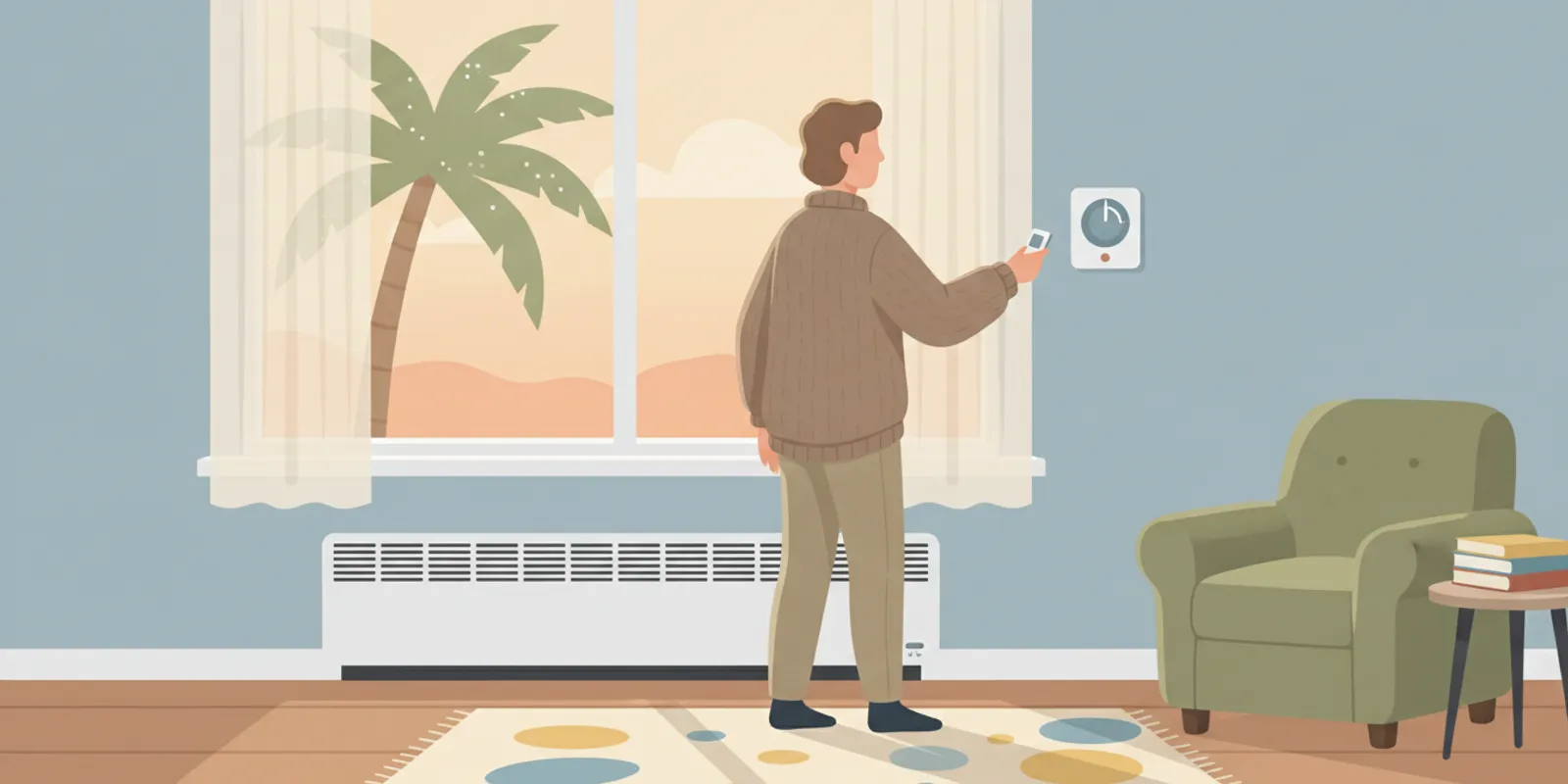
Baseboard Heaters in Florida: Uses, Limits, and Service
A baseboard heater can warm one room without heating every room in a Florida home. Before relying on one, understand its type, limits, safety needs, and how it fits alongside central heating and cooling.
Talk with a home comfort professional
What Is a Baseboard Heater, and How Does It Work?
A baseboard heater is a low-mounted heating unit that warms a room near the floor. Many electric models heat air directly with an internal resistance element. The warmed air rises, and cooler air moves toward the unit to be warmed in turn.
Some baseboard systems use hot water circulated through a radiator-like unit. That type needs a heat source, pipes, and controls beyond the visible heater. Identify the equipment before troubleshooting, since an electric unit and a hydronic unit have different components.
Electric baseboard units often have a thermostat on the heater or wall. Hydronic systems may use separate room controls and a central boiler. A unit's label and owner's manual can help identify its model and operating requirements.
Look for clues without removing covers. Electric models commonly connect to a dedicated electrical circuit and may have a wall thermostat. Hydronic units have water pipes entering the enclosure, although those pipes can be concealed. If the equipment is unfamiliar, note its label and take a photo from a safe distance. A service professional can use those details to determine what type of system is present.
Where Might a Baseboard Heater Make Sense in Florida?
In a warm-weather region, a heater dedicated to one area may be useful when that room feels cooler than the rest of the house. It could serve an enclosed room, a space used at different hours, or a home without central heat in that area.
That does not make it the best choice for every home. Florida's mild winters do not remove the need to consider comfort, electrical capacity, energy use, and how often the room needs heat. A homeowner should compare the installed equipment and usage pattern, not just the size of the heater.
For example, a household that uses a converted room only in the evening has different needs from one that wants steady heat throughout the whole home. A heater intended for occasional, one-room use may not be a sensible substitute for a whole-home system. Consider how the room is connected to the rest of the house, how much heat it loses, and whether other household members need comfort in adjoining areas.
Baseboard heat also does not provide cooling. If the broader goal is year-round comfort, consider how the heater interacts with the home's cooling equipment and ductwork. Call Miranda Plumbing and Air provides HVAC services for residential heating and cooling. Homeowners should confirm whether a particular system or repair is offered.
What Types of Baseboard Heating Should You Compare?
Start by establishing whether the existing equipment is electric or hydronic. Then compare it with the heating system serving the rest of the home. The table below is a starting point, not a recommendation for a specific property.
| Option | How it provides heat | Potential fit | Points to check |
|---|---|---|---|
| Electric baseboard | Uses electricity to heat air near the unit. | One room or an area without central heat. | Electrical circuit, thermostat, clearance, and operating cost. |
| Hydronic baseboard | Moves heated water through a low-mounted radiator. | A home already equipped with a compatible hot-water heating system. | Water source, piping, controls, leaks, and system condition. |
| Central heat pump or furnace | Uses the home's central heating equipment and distribution system. | Whole-home heating where existing equipment and ducts support it. | Equipment condition, ducts, sizing, and available service options. |
| Portable electric heater | Heats a small area when plugged into an outlet. | Occasional supplemental heat under close supervision. | Manufacturer instructions, outlet load, placement, and supervision. |
Electric resistance heating uses electricity at the room unit, while a central heat pump works differently. The UCF Florida Solar Energy Center's comparison of residential energy code provisions discusses differences in how Florida and IECC provisions treat electric heating; see its Florida residential energy-code comparison. Applicable requirements depend on the project and current code, so do not treat a comparison document as a site-specific code ruling.
When comparing options, separate the purchase decision from the operating question. A unit that already exists may have a low immediate cost to use, but its comfort and energy use still matter. A new central system can involve more than the heating equipment, including distribution and controls. Ask what work is actually needed, what is already functional, and whether the proposed change addresses one room or the home's broader comfort needs.
What Limits a Baseboard Heater's Performance?
A baseboard heater is designed to heat the area around it, not cool the room or fix unrelated comfort problems. A blocked unit may struggle to circulate warm air. Furniture, curtains, bedding, or stored items placed too close can interfere with its operation and create a safety concern.
Room heat loss matters too. Drafts, windows, insulation, ceiling height, and outside temperatures can affect how comfortable a room feels. A unit that runs frequently may have a sizing, control, maintenance, or building-envelope issue. It is better to investigate than to assume the heater needs a larger replacement.
Electricity use depends on the unit's output, how long it runs, the thermostat setting, and the home's electric rate. A hydronic system has additional factors, including the heat source and circulation equipment. Compare actual usage and operating conditions instead of relying on a general cost estimate.
Heating one room can leave other spaces cooler. Doors, airflow, and how the central system operates all affect the result. Do not close vents or alter central HVAC controls without understanding how that could affect airflow and equipment operation.
Try a simple observation log before deciding the equipment is failing. For several days, record the thermostat setting, approximate run times, outdoor conditions, and whether the room is occupied. Note whether the door stays open and whether curtains or furniture block the heater. Compare the room's comfort with nearby rooms at the same time. This does not diagnose a fault, but it can show whether the problem follows a consistent pattern.
Also distinguish a cold surface from a room-wide heating problem. A draft near a window can make one seat uncomfortable while the rest of the room feels acceptable. A blocked heater can create uneven warmth near the floor. If the whole room stays chilly despite the unit running, the issue may involve capacity, controls, heat loss, or the equipment itself.
How Can You Tell Whether the Heater Is the Main Problem?
Notice whether the discomfort is limited to one room or appears throughout the home. A single cold room may point to a local control, heater, draft, or room-use issue. Several rooms with the same symptom may call for a broader review of the central heating system.
Pay attention to changes over time. Note whether the heater runs longer than usual, the thermostat reading differs from the room's feel, or the unit behaves differently after a setting change. Record when the symptoms start and whether doors or windows were open. These details can help a technician understand the pattern.
Do not assume that a heater is underpowered because one room feels cold. A thermostat in another part of the home may not reflect that room's temperature. Air leakage, poor circulation, or a control problem can also affect comfort. A qualified assessment can separate these possibilities before equipment is changed.
A useful first pass is to make a room-by-room comparison. Write down which spaces feel comfortable, cool, or unusually warm, and note where thermostats are located. Check whether the affected room has a closed door, exterior wall, large window, or noticeably different ceiling height. These observations help describe the condition without attempting electrical or plumbing diagnosis.
If the symptom began after a change, include that timing. A new thermostat setting, furniture placement, window covering, or change in how the room is used may affect comfort. If nothing changed, mention that too. Specific observations are more useful than saying only that the heater is not working.
If there is a central heat pump or furnace, describe how it performs in other rooms as well. Call Miranda Plumbing and Air offers furnace repair service and other residential HVAC work; confirm the equipment type and service fit before booking. A baseboard symptom does not by itself establish that the central system needs repair.
What Should You Check Before Using One?
Use the manufacturer's instructions as the main guide for operating and maintaining the model. A visual check can help you spot obvious concerns, but it is not a substitute for electrical or plumbing work by a qualified professional.
- Keep the heater's air path open and follow the clearance instructions for that model.
- Look for damaged covers, loose parts, unusual smells, discoloration, or marks around the unit.
- For an electric model, do not open the unit or handle wiring while power is connected.
- For a hydronic model, look for visible moisture, corrosion, or signs of a leak.
- Use only the thermostat and settings described in the owner's manual.
- Keep children and pets away from hot surfaces, and do not drape clothing over the heater.
Make the check methodical. First, look from a safe distance for objects that might obstruct the unit or touch its hot surface. Next, compare its condition with the manufacturer's manual, including any required clearances. Then check whether the thermostat responds as the instructions describe. Stop if you notice damage, a burning smell, moisture, or unusual sounds. Do not remove a cover to inspect internal parts.
The Certified Commercial Property Inspectors Association advises inspectors to alert clients to defects and points to an electric baseboard inspection checklist. Its guidance can help homeowners understand what a visual inspection may flag, but an inspector's checklist is not a repair procedure. Review electric baseboard heater inspection guidance for examples of conditions that merit attention.
When Should You Stop Using the Heater?
Stop using a unit if it produces smoke, sparks, a burning odor, repeated breaker trips, or visible damage. Keep people away from the equipment. If there is smoke or fire, leave the area and contact emergency services.
Do not repeatedly reset a tripped breaker or keep switching a malfunctioning unit back on. The cause may involve the heater, wiring, circuit load, thermostat, or another part of the system. A qualified professional should identify the problem before the unit returns to service.
Water around a hydronic heater deserves prompt attention. Avoid touching wet electrical components. If it is safe to do so, keep clear and arrange qualified plumbing or heating service to identify the source.
Tell the person you contact what happened and when. Mention any odor, sound, visible water, breaker activity, or change in performance. Do not test the heater repeatedly to reproduce the symptom. If smoke or fire is present, prioritize leaving the area and contacting emergency services over collecting equipment details.
Should You Repair, Replace, or Use Another Heating System?
The right next step depends on what has failed and whether the system suits the room. Ask a technician to explain the diagnosis, the repair scope, and whether other components may also need attention. For a central heating issue, homeowners can review HVAC repair service information and confirm which equipment is supported.
When a baseboard unit is damaged or unreliable, compare repair and replacement in context. Consider the unit's age and condition, parts availability, electrical or piping concerns, comfort needs, and expected use. Do not replace only by appearance if a safe, suitable repair may address the actual fault.
Ask for an explanation that connects the proposed work to the symptom. For example, if the room is cold but the unit heats, ask whether testing found a failed control, restricted airflow, inadequate capacity, or heat loss. If replacement is recommended, ask whether the existing circuit or piping is suitable for the replacement. If only a central system is proposed, clarify how that system will serve this room and the rest of the home.
If a household is considering a central system instead, the evaluation may include the home's layout, duct condition, heating and cooling needs, existing equipment, and electrical supply. Call Miranda Plumbing and Air provides central HVAC installation and replacement; ask whether the service applies to the specific equipment and home. See central air-conditioning installation and replacement for information about that service category.
For a central system already in place, routine attention can help identify issues outside a baseboard unit. Learn what is covered by AC tune-up and maintenance service. That service concerns air conditioning; it should not be confused with a baseboard heater inspection or repair.
When comparing written recommendations, look for a clear scope rather than a single conclusion. The explanation should identify the equipment being evaluated, the reported symptoms, the work proposed, and any limits to the diagnosis. Ask what remains uncertain and what would happen if you postpone the work. This keeps the decision focused on comfort, safety, and the home's actual equipment.
What Questions Should You Ask Before Scheduling Service?
Clear questions make it easier to understand what a service visit can address. Before booking, describe the equipment and the symptoms as specifically as possible.
- Is the heater electric or hydronic, and what evidence supports that identification?
- What is the likely source of the problem, and what testing is needed to confirm it?
- Does the issue involve the heater, thermostat, circuit, piping, or central system?
- What repair choices are available, and what is included in each option?
- Would replacement change how the room receives heat, or only replace the existing unit?
- Does the proposed work require a permit or code review for this home?
- What other equipment should be checked before making a final decision?
You can also prepare a brief description before contacting a company. Include the heater type if known, its location, the symptoms, when they began, and whether other rooms are affected. Mention any prior repairs or adjustments. This concise summary helps route the question to the right service category and avoids guessing about what the visit can cover.
Rules and permitting requirements can depend on the work and jurisdiction. Florida's residential energy provisions are periodically updated, and the FSEC comparison describes particular code editions rather than every local requirement. Have the contractor verify the current rules that apply to the proposed work.
How Can Treasure Coast Homeowners Find the Right Service?
Describe whether the home has an electric baseboard unit, a hydronic unit, or central heating. Share the make and model if available, when the issue occurs, and whether other rooms have the same problem. Photos of the equipment label can help, but do not remove a cover to take them.
Service availability may vary by equipment and location. Check the Treasure Coast service areas and ask whether the specific baseboard heater concern is within scope. Call Miranda Plumbing and Air provides residential HVAC and plumbing services, but this article does not promise service on every heater type.
When you reach out, be direct about what you need answered. You might ask whether the company evaluates the specific heater type, whether the reported issue falls within its service scope, and what information to provide before an appointment. If the baseboard unit is not serviced, ask whether another relevant HVAC concern can be addressed instead. Confirming that distinction before scheduling can prevent confusion.
Ask about the right service for your system
Frequently Asked Questions
Can a baseboard heater cool a room in summer?
No. A baseboard heater provides heat only. Cooling requires a separate air-conditioning system or another cooling solution suited to the home.
Is electric baseboard heat the same as hydronic baseboard heat?
No. Electric models use an electrical heating element at the unit. Hydronic models circulate heated water and depend on a compatible heat source and piping.
Can furniture sit in front of a baseboard heater?
Keep the air path and clearances required by the manufacturer open. Furniture or fabric too close can restrict airflow and may become a safety risk.
Can I repair a baseboard heater myself?
Limit homeowner checks to the instructions and visual observations. Do not open energized equipment, handle wiring, or attempt plumbing repairs unless qualified to do that work.
Does Call Miranda Plumbing and Air service every baseboard heater?
Service depends on the heater type, the issue, and the location. Contact the company with the equipment details before scheduling, and ask whether the specific work is available.
Call Miranda Plumbing and Air for help confirming service; the company holds Florida plumbing license CFC1427227 and HVAC license CAC1815486.
Need plumbing or HVAC service on the Treasure Coast?
Contact Miranda Plumbing & Air