
Air Handler Installation: Florida Home Guide
Air handler installation is the indoor half of a split cooling system, and in a Florida home it affects more than the thermostat reading. The indoor unit moves air through the ducts. It also shapes humidity, noise, drain safety, and how evenly rooms feel.
Call Miranda Plumbing and Air to discuss your air handler installation plan.
A careful job starts before the new cabinet arrives. The contractor should look at the home, the outdoor unit, and the path air takes through each room. This guide explains that process so you can ask better questions and choose the right scope of work.
What Is an Air Handler?
An air handler is the indoor portion of many split air conditioning and heat pump systems. A blower inside the cabinet moves air through the home. The cabinet may also hold an indoor coil, a filter rack, electric heat strips, and controls.
The outdoor unit rejects heat from the home. The air handler pulls room air across the cold coil, then sends cooled, drier air through the supply ducts. Return ducts bring that air back to the cabinet.
That makes the cabinet more than a metal box in a closet or attic. It is one piece of a connected system. The ducts, thermostat, condensate drain, electrical supply, and outdoor unit have to work with it.
ENERGY STAR explains that quality HVAC installation includes correct sizing, airflow, refrigerant charge, and duct considerations. Those checks are why the work around the cabinet matters as much as the equipment label.
When Should Florida Homeowners Consider Air Handler Installation?
Some homes need a new indoor unit only. Others need a full air conditioning or heat pump installation. A site visit is what separates those two jobs.
- Frequent repairs: Repeated blower, coil, control, or drain failures are a reason to compare replacement with another repair.
- Uneven rooms: Persistent hot rooms can point to airflow, sizing, ducts, or the indoor unit itself.
- Sticky indoor air: A system that cools but leaves the house damp may not be removing moisture well.
- A mismatched pair: A new indoor unit has to match the outdoor unit and the controls already in the home.
- An added room: A changed layout or an extra room can require a new airflow plan, not just a new cabinet.
- Aging equipment: An older indoor unit is a fair reason to compare repair cost with a planned replacement.
Repair can still be the right call when the cabinet, coil, blower, and controls are sound. Replacement makes more sense when several parts are failing together. Condition, compatibility, and safety decide it, not a single symptom.
If cooling has already stopped, start with Miranda's air conditioning repair service before you assume a new indoor unit is the only answer. A technician can explain both paths after looking at the system.
How Does Air Handler Installation Work?
Every house is different, but a professional job usually follows the same order. The contractor should walk through that order before the work day.
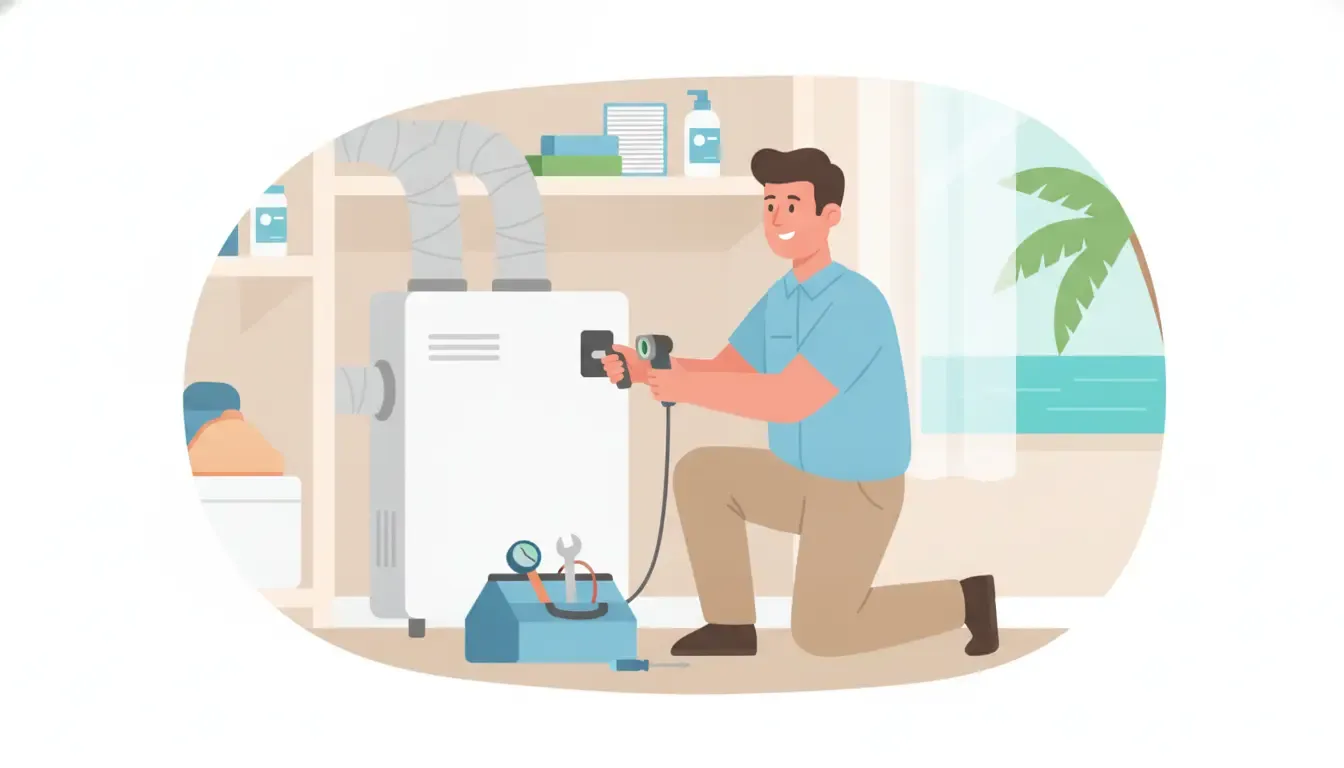
- Evaluate the existing system. The technician reviews the indoor unit, outdoor equipment, ducts, drain, wiring, and thermostat.
- Confirm the equipment match. Indoor and outdoor components must be compatible. Controls and electrical needs get the same review.
- Check the location. The new unit needs a stable spot with enough clearance for future service.
- Protect the home. The crew should cover floors and nearby finishes and keep the work area orderly.
- Remove the old equipment. The technician disconnects the existing unit safely and takes it away as agreed.
- Set and connect the new unit. The crew joins ducts, refrigerant lines, the condensate drain, electrical parts, and controls.
- Test the system. Testing should cover airflow, temperature response, drain operation, controls, and overall performance.
- Review the result. You should leave with a clear explanation of operation, filter access, maintenance, and warning signs.
The job is not finished when the cabinet is sitting in place. The final checks show whether the system behaves as planned. They also give you a chance to ask how to live with it.
Miranda's air conditioning installation and replacement service is the right next page when the outdoor unit may need to be replaced along with the indoor cabinet.
What Should a Contractor Check Before Installation?
A useful estimate covers more than a model number. Ask how the contractor will look at the whole air path, not only the box being swapped.
System size and capacity
Oversized equipment can shut off before the house feels dry. Short cycles also waste the start-up energy of the system. Undersized equipment may run constantly and still struggle on the hottest afternoons. The contractor should explain how the home, not a rule of thumb, drives the choice.
Florida's own home-energy guidance says a load calculation, not square footage alone, is the way to size cooling equipment. My Florida Home Energy describes Manual J as the residential standard for that calculation. Ask whether your proposal is based on a real load, including moisture, rather than tons per square foot.
Duct condition and airflow
Leaky or crushed ducts can dump cooled air into an attic or a crawl space. The contractor should look at accessible ducts and say when a repair belongs in the same visit. The U.S. Department of Energy's duct sealing guidance treats leakage as a real factor in forced-air performance.
Condensate drainage
A Florida system pulls a lot of water out of indoor air. That water has to leave the house safely. The contractor should confirm the drain path, the pan, the safety switch, and how a technician will reach them later.
Electrical and control requirements
The new unit has to match the home's electrical supply and control system. Needed changes should be named before installation day. That keeps the crew from discovering a missing breaker or an incompatible thermostat mid-job.
Access and service space
Someone will need room to change the filter and to open the cabinet later. A cramped closet can turn a simple service call into a difficult one. Ask how the proposed layout leaves a clear path to the filter, the coil, and the drain.
Permits and local requirements
Permit rules vary by city and by how much of the system is changing. Ask which requirements apply to this address. Do not assume an older installation already meets today's rules.
How Does Florida's Climate Affect Air Handler Installation?
A long cooling season puts steady demand on the indoor unit. Heat and humidity also make small setup mistakes easier to feel. A thoughtful installation treats temperature and moisture as one job.
Humidity control depends on equipment choice, airflow, run time, and drainage. A system that cools the air in a few minutes and then shuts off may leave the house clammy. Talk about how the rooms should feel, not only about the number on the thermostat.
Condensation deserves its own conversation. Drain lines, pans, and safety switches should be installed and tested, not assumed. A blocked or poorly sloped drain can wet a closet, a ceiling, or an attic.
Homes near the coast can also see salt air and faster corrosion. Ask whether the location and the equipment choices fit that setting. Keep the outdoor unit clear, and follow the maintenance schedule the contractor gives you.
Filtration and ventilation can belong in the same visit. Filter access, humidity, and fresh-air needs all change the air people breathe. When the indoor unit is only part of the concern, Miranda's HVAC services are the place to continue that conversation.
How Should You Compare Air Handler Installation Estimates?
Two proposals can name similar equipment and still describe different jobs. Compare the work included, not only the brand on the cabinet.
- Ask whether removal and disposal of the old unit are included.
- Confirm that duct connections, drain work, wiring, and controls are in the scope.
- Ask how airflow and system operation will be tested before the crew leaves.
- Confirm who pulls permits or meets an inspector when one is required.
- Review warranty terms for both the equipment and the labor.
- Ask which maintenance steps protect the new unit after the first season.
A clear estimate names its assumptions and its exclusions. It should also say which findings would require a second decision. Damaged ducts behind a closed chase are a common example.
Do not pick a proposal by brand name alone. A matched system with careful setup can serve the house better than a larger unit installed without a full look at the ducts and the drain.
Price is part of the comparison, but this guide does not invent dollar amounts. Ask each contractor to price the same scope so the numbers mean the same thing. A lower figure that leaves out drain work, permits, or disposal is not the same job.
What Is the Difference Between Air Handler Replacement and Full AC Installation?
These labels describe different scopes of work. The better one depends on the condition of the equipment that is staying.
| Project type | What may change | When it may fit | Question to ask |
|---|---|---|---|
| Air handler replacement. | Indoor unit, controls, drain, and duct connections. | The outdoor unit is suitable and compatible. | Will the new indoor unit match the outdoor equipment? |
| Full AC installation. | Indoor unit, outdoor unit, refrigerant circuit, and controls. | Several major components need replacement. | How will the full system be sized and commissioned? |
| Air handler repair. | One failed part or one connection. | The rest of the equipment is still serviceable. | What failed, and is another failure likely soon? |
| Airflow improvement. | Duct repairs, balancing, or filtration changes. | The equipment runs, but rooms stay uncomfortable. | Can testing find the airflow restriction? |
Do not choose a project label from an online symptom list. A visit can show whether the issue is the indoor unit, the outdoor unit, the ducts, the controls, or more than one of those.
Replacing only the indoor unit is reasonable when the outdoor unit is sound and the two can be matched. Replacing both is the safer path when the outdoor unit is old, the refrigerant requirements do not match, or several parts are already failing. Ask that question in plain language before you approve a scope.
How Can You Prepare Your Home for the Job?
A little preparation makes the day easier for your household and for the crew.
- Clear storage and furniture away from the equipment.
- Put pets in a quiet, closed room during the appointment.
- Tell the contractor about past leaks, hot rooms, or repeat repairs.
- Gather model numbers, the filter size, and recent service notes.
- Ask how long the home may be without cooling.
- Confirm where the crew will park, stage parts, and remove the old unit.
- Ask which areas need access, including the thermostat and the outdoor unit.
Seasonal residents should leave access instructions and a local contact. Mention any worry about floors, walls, attic access, or finished closets before the crew arrives.
That conversation also prevents small delays. A locked gate, a stored holiday closet, or an unknown leak history can change the plan once the technician is already on site.
What Should You Verify After Air Handler Installation?
Before the crew leaves, ask for a short walkthrough. You do not need to become a technician. You do need to know what normal operation looks like.
- Confirm the thermostat starts and stops the system.
- Ask how to replace or clean the filter, and where the spare size is recorded.
- Find the condensate drain and learn the warning signs of a backup.
- Check that supply and return airflow feels steady from room to room.
- Ask whether accessible ducts and connections were inspected.
- Review warranty papers, model information, and who to call for service.
- Ask which sounds, smells, or water marks should trigger a service visit.
- Put the recommended maintenance visit on the calendar before the crew leaves.
Miranda's AC tune-up and maintenance service is the follow-up for that ongoing care. A scheduled visit can catch a slow drain, a dirty filter, or a change in airflow before it becomes a no-cool call.
If the home is a rental or a seasonal property, write down the filter direction and the shutoff location for the next person who stays there. Those two notes prevent the most common post-install mistakes.
Frequently Asked Questions
Can an air handler be replaced without replacing the outdoor unit?
Sometimes, but only after a compatibility check. The indoor coil, blower, controls, refrigerant needs, and outdoor equipment have to work as a matched system. If they do not, replacing the indoor unit alone can leave the system unreliable.
How long does air handler installation take?
Time depends on access, the equipment, any duct changes, electrical work, and whether the outdoor unit is part of the job. A straightforward indoor swap does not take the same amount of time as a full system change. Ask for a schedule after the evaluation, not from a generic online estimate.
Is air handler installation a do-it-yourself project?
No. The work can involve refrigerant, electrical connections, condensate drainage, airflow, and commissioning. Those steps belong to a qualified HVAC professional. A homeowner can prepare the space and ask questions, but should not open the refrigerant circuit.
Why does a new system still feel humid?
Sticky air can come from sizing, airflow, drainage, thermostat settings, duct leakage, or the way the house is used. Changing the setpoint over and over will not isolate the cause. Ask for testing instead of assuming the new cabinet is defective.
Should I repair or replace my air handler?
Compare the unit's condition, repair history, compatibility with the outdoor unit, and the comfort you want next season. One failed part on a sound cabinet is a different decision from several failing parts on an older system. A professional inspection should lay out both paths.
How do I find an air handler installer in Florida?
Look for a licensed HVAC company that explains sizing, airflow, drainage, compatibility, testing, and later service. Confirm the company serves your city. Miranda lists the Treasure Coast communities it covers on the service areas page.
Ready to Plan Air Handler Installation?
Comfort in a Florida home depends on more than a new cabinet in the closet. The installation has to fit the house, the ducts, the climate, and the way you use the rooms.
Start with an evaluation. Ask about sizing, airflow, humidity, drainage, compatibility, and the tests that happen before the crew leaves. Then choose the scope that matches the equipment you already have.
If cooling has failed and you need help the same day, Miranda's emergency HVAC service is the faster path. For a planned indoor-unit project, a scheduled visit is usually the better fit.
Bring your questions about filter access, drain safety, and how long the house will be without cooling. A contractor who answers those clearly is easier to compare than one who only quotes a model number.
Call Miranda Plumbing and Air to get started with an air handler installation consultation.
Need plumbing or HVAC service on the Treasure Coast?
Contact Miranda Plumbing & Air