
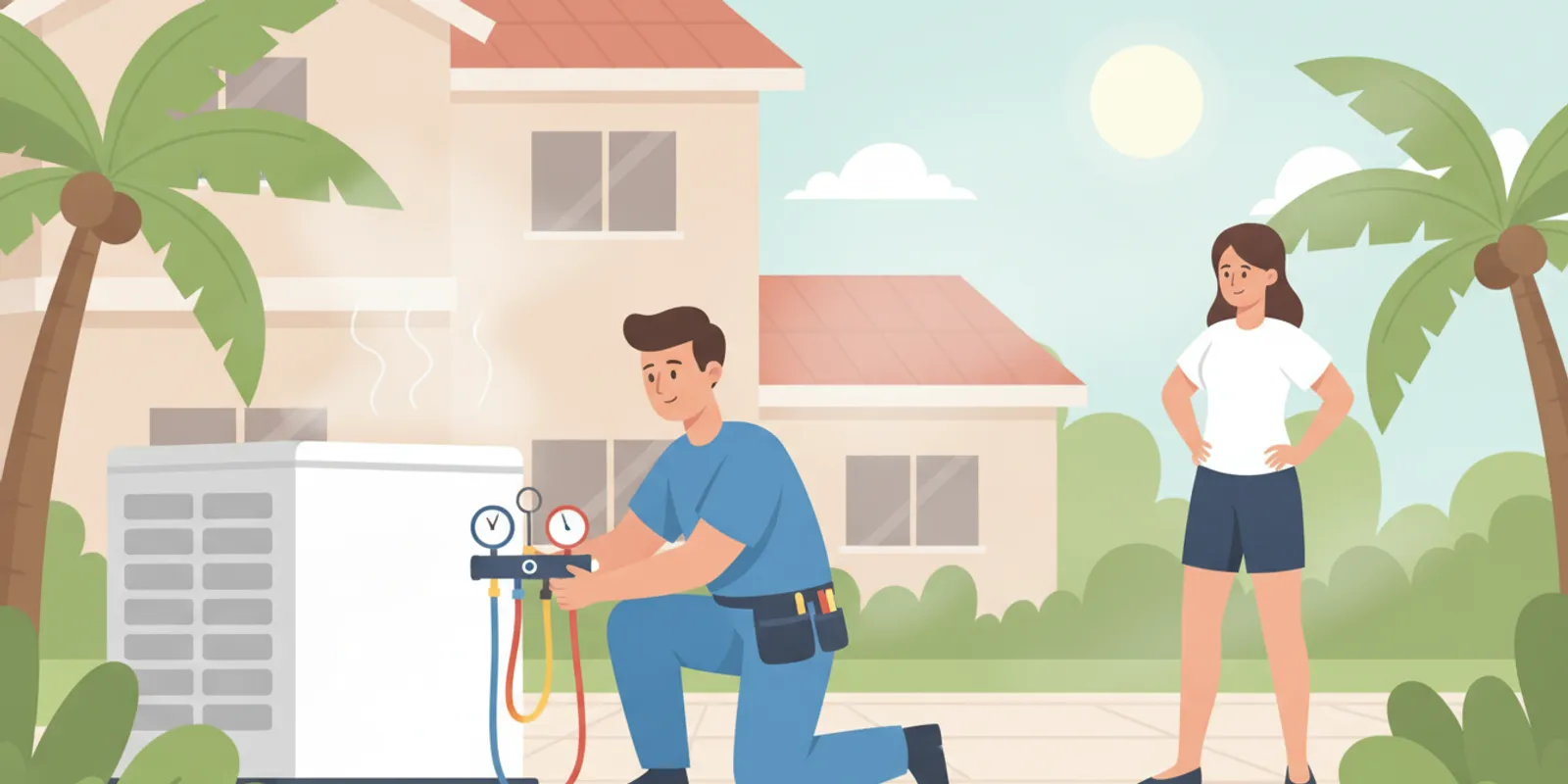
Air Conditioner Repair: When Should You Call?
Knowing when to request air conditioner repair can help you act before a small cooling change disrupts your home. In Florida, call for assessment when cooling weakens, temperatures become uneven, or water, unusual sounds, or electrical warning signs appear. This guide helps Treasure Coast homeowners decide what to do next without attempting risky repairs.
Request air conditioning service
When do cooling symptoms mean you need air conditioner repair?
Look for changes from your system’s usual behavior. One symptom can have several causes, so report what you notice rather than guessing which component has failed.
- Warm or weak airflow: The thermostat calls for cooling, but vents deliver little air or air that feels warmer than usual.
- Longer cooling cycles: The system runs much longer than before, yet rooms remain uncomfortable.
- Frequent starting and stopping: The equipment cycles repeatedly without keeping the home near the thermostat setting.
- New sounds: Grinding, buzzing, rattling, or persistent clicking deserves attention, especially if it is new.
- New odors: A persistent musty smell or burning odor should not be dismissed as normal operation.
- Unexpected water: Moisture or pooling near indoor equipment may signal a drainage or other system issue.
- Uneven room temperatures: One room becomes unusually warm while other areas cool as expected.
A dirty filter or thermostat setting can sometimes contribute to weak airflow or poor comfort. A filter change may help if the old one is visibly loaded, but recurring symptoms need a professional assessment.
Notice how long the symptom lasts and whether it changes after a simple check. A single warm afternoon may differ from a system that repeatedly fails to reach its setting. The pattern, timing, and location of the issue help a technician narrow the possibilities.
When should you treat an AC problem as urgent?
Turn the system off if you notice smoke, sparking, a burning smell, or a breaker that trips again after resetting. Do not keep resetting it or open electrical panels.
Keep people away from wet equipment and exposed wiring. Water near electrical components also calls for caution. If you can safely reach the thermostat, turn cooling off and avoid wet surfaces.
If indoor heat is becoming unsafe, move to a cooler place while arranging assistance. This is especially important when someone at home has special health needs.
A sudden loss of cooling without electrical warning signs may still deserve prompt attention in Florida. Consider how quickly indoor conditions are changing. Also consider whether the system is completely off or simply cooling poorly.
Tell the service team these details when you request help. For urgent system failures, review emergency HVAC service information. Do not delay a safety response while trying to diagnose a component.
What can you safely check before calling?
Simple checks can clarify what is happening, but they should not involve tools or equipment panels. Stop if anything appears unsafe, wet, damaged, or unusually hot.
- Confirm the thermostat is set to cooling and that its target temperature is below the room temperature.
- Check whether the display is blank, showing a message, or responding to adjustments.
- Look at the filter. If visibly clogged, replace it with the correct size and follow its airflow direction marking.
- Make sure supply vents are open and not covered by furniture, rugs, or curtains.
- From a safe distance, look for obvious damage, heavy debris, or standing water around the equipment.
- Note whether the indoor blower and outdoor unit appear to run, without touching either unit.
After changing a filter or correcting a thermostat setting, give the system time to respond. Record whether airflow or comfort improves. If the system remains weak, repeatedly stops, or worsens, stop troubleshooting.
Do not remove panels, handle wiring, pour chemicals into a drain, or attempt refrigerant work. If a breaker has tripped more than once, leave it off and request qualified service.
For routine upkeep, see AC tune-up and maintenance information. Maintenance can support reliable operation, but it does not replace diagnosis for a current failure.
How can you separate a simple check from a service call?
Use the timing and severity of the symptom to choose your next step. A simple setting error may improve after a safe adjustment. A repeating symptom deserves more attention.
Example one: the thermostat was changed
A homeowner may discover that the thermostat is set to fan-only mode. Switching to cooling can restore normal operation. Watch the system afterward and note whether the room reaches the selected setting.
If the thermostat is correctly set but the air remains warm, do not keep lowering the temperature. That action does not identify the cause. Request service and describe the setting, airflow, and timing.
Example two: one bedroom feels warm
First, check whether the affected supply vent is open. Look for furniture or curtains blocking it. Then compare airflow with another room.
If only one room remains warm, record that detail. The problem may involve airflow or another part of the system. Repeated uneven comfort still merits an assessment.
Example three: the system makes a new sound
Listen from a safe distance and note when the sound starts. A noise during startup may differ from a noise that continues during operation.
Do not remove a cover to locate the sound. Turn the system off if the noise comes with smoke, a burning odor, sparking, or another warning sign.
This approach avoids two common mistakes. It avoids ignoring a developing problem. It also avoids replacing parts based only on a guess.
How do common symptoms compare?
This table can help you decide what to report and how quickly to seek help. It is not a diagnosis. Different problems can produce similar symptoms.
| What you notice | Safe next step | When to seek help |
|---|---|---|
| Weak airflow and a visibly dirty filter | Replace the filter with the correct type and orientation if safe. | Request service if airflow stays weak or the issue returns. |
| Warm air on a cooling setting | Confirm thermostat settings and note which equipment appears to run. | Arrange service soon, especially if indoor temperatures rise. |
| Water near indoor equipment | Keep clear of wet electrical areas and turn cooling off if needed. | Contact a professional promptly. |
| Burning smell, smoke, or sparking | Turn the system off only if safe and stay clear of equipment. | Treat as urgent and seek appropriate help. |
| Repeated breaker trips | Leave the breaker off and do not reset it again. | Arrange prompt professional diagnosis. |
| Uneven temperatures or frequent cycling | Write down affected rooms and how often the system starts. | Schedule service if the pattern persists. |
| New rattling, buzzing, or grinding | Note when the sound occurs and where it seems to come from. | Turn it off with danger signs; otherwise request assessment. |
What details help a technician diagnose the problem?
A concise description can make a service conversation more useful. You do not need to identify a failed part. Explain what changed, when you first noticed it, and whether it is happening now.
- Does the system run continuously, cycle often, or fail to start?
- Which rooms feel different, and are particular vents weak?
- Did you notice unusual sounds, odors, water, or thermostat messages?
- Did you recently change the filter, thermostat, or settings?
- Did the symptom begin after a power interruption or another noticeable event?
- Has the issue occurred before, and what seemed to happen afterward?
- Did you turn the system off because of a safety concern?
For example, “the living room is comfortable, but two bedrooms have weak airflow since yesterday” is useful. It is more useful than saying only, “the AC is broken.”
If the problem occurs only at certain times, share that pattern. Mention whether the issue begins after several hours of operation. Also mention whether outdoor conditions seem to change it.
To learn about local coverage, consult the company’s Treasure Coast service areas. Homeowners in specific communities can review Vero Beach service information or Stuart service information.
What may a professional AC inspection involve?
A technician typically asks about the symptoms and checks controls and equipment. The goal is to narrow down the cause rather than assume it from one sign.
Depending on the complaint, the inspection may include airflow, drainage, electrical components, and operating performance. The technician may also compare the reported symptom with what the system does during operation.
The U.S. Department of Energy’s Home Cooling 101 guide discusses common air conditioner problems and maintenance considerations. It explains that refrigerant concerns should be handled by a trained technician.
Homeowners should not open a refrigerant circuit or add refrigerant themselves. Refrigerant work requires appropriate training and equipment. A professional can explain what the inspection found.
During the visit, ask what was checked and how the findings relate to your symptoms. If a component is recommended for repair, ask what evidence points to it. Ask what the proposed work should resolve.
Call Miranda Plumbing and Air has served homeowners since 1981. The company provides residential HVAC service across the Treasure Coast. Review the air conditioning repair information before requesting a visit.
Contact Call Miranda Plumbing and Air about your AC symptoms
How can you assess a repair or replacement recommendation?
A repair recommendation does not automatically mean the whole system needs replacement. The right choice depends on the equipment’s condition, repair history, comfort needs, and proposed work.
Ask for an explanation of the problem and what the repair should change. If replacement is suggested, ask why repair is not suitable. Ask which options fit the home and the current comfort concern.
Compare the explanation, scope, and expected outcome. Do not rely on one symptom to make a major decision. A clear recommendation should connect the observed condition with the proposed next step.
A second opinion can be reasonable when the recommendation is unclear or substantial. Gather the inspection findings and proposed work first. Another professional can then understand what was evaluated.
Avoid comparing estimates that describe different work as if they were identical. Check the equipment, included work, and follow-up terms. Ask whether the system can safely operate while you decide.
When replacement is under consideration, compare the proposed repair with the company’s air conditioning installation and replacement information. Financing information is available on the company’s financing page. Review terms and eligibility directly.
What questions should you ask before approving service?
You do not need technical training to ask for a clear explanation. These questions can help you understand a recommendation and decide what to authorize.
- What did the inspection identify as the likely cause?
- Which repair do you recommend?
- What problem should that repair address?
- Are there other reasonable options?
- What are the trade-offs between those options?
- Does the written estimate explain parts, labor, and follow-up work?
- Is it safe to operate the system while I consider the recommendation?
- What should prompt me to turn the system off?
- If replacement is proposed, why is repair not preferred?
Ask for findings and pricing in writing before approving work. If anything is unclear, request a plain-language explanation. Keep a copy of the estimate and note conditions that require immediate attention.
For an AC concern in Port St. Lucie, review AC repair service information for Port St. Lucie. The company’s service page also lists HVAC options for homeowners across its coverage area.
How can you prepare for the service visit?
A few practical preparations can make it easier to describe the issue. They can also give the technician safe access to relevant areas. You do not need to clean or move equipment yourself.
- Write down the first date or approximate time the symptom appeared.
- List the rooms affected and whether the problem changes during the day.
- Keep any thermostat message or error code available for reference.
- Note filter changes, power interruptions, or adjustments made since the issue began.
- Clear a safe path to the thermostat and equipment.
- Do not touch wiring or wet areas while preparing.
- Tell the technician if the system is shut off.
- Tell the technician if a breaker has tripped.
If you are unsure whether a sound or smell matters, describe it plainly. Avoid running the system just to recreate a dangerous symptom. A short recording from a safe distance may help with an intermittent noise.
Never approach moving or electrical parts to capture a recording. Do not remove panels for a better view. Safety matters more than documenting every detail.
Homeowners seeking ongoing care can explore AC maintenance guidance. That information supports prevention, but it does not replace diagnosis when a current problem persists.
How can you reduce repeat cooling problems?
Start with observations that do not require opening equipment. Notice changes in airflow, room comfort, sounds, odors, and water. Share those observations during future service conversations.
Follow the filter maker’s replacement instructions and use the correct size. Do not treat a filter change as a solution for every airflow problem. Persistent symptoms need a closer assessment.
Keep supply vents accessible. Avoid placing furniture directly over vents. Also watch for patterns that appear after long operating periods or during especially humid weather.
Routine maintenance may help identify developing concerns earlier. Ask what maintenance includes and what the system’s current condition means. Keep service records with dates, findings, and recommendations.
These records can help when you compare a repair with replacement. They can also help explain recurring symptoms. Clear records reduce the chance that an important detail is forgotten.
Frequently asked questions about air conditioner repair
Should I keep running an AC that is not cooling?
If the system runs without cooling, makes unusual noises, leaks, or repeatedly cycles, turn it off and ask a professional for guidance. Turn it off immediately for smoke, burning odors, or electrical warning signs.
Can a dirty filter cause an AC problem?
A heavily loaded filter can restrict airflow. Replacing it with the correct filter may help. Persistent or recurring symptoms need diagnosis rather than repeated filter changes.
Is water near an air conditioner normal?
Some systems produce condensate during operation, but unexpected pooling near indoor equipment should be checked. Keep away from wet electrical areas and turn the system off if needed.
What should I do if the AC breaker trips again?
Leave the breaker off and arrange professional service. Repeatedly resetting it is not a safe troubleshooting plan.
When should I consider replacement instead of repair?
Consider replacement when the equipment’s condition or repair needs make continued service a poor fit. Ask for a clear comparison before deciding.
What should you remember when cooling changes?
Note the symptoms, avoid unsafe troubleshooting, and seek prompt help for electrical warning signs, unexpected water, or worsening comfort. Call Miranda Plumbing and Air is licensed in Florida for HVAC under CAC1815486 and plumbing under CFC1427227.
Need plumbing or HVAC service on the Treasure Coast?
Contact Miranda Plumbing & Air