
AC Compressor Not Working? Safe Next Steps for Homeowners
If your AC compressor is not working, the outdoor unit may be quiet, may hum without starting, or may run while the home stays warm. The compressor is a key part of the cooling system, but a symptom alone cannot confirm which component has failed. Some checks are safe for homeowners; electrical, refrigerant, and internal repairs are not. Here is how to respond, what to observe, and when to arrange professional diagnosis on Florida’s Treasure Coast.
Contact Call Miranda Plumbing and Air to discuss AC service
What Does the AC Compressor Do?
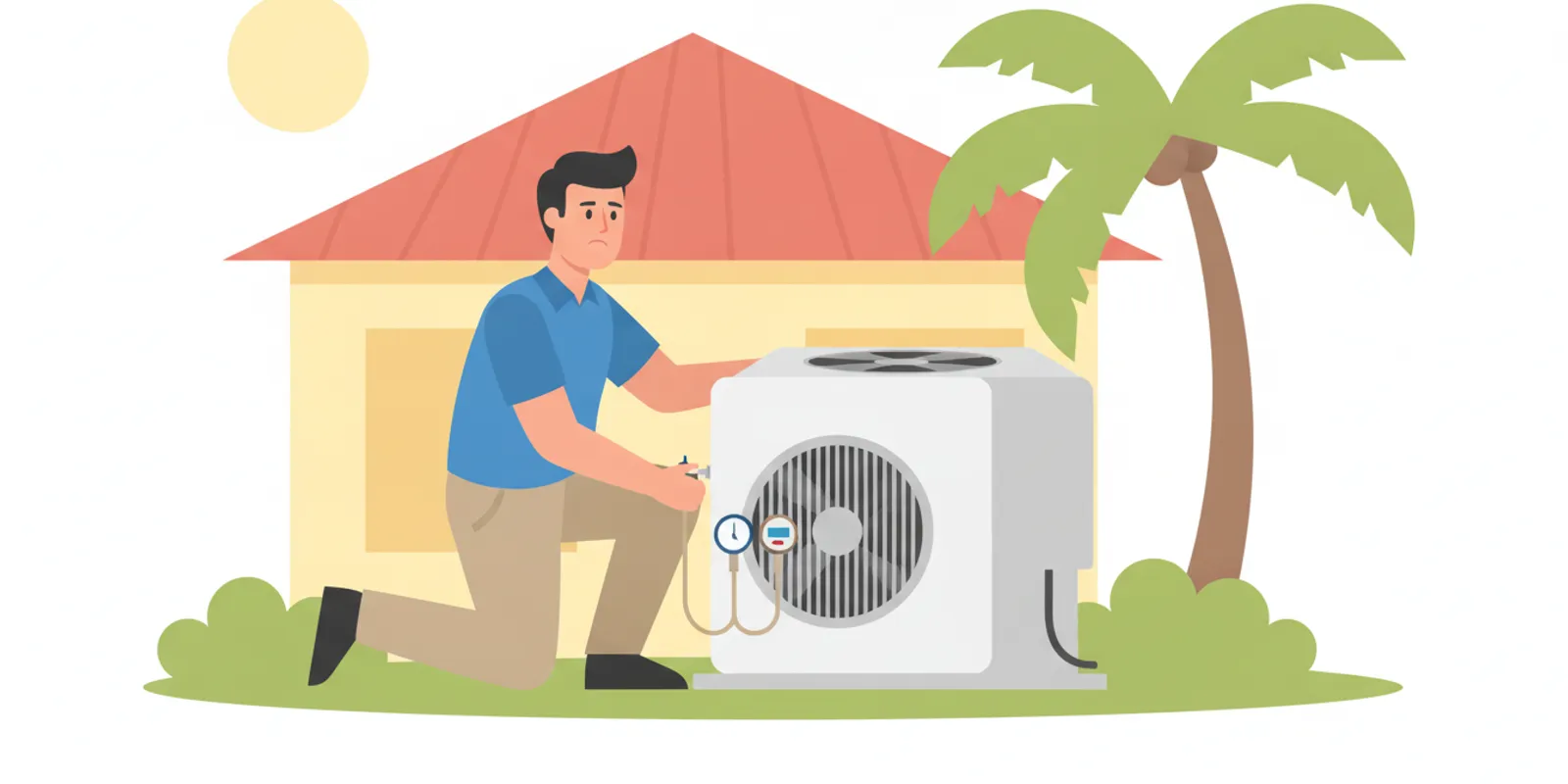
The compressor sits in the outdoor condenser cabinet. It circulates refrigerant through the cooling system, helping move heat from indoors to outside. The outdoor unit also contains a fan, electrical components, and other parts. A problem in any of these areas can affect cooling, so an outdoor-unit symptom does not prove that the compressor itself has failed.
Think of the compressor as one part of a connected system, rather than a stand-alone appliance. Indoor airflow, thermostat settings, power supply, controls, and refrigerant movement all affect what you experience. A technician may need to check several components before identifying the source. That distinction matters because replacing a compressor without confirming the underlying cause can leave the actual issue unresolved.
Homeowners often use “compressor not working” to describe any outdoor unit that will not start or cool properly. It is a useful way to explain the concern, but it is not a confirmed diagnosis. Tell the service professional what you observed, when it began, and whether anything changed just before the problem.
What Can You Safely Check Before Calling?
Begin with observations and basic controls. Do not remove access panels, touch wiring, open refrigerant lines, or put tools inside the outdoor cabinet. Those steps can expose you to electrical hazards or damage system components. If you feel uncertain at any point, stop and request professional help.
- Check the thermostat. Confirm it is set to cooling and that the set temperature is below the room temperature. If the display is blank, note that detail rather than taking apart the thermostat.
- Look at the air filter. If it is visibly clogged, replace it with the correct size and type, following the equipment instructions. A restricted filter can reduce airflow, but replacing it will not fix every cooling problem.
- Check the breaker without repeatedly resetting it. If a breaker is tripped, you may note its position. Do not keep switching it back on if it trips again; repeated trips need professional attention.
- Observe the outdoor unit from a safe distance. Note whether the fan is running, whether you hear a hum or clicking, and whether the cabinet appears damaged. Keep hands and objects away from the fan and grille.
- Look for obvious airflow or drainage concerns. Check whether supply vents are open and whether water is present near the indoor equipment. Avoid reaching into equipment or removing covers.
- Record when the issue happens. Note the time, weather, thermostat setting, and any sounds or visible changes. This information can help a technician narrow down the next checks.
A state safety handout on compressed-air equipment advises shutting off its air supply before changing air connections. That document concerns compressed-air systems, not home AC refrigerant service, so do not apply it as repair instructions for your air conditioner. In either setting, avoid disconnecting pressurized lines or attempting work beyond your training. Read the Virginia compressed-air safety handout.
What Information Should You Have Ready for a Service Call?
A clear description of the problem helps the technician understand what to investigate. You do not need to identify the failed part. Share the time the issue began, whether cooling stopped suddenly or gradually, and whether the system has worked normally since then.
Describe what you observed at both the thermostat and the equipment. Mention whether the display is blank, whether air comes from the vents, and whether the outdoor fan appears to run. If you heard humming, clicking, or rattling, describe when it occurred. Avoid interpreting the sound as proof of a particular failure.
Tell the technician if the breaker tripped, if you noticed an unusual odor, or if water appeared near the indoor unit. Mention any recent changes, such as a filter replacement or a power interruption, without removing covers to investigate further. If you have the system’s model information readily available, you can share it, but do not climb or reach into unsafe areas to find it.
Before work begins, ask what the visit will include and how the diagnostic process is charged. Confirm the proposed repair and its cost before authorizing it. If the technician finds a different issue than expected, request an explanation of the new finding and any change in scope.
It can help to make a short note before calling: the thermostat setting, whether indoor air is moving, what the outdoor unit is doing, and when the symptoms occur. Add any safety warning, such as a breaker that tripped more than once or a burning odor. Keep the note factual: “the fan was still” is more useful than guessing that a particular electrical part failed.
If the problem comes and goes, record a few separate observations rather than waiting beside the equipment. Note whether the system restarts on its own, whether cooling returns, and how long the change lasts. Do not repeatedly cycle the thermostat to reproduce a sound. A simple timeline helps the technician understand whether the issue is constant or intermittent.
Which Symptoms Should You Take Seriously?
Some symptoms call for a prompt service appointment. Others may indicate an urgent safety concern. If you notice smoke, a burning odor, sparks, or a repeatedly tripping breaker, switch the system off at the thermostat if you can do so safely. Do not touch damaged wiring or open the equipment cabinet. Contact a qualified professional for guidance.
A persistent hum without normal operation, repeated clicking, unusual rattling, or a fan that does not turn can point to different faults. These sounds are clues, not diagnoses. Avoid trying to start the fan manually or using an object to move it. The unit may contain energized components even when it appears idle.
If the AC runs but the home does not cool, note whether indoor airflow is weak, whether the system runs for unusually long periods, and whether the thermostat reading changes. Weak airflow may involve an indoor-side issue rather than the compressor. A professional can assess the complete system and determine what is actually preventing cooling.
When the home is becoming uncomfortable, especially for someone who is older, very young, or sensitive to heat, make a plan to stay somewhere cooler while arranging service. Do not wait for a particular sound or symptom to appear before asking for help. For urgent service information, see emergency HVAC service options.
For example, an outdoor unit that is completely quiet and a blank thermostat display gives a different set of observations than an indoor fan blowing warm air while the outdoor fan runs. Neither pattern proves compressor failure. Recording both indoor and outdoor behavior gives the service professional a more useful starting point.
Another useful distinction is whether the system never starts, starts and stops, or continues running without cooling the home. Describe the sequence rather than labeling it. If an odor, smoke, sparks, or repeated breaker trips are present, safety takes priority over collecting more details.
Why Might an Outdoor AC Unit Stop Running?
A unit that will not start can have an interruption in power, a thermostat or control issue, a safety switch response, or a failed electrical component. A compressor may also be affected, but a quiet outdoor cabinet does not identify which part is responsible. Some causes are relatively simple to address; others require testing and repair by a trained technician.
A humming sound can come from an electrical or mechanical problem. Clicking may occur as controls attempt to operate, but repeated clicking is not a reliable way to identify a failed part. A technician may inspect the power supply, electrical connections, controls, and system condition before recommending a repair.
Cooling problems can also arise from airflow restrictions or refrigerant-system concerns. Refrigerant circuits are sealed systems and should not be opened by a homeowner. Do not attach gauges, add refrigerant, or buy a product that claims to repair a leak. The correct next step depends on what testing shows.
Florida heat and humidity can make an AC failure feel urgent, but rushing into an unverified repair can create more risk. Share the symptoms and ask what the diagnosis establishes. For broader repair information, review air conditioning repair service details.
What Might a Technician Inspect?
A professional diagnosis generally starts with your description of the problem and the system’s current behavior. The technician may verify the thermostat call, check whether indoor and outdoor equipment respond, and inspect visible conditions. The exact process depends on the equipment, symptoms, and findings at the home.
Further checks may involve electrical supply and components, controls, airflow, and refrigerant-system operation. Testing helps distinguish a compressor failure from a problem elsewhere in the system. It can also reveal whether another condition contributed to the failure or should be addressed during the repair.
Ask the technician to explain what was tested and what the results mean. A clear recommendation should identify the suspected or confirmed fault, the proposed work, and any relevant alternatives. If the diagnosis is uncertain, ask what additional testing would clarify it before authorizing a major repair.
You can also ask the technician to separate confirmed findings from possibilities. For instance, ask which test points to the recommended component and whether another issue could produce the same symptom. This does not require you to interpret technical readings. It simply helps you understand what the evidence supports and what remains uncertain.
Before approving work, clarify what happens next if the initial repair does not restore cooling. Ask whether further testing or a separate repair could be needed, and whether that would require new approval. Keep any written estimate or service notes with the date and a description of the reported symptoms. These details make later comparisons more straightforward.
For homes in the area, Call Miranda Plumbing and Air lists AC repair in Port St. Lucie and AC repair in Vero Beach. Homeowners elsewhere can check the service-area information when deciding whom to contact.
How Do Repair and Replacement Options Compare?
Whether to repair or replace an AC system depends on the diagnosis and the condition of the equipment as a whole. There is no single rule that makes replacement the right answer whenever a compressor is involved. Consider the documented fault, the scope of the proposed work, the system’s operating history, and whether other major concerns exist.
| Option | When it may be considered | Questions to ask |
|---|---|---|
| Repair the identified fault | Testing points to a repairable problem and the wider system condition supports continued use. | What failed? What work is included? Are there related issues to address? |
| Repair a compressor-related problem | The technician confirms the compressor or a connected component is involved. | How was the fault confirmed? What caused it? What does the repair cover? |
| Compare replacement choices | The diagnosis, equipment condition, or expected scope makes a broader system discussion useful. | What equipment and installation work are proposed? What factors affect the total? |
| Request more explanation | You do not understand the findings or need to compare the recommendation with your priorities. | Can the technician explain the evidence and available options in plain language? |
Before approving a significant repair, request a written description of the work and its price. Ask whether the quote covers diagnosis, parts, labor, and any related work, as applicable. Do not assume that an estimate includes tasks the technician has not identified. If replacement is discussed, ask what conditions make it preferable to repairing the current equipment.
To compare options fairly, use the same questions for each proposal. Ask what condition has been confirmed, what work is included, and what is excluded. Ask whether the current equipment has other known concerns, and whether the recommendation changes if those concerns are left unaddressed. This keeps the discussion focused on the specific system rather than a generic rule about age or one component.
For a repair proposal, ask whether the described work addresses the diagnosed cause or only one symptom. For a replacement discussion, ask what installation work is included and how the proposed system is selected for the home. Request a clear explanation of any assumptions. A written scope helps you compare like with like, especially when proposals use different equipment or work descriptions.
Financing may be one consideration for a larger project. Review available financing information directly and confirm the terms that apply to your situation. Financing does not determine whether repair or replacement is technically appropriate.
How Can You Reduce the Chance of Another Cooling Interruption?
Routine attention can help identify developing issues, although maintenance cannot guarantee that a compressor will never fail. Keep the filter maintained according to its instructions and the conditions in your home. Make sure supply vents are not blocked by furniture or other objects.
Keep the outdoor area clear of loose debris and maintain reasonable space around the condenser. Do not spray electrical parts, remove panels, or attempt to clean internal components unless the equipment manufacturer specifically describes a safe homeowner task. If the cabinet or surrounding area looks damaged, mention it during service.
Pay attention to changes rather than waiting for a complete shutdown. Longer cooling cycles, unusual sounds, weaker airflow, or repeated breaker trips are worth recording and discussing. A maintenance visit can provide an opportunity for a professional to check system condition and address concerns before peak cooling demand.
A simple seasonal routine can make observations easier. Check the filter at the interval recommended for your equipment and replace it when needed. Keep supply and return vents unobstructed. From a safe distance, notice whether leaves or other debris have collected around the outdoor cabinet, but do not open it or reach through the grille.
After any service visit, keep the written findings and note the date, work performed, and any follow-up the technician recommends. If a familiar sound returns or cooling changes again, compare it with the earlier notes and contact the service provider. Maintenance and recordkeeping cannot prevent every failure, but they help you explain changes clearly instead of starting from memory.
Call Miranda Plumbing and Air offers AC tune-up and maintenance information. For a general overview of cooling work, homeowners can also review the company’s HVAC service information.
Ask Call Miranda Plumbing and Air about your AC concern
Frequently Asked Questions
Can I tell from a humming sound that the compressor has failed?
No. A hum can have more than one cause, and sound alone cannot confirm a compressor failure. Note when it happens and whether the fan operates, then arrange diagnosis rather than opening the unit.
Should I keep resetting a breaker when the AC stops?
No. A breaker that trips again should not be repeatedly reset. Leave the system off and contact a qualified HVAC professional to investigate the cause.
Is it safe to add refrigerant myself?
No. Do not open the refrigerant circuit or add refrigerant as a homeowner. Ask a qualified technician to diagnose the system and explain the appropriate next step.
Does a broken compressor always mean I need a new AC system?
Not automatically. The right choice depends on confirmed findings, the overall equipment condition, and the scope of repair compared with replacement. Ask for the reason behind each recommendation.
What Should You Do Next?
Write down the symptoms, complete only basic checks you can perform safely, and stop if you notice electrical warning signs or feel unsure. A professional diagnosis can establish whether the compressor is involved and explain the available options. Call Miranda Plumbing and Air serves homeowners with plumbing and HVAC services; Florida license numbers are CFC1427227 for plumbing and CAC1815486 for HVAC. The company has served the Treasure Coast since 1981.
Need plumbing or HVAC service on the Treasure Coast?
Contact Miranda Plumbing & Air